About this artwork
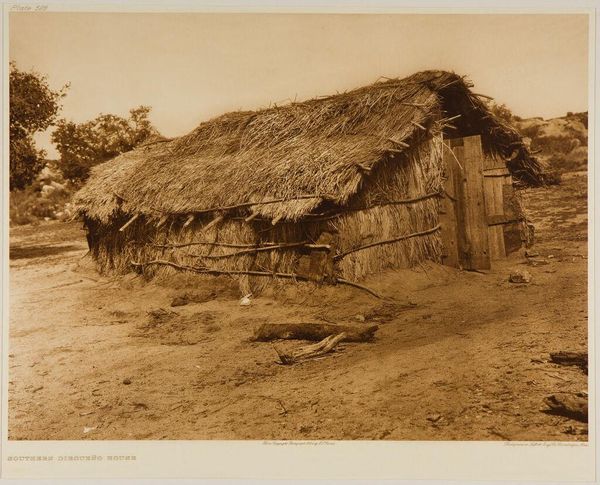
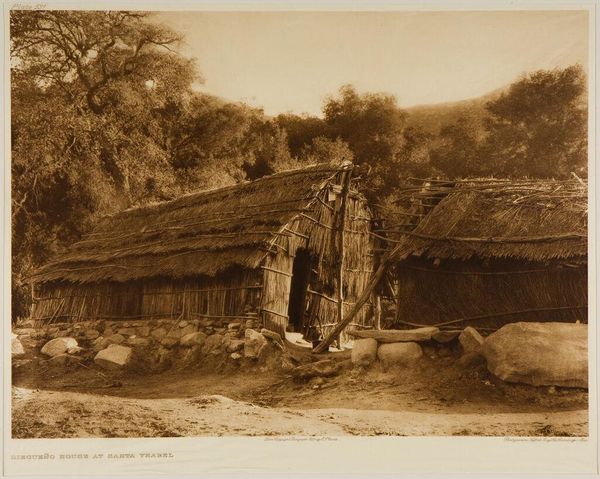
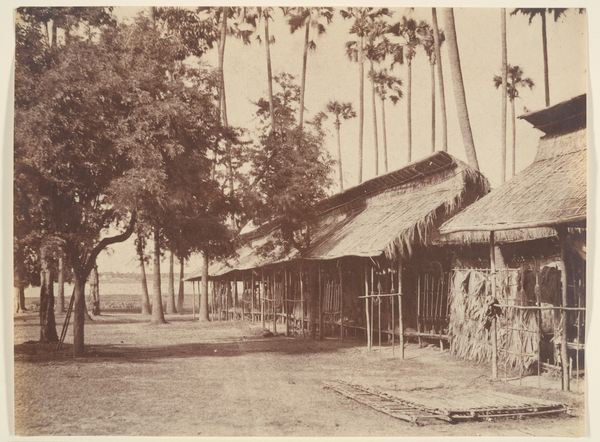
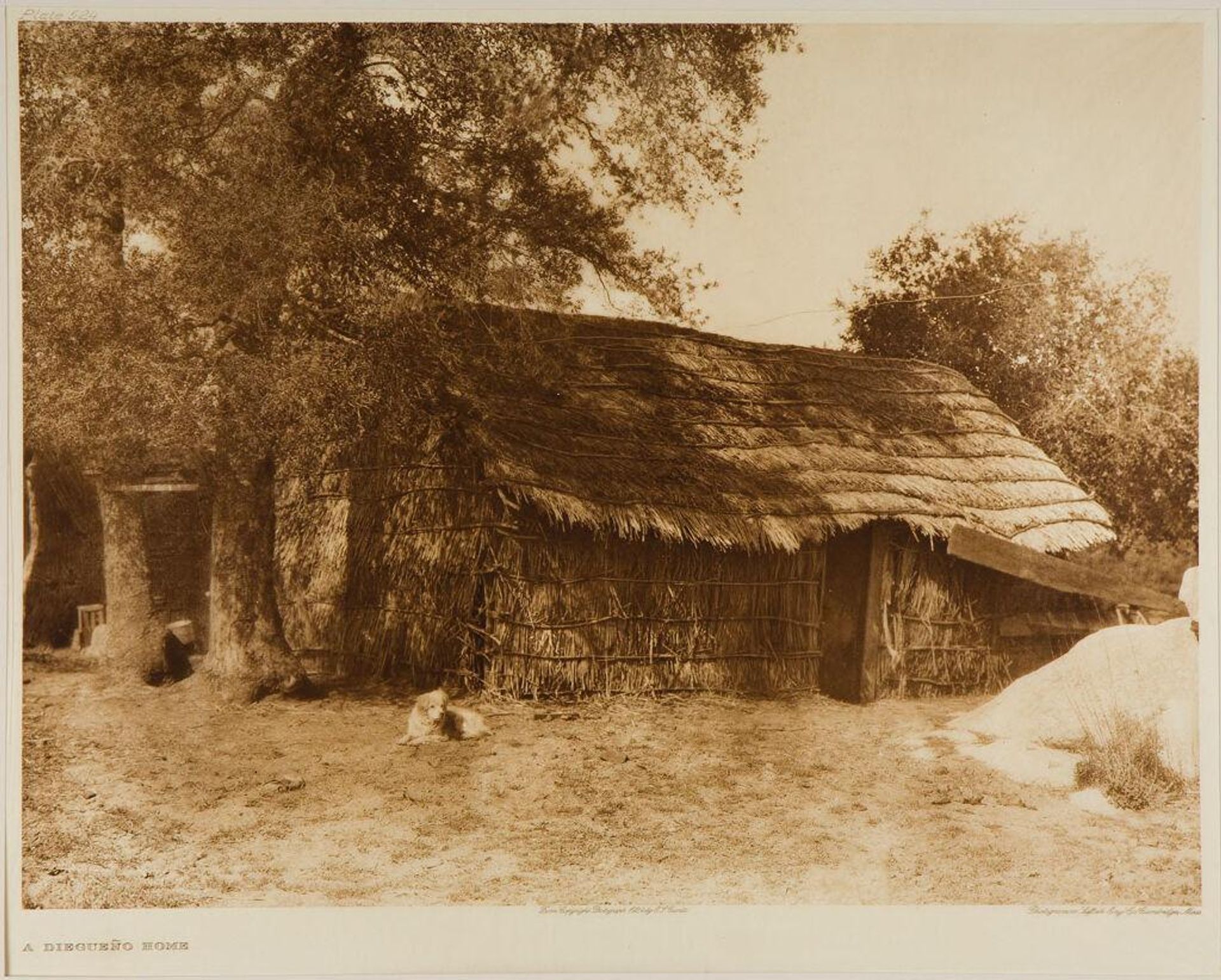
Curator: This softly-toned photograph, taken by Edward Sheriff Curtis, is titled "A Diegueño Home." Editor: It has a very grounding, tactile feel. The straw and earth tones give a sense of connection to the landscape and the labor involved in building this home. Curator: Curtis intended to document Native American life, but it's crucial to recognize that his work was framed by a romanticized and often inaccurate perspective. He was driven by a desire to record what he perceived as a vanishing way of life. Editor: Right. We must consider the material reality of the home, the skill in its construction from local resources, and how that contrasts with Curtis's own intervention and potential misrepresentation. Curator: Exactly. His photographs, while visually striking, can reinforce stereotypes if viewed uncritically. We must always consider the power dynamics inherent in his gaze. Editor: I agree. By focusing on the tangible aspects, the how and what of its making, we can appreciate the ingenuity while acknowledging the complex context of its portrayal. Curator: A vital point. It is about respecting Indigenous voices and using photographs like this as a prompt for deeper understanding. Editor: Precisely, acknowledging the work and the material conditions allows us to approach the image with more nuance and critical awareness.


Artwork details
- Dimensions
- image: 29.5 x 39 cm (11 5/8 x 15 3/8 in.)
- Location
- Harvard Art Museums
- Copyright
- CC0 1.0
Comments
Share your thoughts
About this artwork
Curator: This softly-toned photograph, taken by Edward Sheriff Curtis, is titled "A Diegueño Home." Editor: It has a very grounding, tactile feel. The straw and earth tones give a sense of connection to the landscape and the labor involved in building this home. Curator: Curtis intended to document Native American life, but it's crucial to recognize that his work was framed by a romanticized and often inaccurate perspective. He was driven by a desire to record what he perceived as a vanishing way of life. Editor: Right. We must consider the material reality of the home, the skill in its construction from local resources, and how that contrasts with Curtis's own intervention and potential misrepresentation. Curator: Exactly. His photographs, while visually striking, can reinforce stereotypes if viewed uncritically. We must always consider the power dynamics inherent in his gaze. Editor: I agree. By focusing on the tangible aspects, the how and what of its making, we can appreciate the ingenuity while acknowledging the complex context of its portrayal. Curator: A vital point. It is about respecting Indigenous voices and using photographs like this as a prompt for deeper understanding. Editor: Precisely, acknowledging the work and the material conditions allows us to approach the image with more nuance and critical awareness.
Comments
Share your thoughts