About this artwork
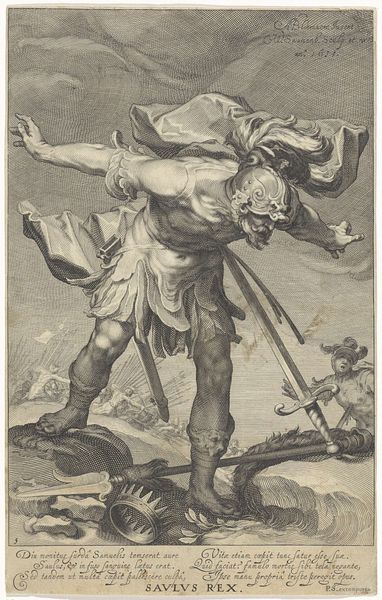
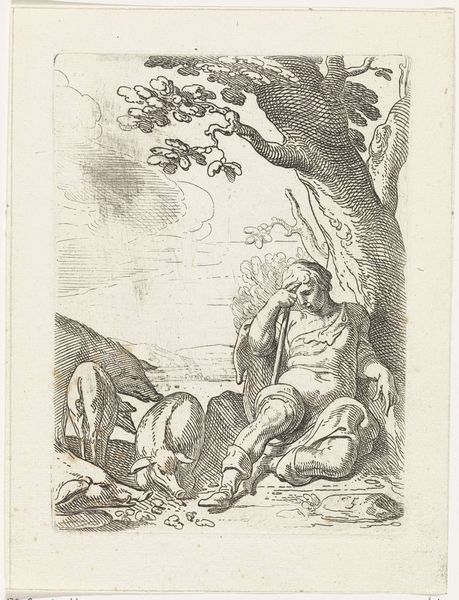
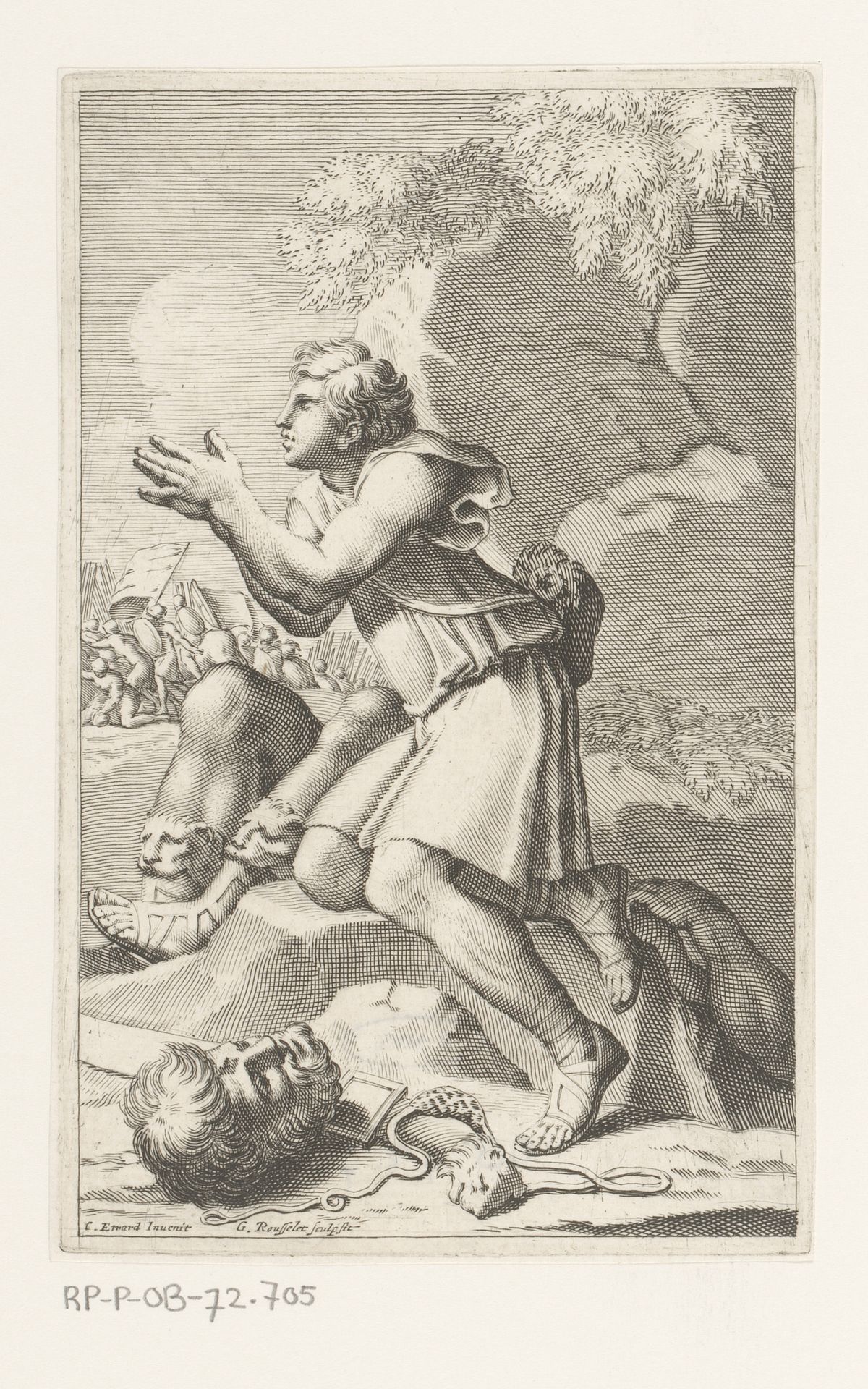
Gilles Rousselet created this engraving, David after defeating Goliath, sometime in the 17th century. It depicts a triumphant David, having slain the giant Goliath. But beyond the immediate religious narrative, this image offers a glimpse into the cultural values of its time. The image's meaning stems from its visual codes and cultural references. Made in France, it would have resonated with the prevailing societal norms and religious sentiments. David’s victory would have been seen as a triumph of good over evil, a theme often used to reinforce moral and social order. The print would likely have circulated amongst the educated elite, reinforcing shared values. As historians, we look into the social conditions that shape artistic production. Researching the history of printmaking, religious patronage, and audience reception can enrich our understanding. By situating the work within its cultural and institutional context, we recognize that its meaning is not fixed, but is contingent on these factors.

Artwork details
- Medium
- engraving
- Dimensions
- height 171 mm, width 109 mm
- Location
- Rijksmuseum
- Copyright
- Rijks Museum: Open Domain
Tags
Comments
Share your thoughts
About this artwork
Gilles Rousselet created this engraving, David after defeating Goliath, sometime in the 17th century. It depicts a triumphant David, having slain the giant Goliath. But beyond the immediate religious narrative, this image offers a glimpse into the cultural values of its time. The image's meaning stems from its visual codes and cultural references. Made in France, it would have resonated with the prevailing societal norms and religious sentiments. David’s victory would have been seen as a triumph of good over evil, a theme often used to reinforce moral and social order. The print would likely have circulated amongst the educated elite, reinforcing shared values. As historians, we look into the social conditions that shape artistic production. Researching the history of printmaking, religious patronage, and audience reception can enrich our understanding. By situating the work within its cultural and institutional context, we recognize that its meaning is not fixed, but is contingent on these factors.
Comments
Share your thoughts