About this artwork
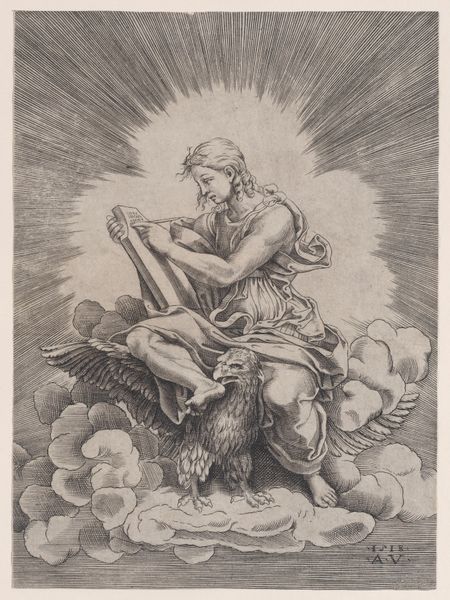
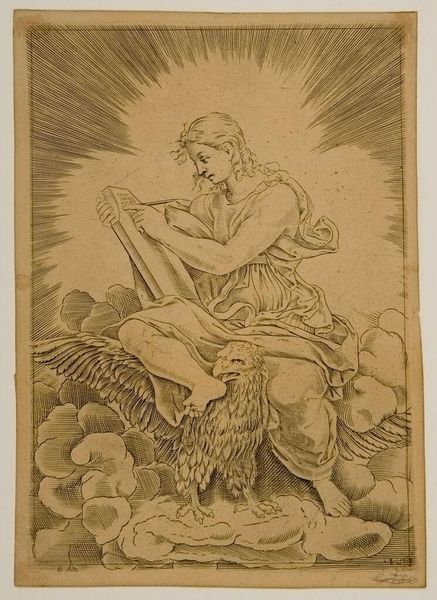
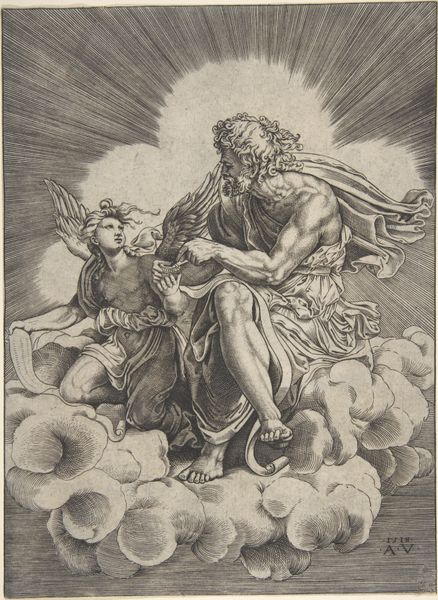
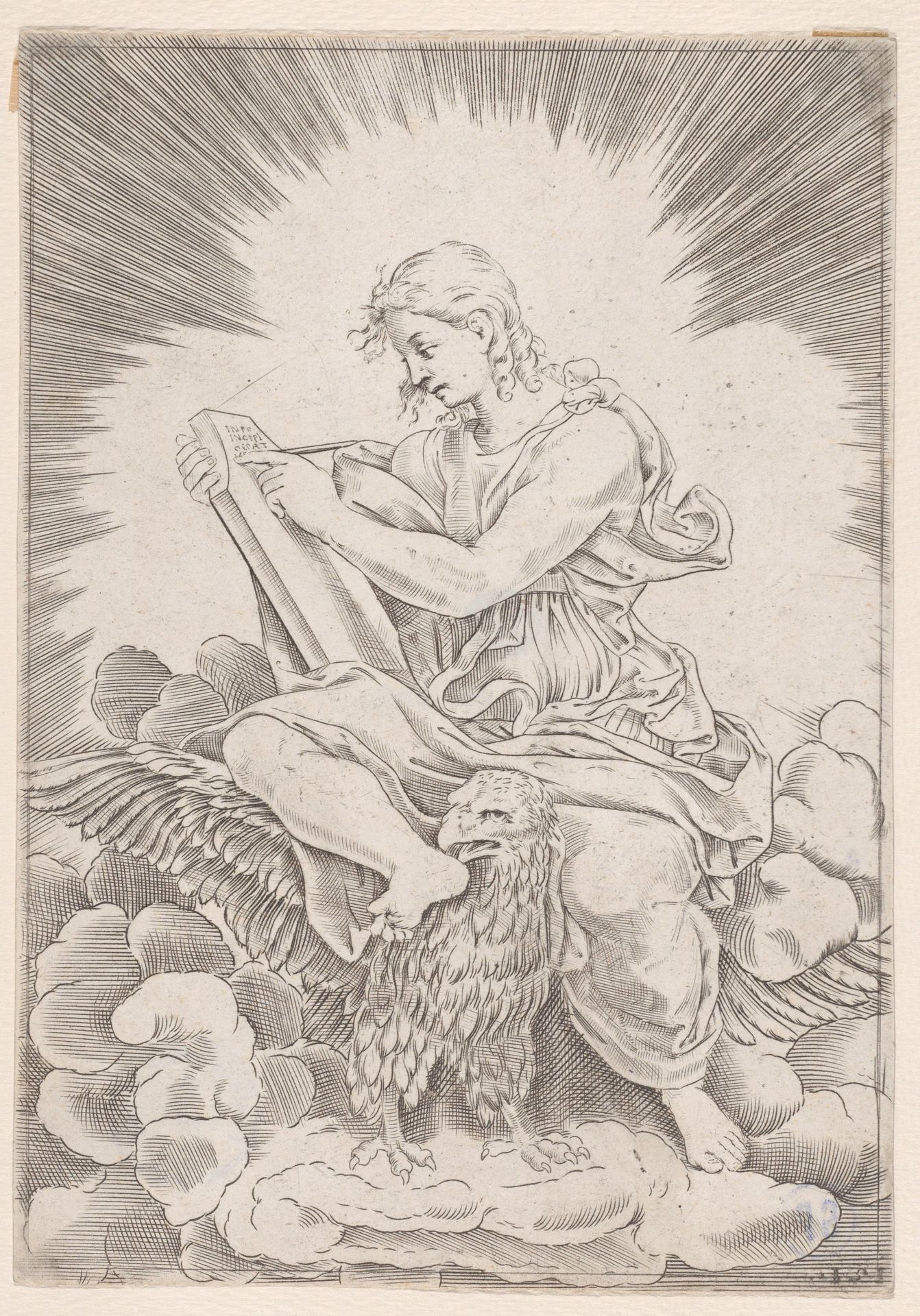
Agostino Veneziano etched this image of Saint John, who sits, divinely inspired, writing. Note the eagle at his feet, a symbol passed down through time. The eagle, an ancient emblem of power and vision, was first associated with Zeus and the Roman emperors and later adopted by Christianity to symbolize John the Evangelist, believed to have a uniquely clear and soaring spiritual insight. Consider how the symbolism of the eagle evolved; from representing imperial authority, to spiritual enlightenment. In the same way, the halo above John’s head, originally a pagan symbol of divinity in ancient Greece and Rome, was reinterpreted in Christian art as a sign of grace. These symbols possess a remarkable tenacity, resurfacing across cultures. These visual motifs resonate with us, tapping into a collective memory. They are a testament to the enduring power of images to transcend time.
Saint John 1514 - 1536


Artwork details
- Medium
- drawing, print, engraving
- Dimensions
- 8 3/16 x 5 3/4 in. (20.8 x 14.6 cm)
- Location
- Metropolitan Museum of Art, New York, NY
- Copyright
- Public Domain
Tags
drawing
figuration
line
history-painting
italian-renaissance
engraving
Comments
No comments
About this artwork
Agostino Veneziano etched this image of Saint John, who sits, divinely inspired, writing. Note the eagle at his feet, a symbol passed down through time. The eagle, an ancient emblem of power and vision, was first associated with Zeus and the Roman emperors and later adopted by Christianity to symbolize John the Evangelist, believed to have a uniquely clear and soaring spiritual insight. Consider how the symbolism of the eagle evolved; from representing imperial authority, to spiritual enlightenment. In the same way, the halo above John’s head, originally a pagan symbol of divinity in ancient Greece and Rome, was reinterpreted in Christian art as a sign of grace. These symbols possess a remarkable tenacity, resurfacing across cultures. These visual motifs resonate with us, tapping into a collective memory. They are a testament to the enduring power of images to transcend time.
Comments
No comments