1642 - 1678
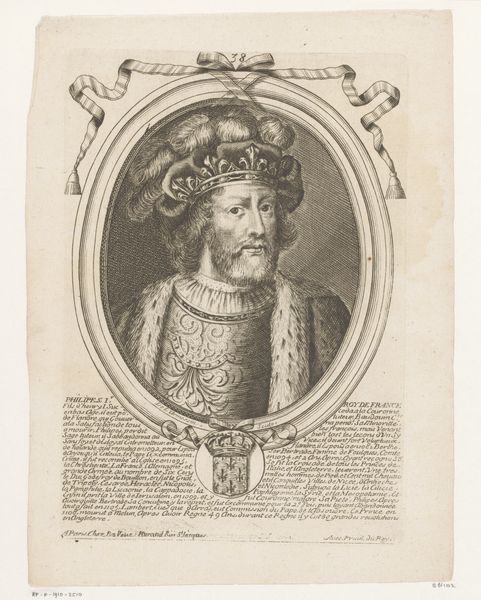
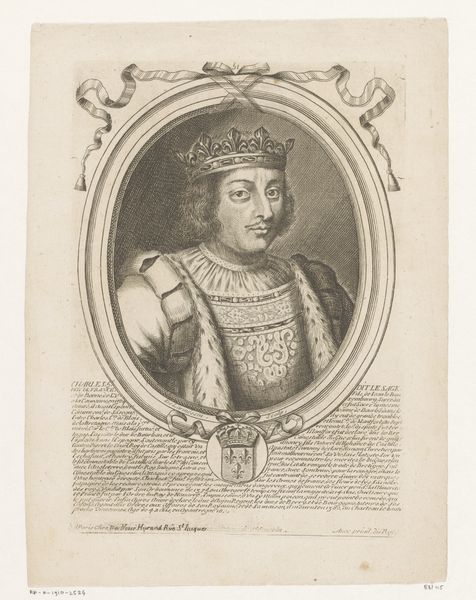
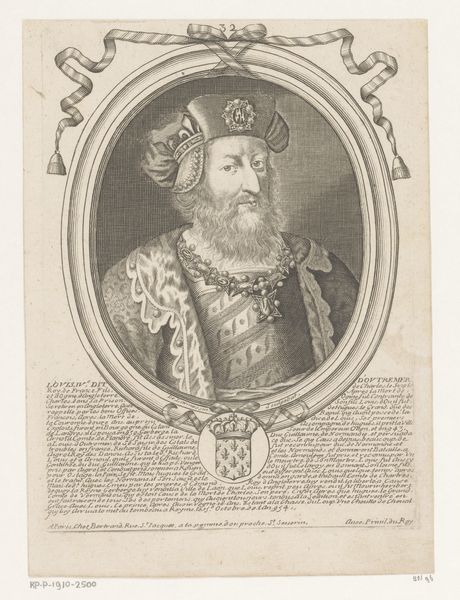
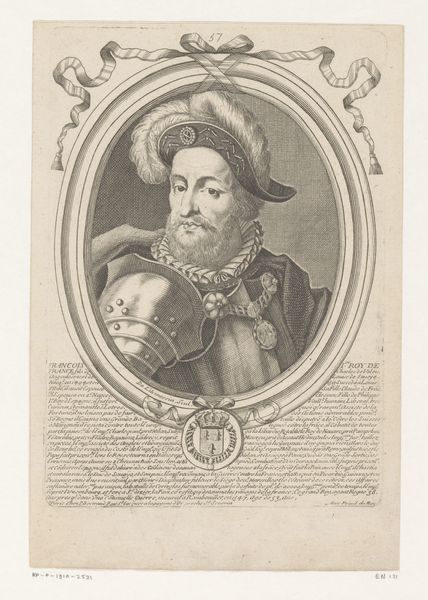
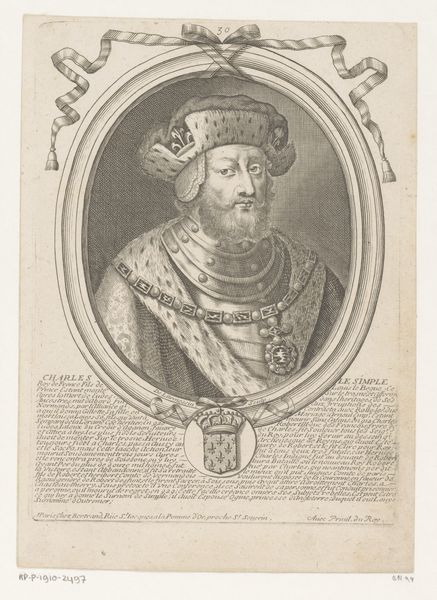
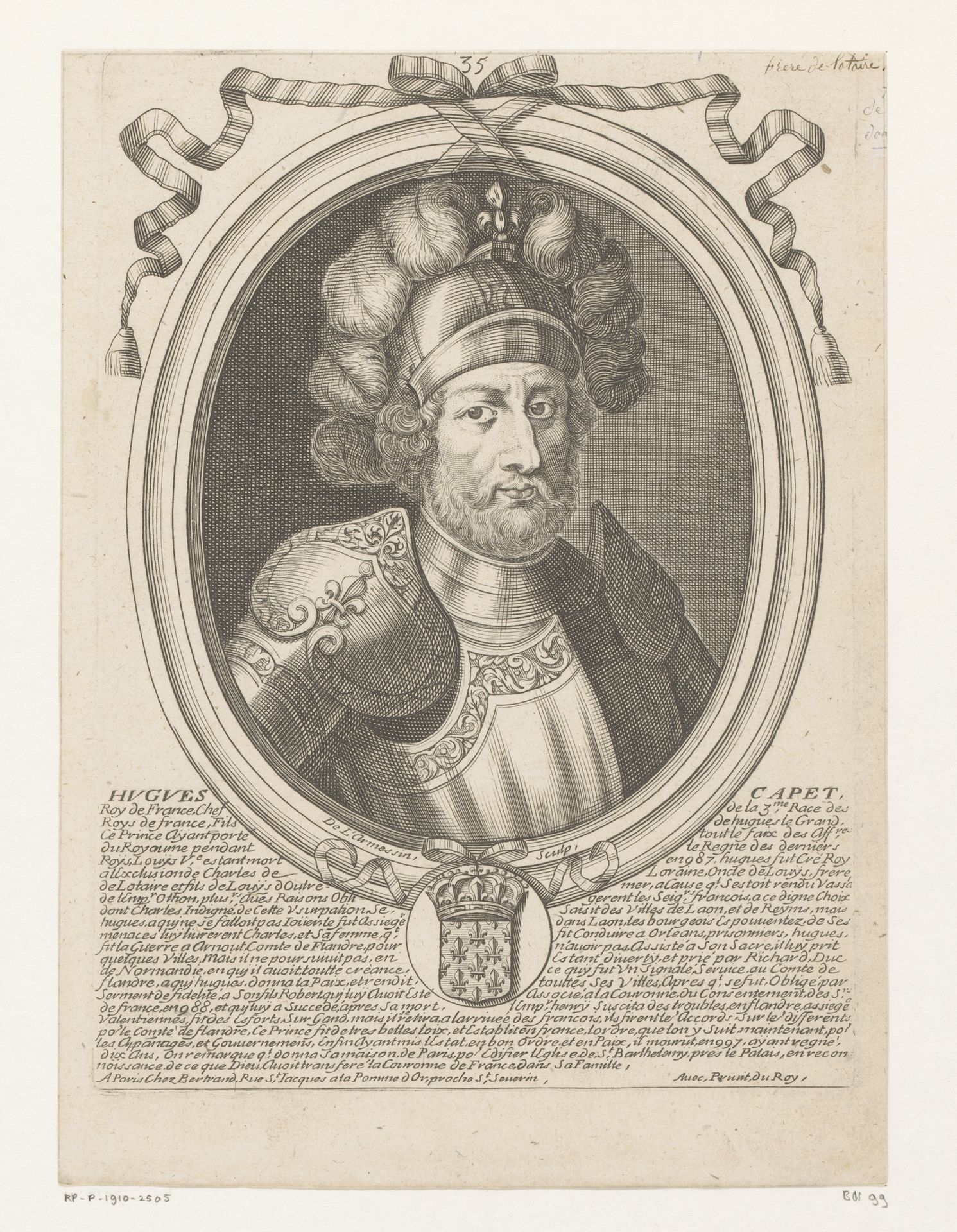
Portret van Hugo Capet, koning van Frankrijk

Nicolas de (I) Larmessin
1632 - 1694Location
RijksmuseumListen to curator's interpretation
Curatorial notes
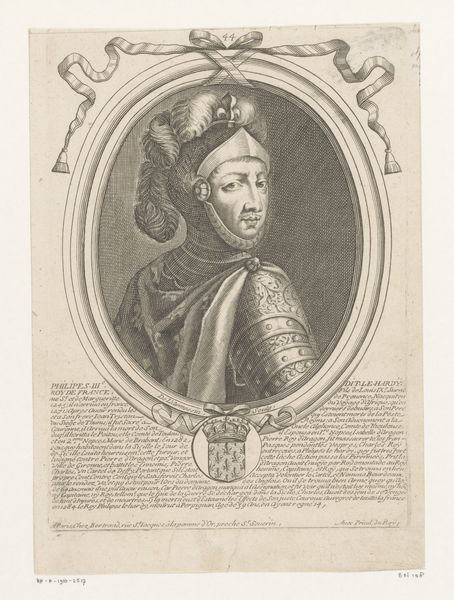
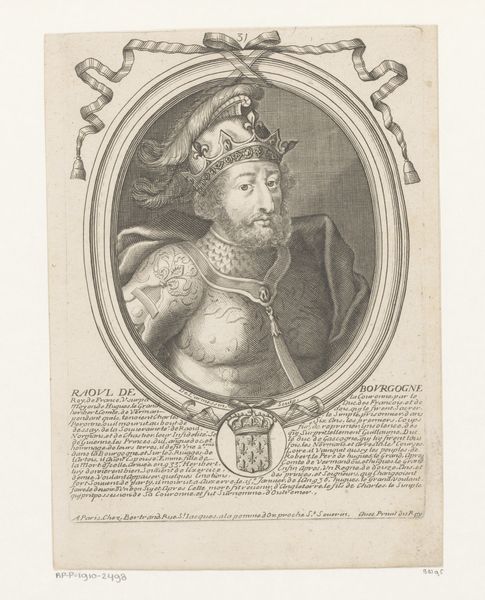
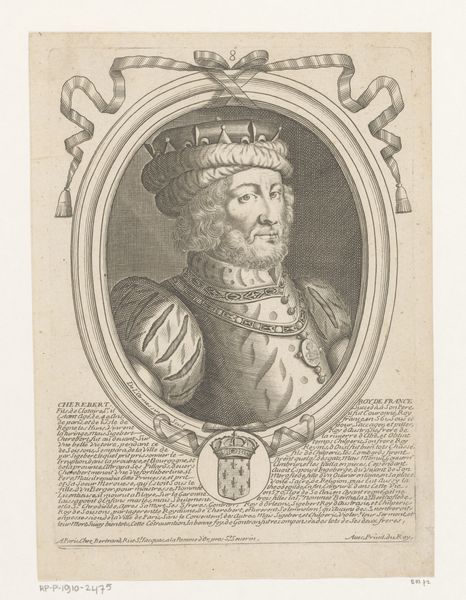
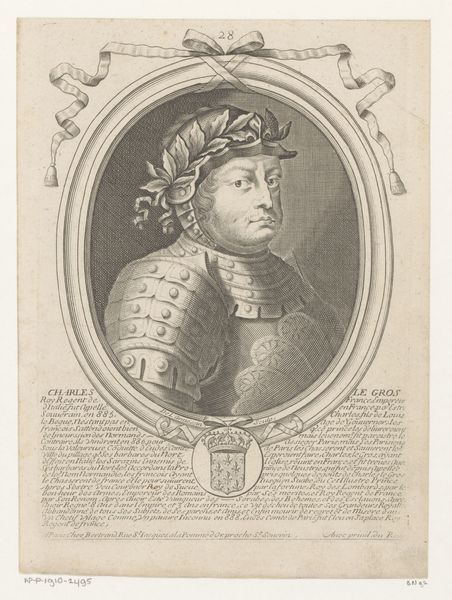
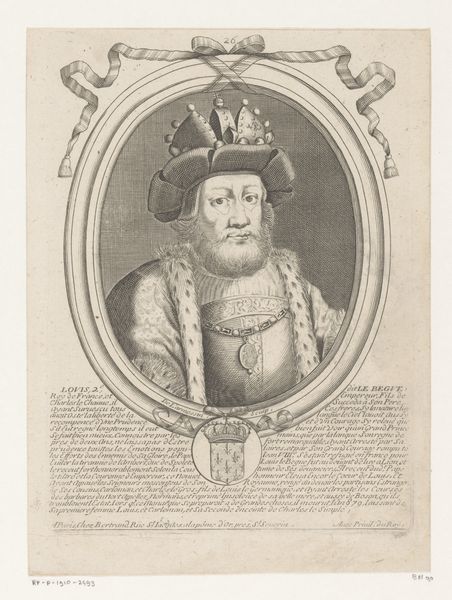
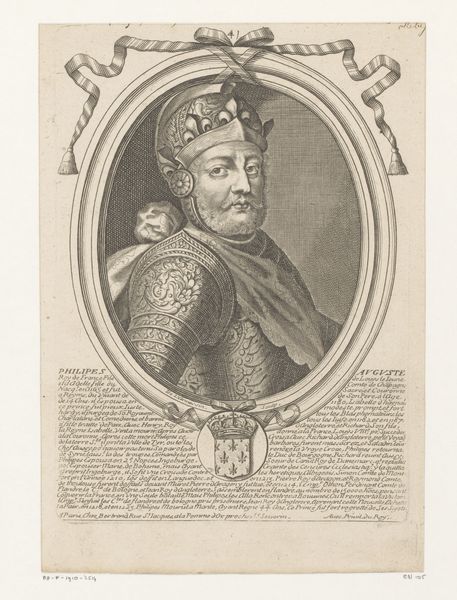
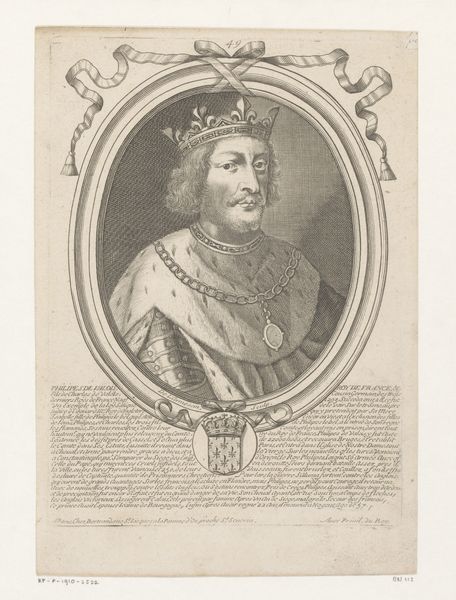
This print of Hugo Capet, King of France, was created by Nicolas de Larmessin in the late 17th century. The composition centers on an oval portrait, framed by ribbons, which captures the king in armor. The image is primarily linear, its form constructed through precise, deliberate lines that define texture and volume. Consider how the lines articulate the textures of the king's garments, from the intricate armor to the plush feathered helmet. These are not just representations, but coded visual signifiers of power and authority. The very structure of the portrait, encased in an oval and adorned with ribbons, speaks to the conventions of royal portraiture. What happens when we view this through a structuralist lens? We see a system of signs, where each element—armor, crown, even the way the king is framed—contributes to a larger narrative of kingship and legitimacy. The print operates within a defined cultural and visual language, reinforcing established hierarchies and meanings.