About this artwork
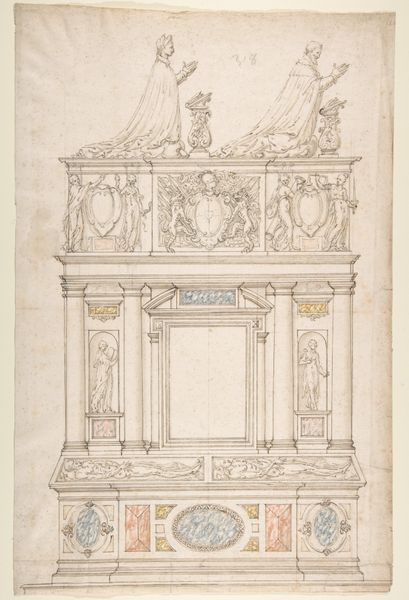
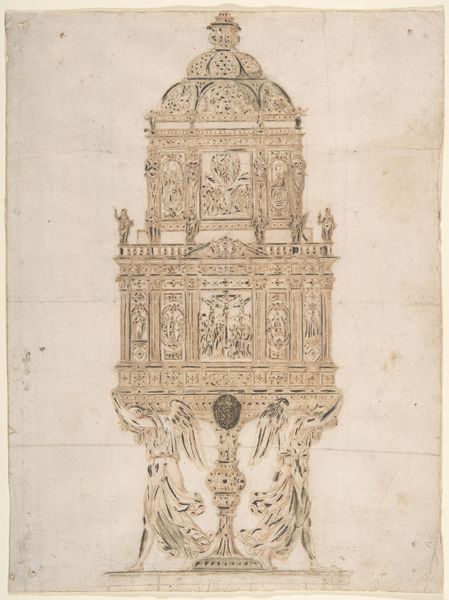
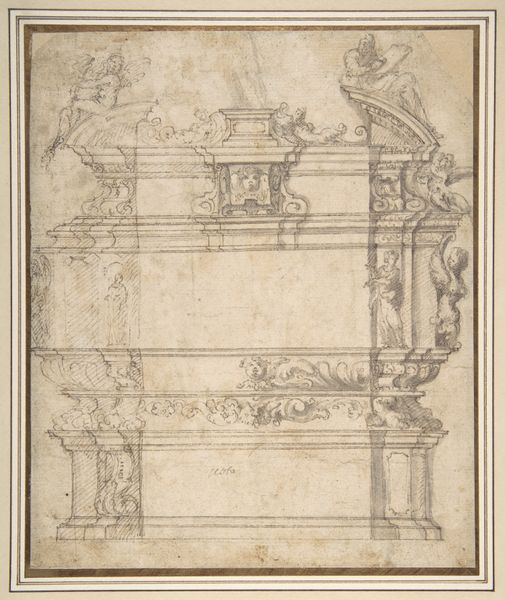
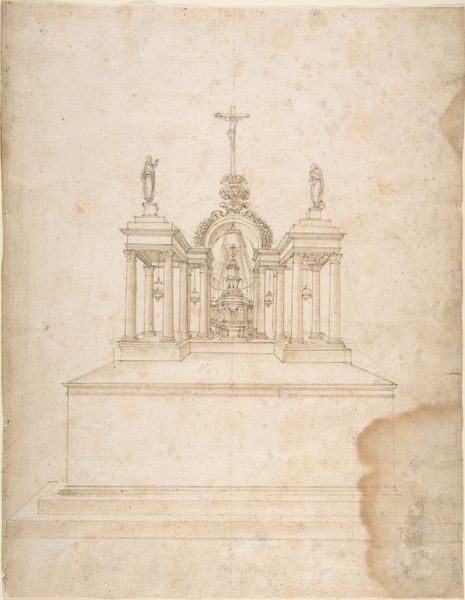
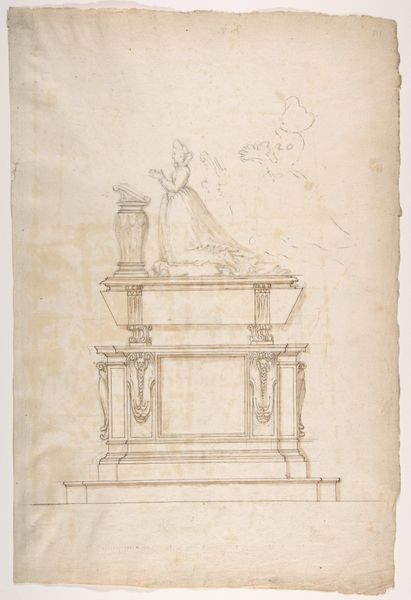
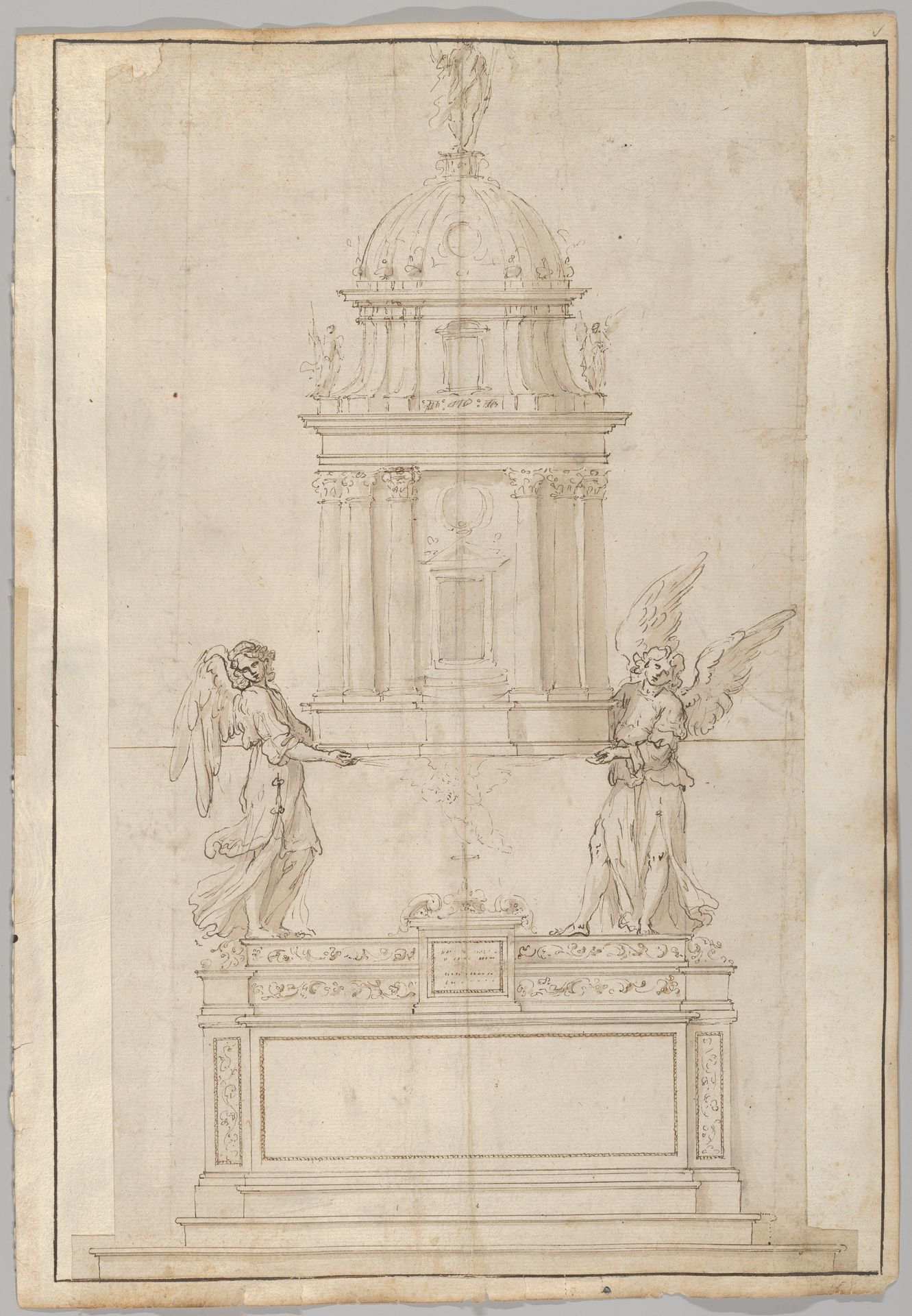
This is Bastiano Torrigiani's design for the Tabernacle of the Sistine Chapel in the Santa Maria Maggiore in Rome. Torrigiani's sketch offers us a glimpse into the world of Roman High Renaissance art, deeply intertwined with the power and aesthetics of the Catholic Church. Here, the angels aren't merely decorative; they embody a divine presence. Note how they flank the tabernacle, seemingly offering it up. During the High Renaissance, artists navigated a complex social structure, often working under the patronage of wealthy families or the church, which influenced their artistic choices. Torrigiani balances traditional religious symbolism with the developing artistic ideals of the time. The design, while reverent, flirts with the era's fascination with symmetry and proportion. Consider what it meant to create religious art in a society where the church had immense political and cultural power. Reflect on how designs like this sought to inspire awe and reinforce religious devotion.
Design for the Tabernacle of the Sistine Chapel in the Santa Maria Maggiore in Rome
1580 - 1595

Bastiano Torrigiani
@bastianotorrigiani
The Metropolitan Museum of Art
Metropolitan Museum of Art, New York, NYArtwork details
- Medium
- drawing, print, paper, ink, architecture
- Dimensions
- Sheet: 15 1/2 × 9 15/16 in. (39.4 × 25.2 cm) Mount: 16 1/8 in. × 11 3/16 in. (41 × 28.4 cm)
- Location
- Metropolitan Museum of Art, New York, NY
- Copyright
- Public Domain
Tags
Comments
Share your thoughts
About this artwork
This is Bastiano Torrigiani's design for the Tabernacle of the Sistine Chapel in the Santa Maria Maggiore in Rome. Torrigiani's sketch offers us a glimpse into the world of Roman High Renaissance art, deeply intertwined with the power and aesthetics of the Catholic Church. Here, the angels aren't merely decorative; they embody a divine presence. Note how they flank the tabernacle, seemingly offering it up. During the High Renaissance, artists navigated a complex social structure, often working under the patronage of wealthy families or the church, which influenced their artistic choices. Torrigiani balances traditional religious symbolism with the developing artistic ideals of the time. The design, while reverent, flirts with the era's fascination with symmetry and proportion. Consider what it meant to create religious art in a society where the church had immense political and cultural power. Reflect on how designs like this sought to inspire awe and reinforce religious devotion.
Comments
Share your thoughts