About this artwork
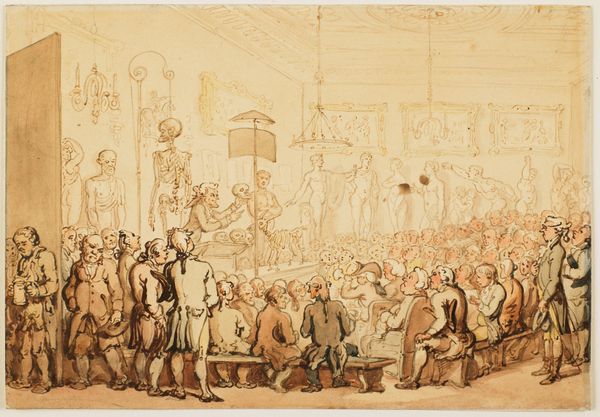
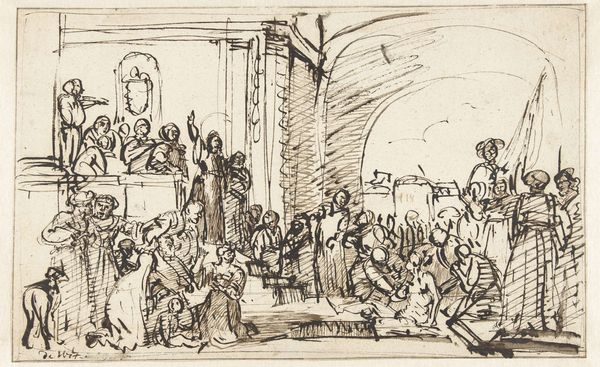
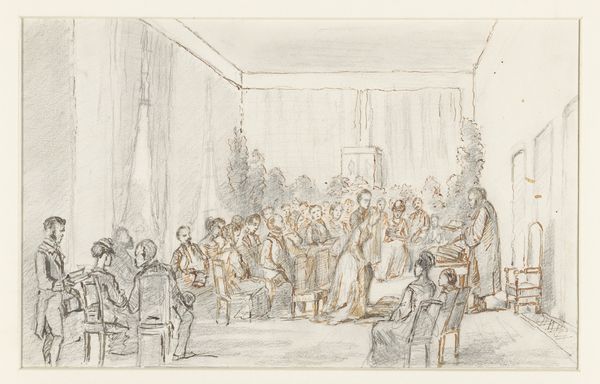
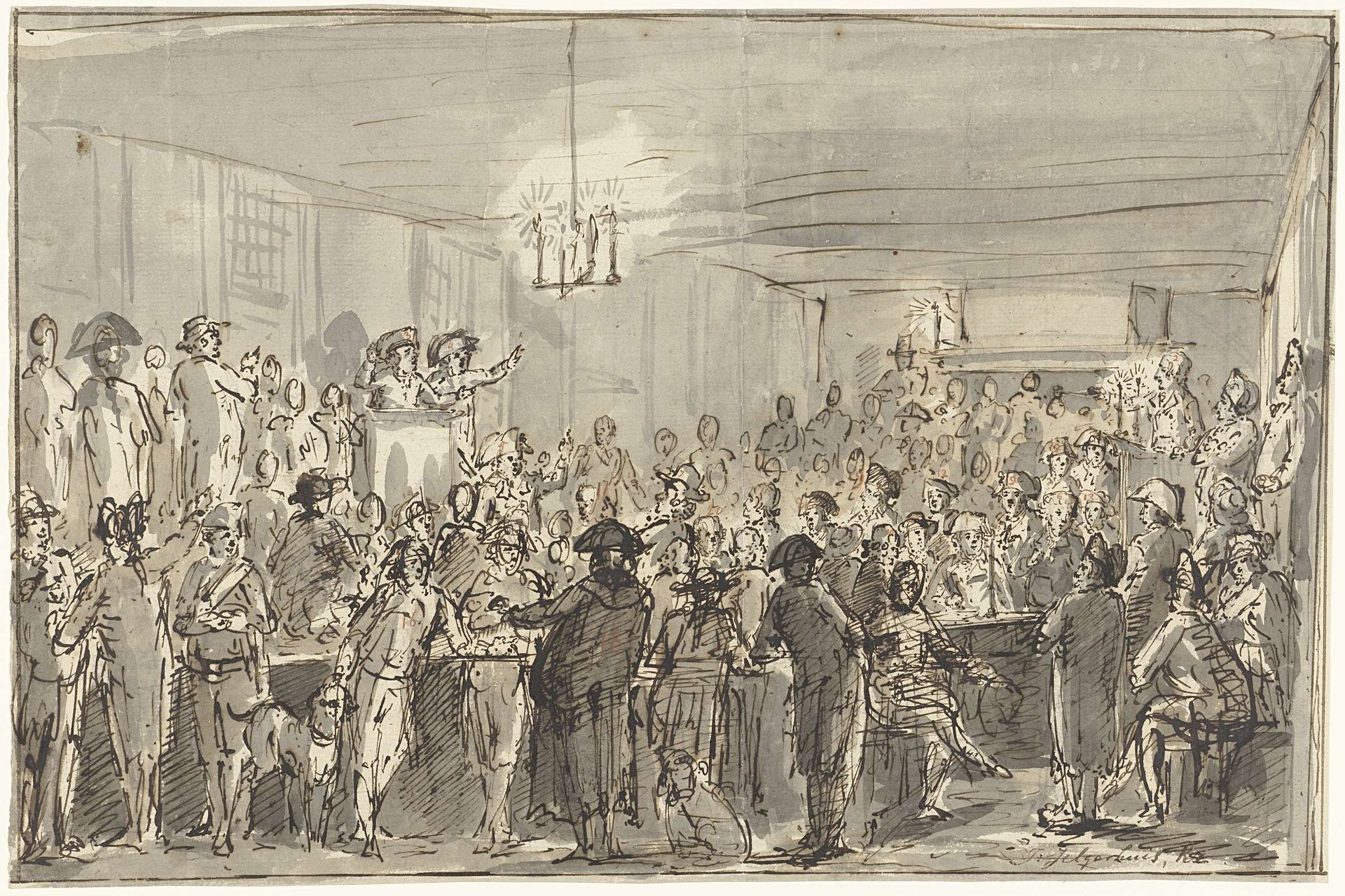
Johannes Jelgerhuis created this drawing, "Een revolutionaire vergadering te Delft in 1795," using pen and brown ink with a brown wash. Notice how the artist uses line to create a sense of depth and dynamism. The composition is carefully structured, dividing the space into distinct areas of activity and focus. The use of line suggests movement, guiding the viewer's eye through the crowded scene from the foreground towards the raised platforms where figures are speaking. The artist masterfully employs a semiotic system, using gestures and expressions to communicate the revolutionary fervor of the assembly. Jelgerhuis challenges traditional artistic conventions by capturing a moment of political upheaval, reflecting broader societal concerns about representation and power. The linear quality evokes a sense of immediacy, underscoring the idea that art is not merely a reflection of reality, but an active participant in shaping our understanding of historical events.
Een revolutionaire vergadering te Delft in 1795
1795

Johannes Jelgerhuis
1770 - 1836Location
RijksmuseumArtwork details
- Medium
- drawing, ink, pen
- Dimensions
- height 239 mm, width 360 mm
- Location
- Rijksmuseum
- Copyright
- Rijks Museum: Open Domain
Tags
Comments
Share your thoughts
About this artwork
Johannes Jelgerhuis created this drawing, "Een revolutionaire vergadering te Delft in 1795," using pen and brown ink with a brown wash. Notice how the artist uses line to create a sense of depth and dynamism. The composition is carefully structured, dividing the space into distinct areas of activity and focus. The use of line suggests movement, guiding the viewer's eye through the crowded scene from the foreground towards the raised platforms where figures are speaking. The artist masterfully employs a semiotic system, using gestures and expressions to communicate the revolutionary fervor of the assembly. Jelgerhuis challenges traditional artistic conventions by capturing a moment of political upheaval, reflecting broader societal concerns about representation and power. The linear quality evokes a sense of immediacy, underscoring the idea that art is not merely a reflection of reality, but an active participant in shaping our understanding of historical events.
Comments
Share your thoughts