About this artwork
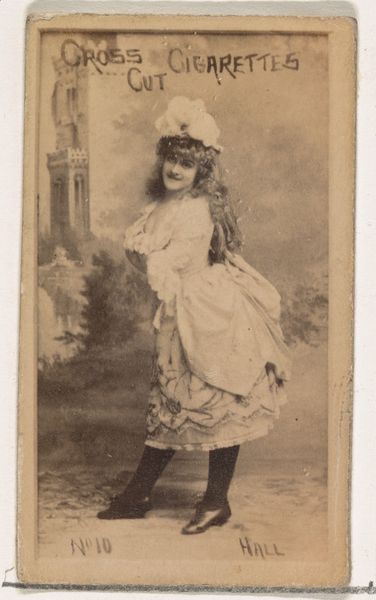
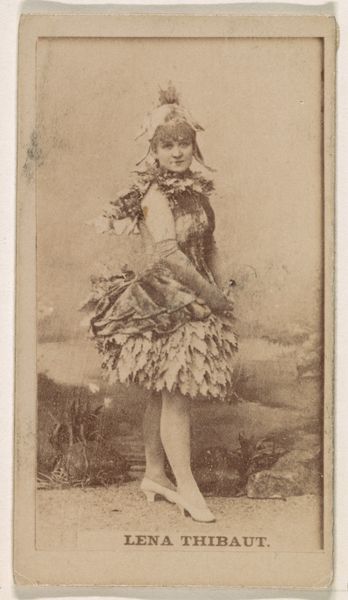
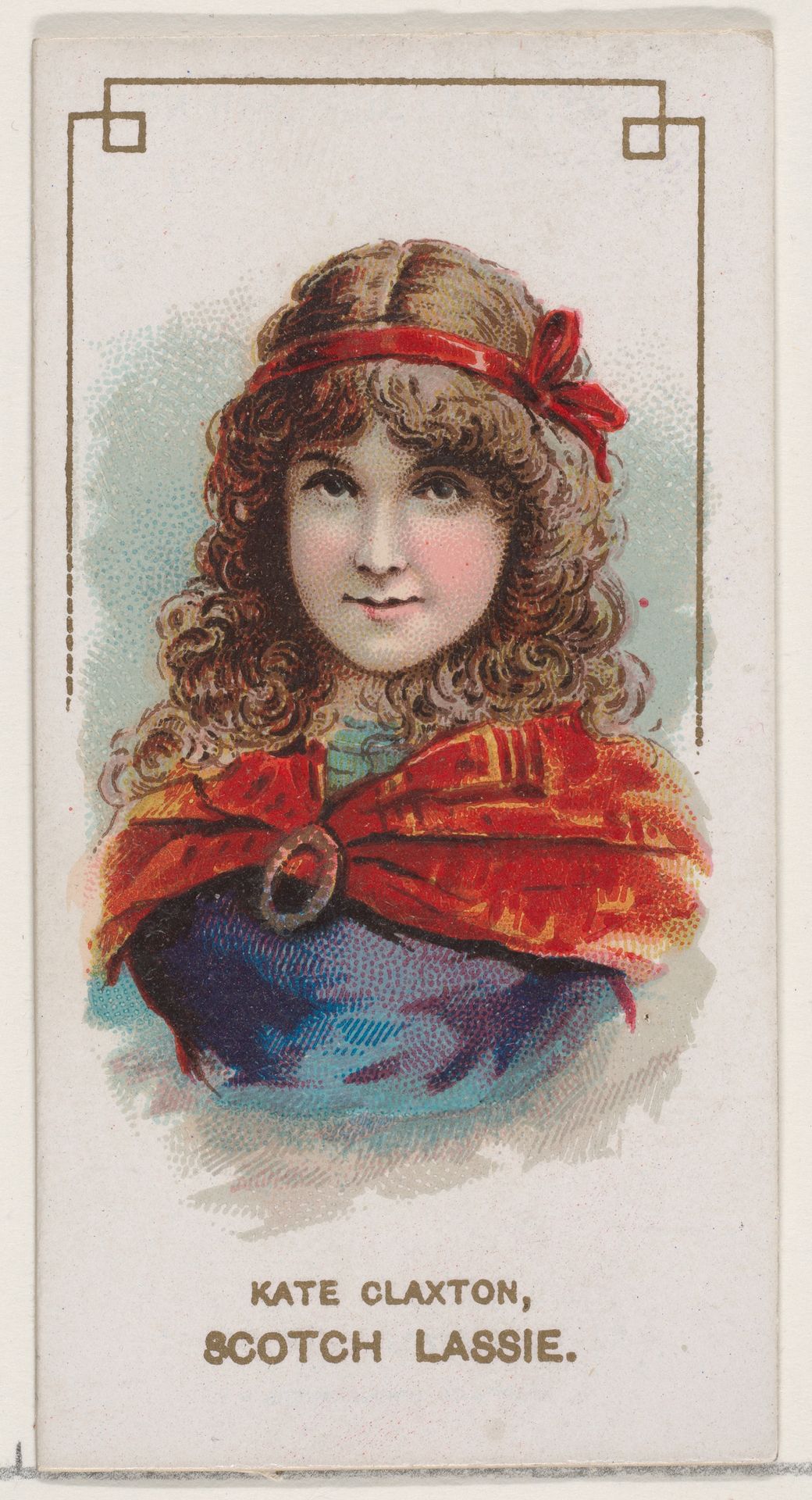
This chromolithograph from around 1870 by W. Duke, Sons & Co. captures Kate Claxton as a ‘Scotch Lassie’ for cigarette cards. It features the actress adorned with a red sash across her chest and a matching ribbon in her hair, both tied with bows. The bows in this image are not merely decorative; they have a long lineage. Think of Cupid and Psyche, where the tying and untying of knots—often represented as bows—symbolize love, union, and the binding together of souls. Consider also how ribbons and bows appear in Renaissance portraits, signifying status and often betrothal or marriage. Here, the bow is repurposed in popular culture, yet it maintains a deep-seated connection to themes of attraction and allure. Its placement on a figure intended to captivate reflects an ongoing, perhaps subconscious, understanding of its power to draw the eye and evoke an emotional response. These symbols resonate deeply within our collective memory, continuing to surface and adapt across generations.
Kate Claxton as Scotch Lassie, from the set Actors and Actresses, Second Series (N71) for Duke brand cigarettes
1888 - 1890

W. Duke, Sons & Co.
1870 - 1920
The Metropolitan Museum of Art
Metropolitan Museum of Art, New York, NYArtwork details
- Medium
- drawing, coloured-pencil, print
- Dimensions
- Sheet: 2 3/4 x 1 1/2 in. (7 x 3.8 cm)
- Location
- Metropolitan Museum of Art, New York, NY
- Copyright
- Public Domain
Tags
Comments
Share your thoughts
About this artwork
This chromolithograph from around 1870 by W. Duke, Sons & Co. captures Kate Claxton as a ‘Scotch Lassie’ for cigarette cards. It features the actress adorned with a red sash across her chest and a matching ribbon in her hair, both tied with bows. The bows in this image are not merely decorative; they have a long lineage. Think of Cupid and Psyche, where the tying and untying of knots—often represented as bows—symbolize love, union, and the binding together of souls. Consider also how ribbons and bows appear in Renaissance portraits, signifying status and often betrothal or marriage. Here, the bow is repurposed in popular culture, yet it maintains a deep-seated connection to themes of attraction and allure. Its placement on a figure intended to captivate reflects an ongoing, perhaps subconscious, understanding of its power to draw the eye and evoke an emotional response. These symbols resonate deeply within our collective memory, continuing to surface and adapt across generations.
Comments
Share your thoughts