1724 - 1726
Makian en Bacan

Frederik Ottens
1675 - 1775Location
RijksmuseumListen to curator's interpretation
Curatorial notes
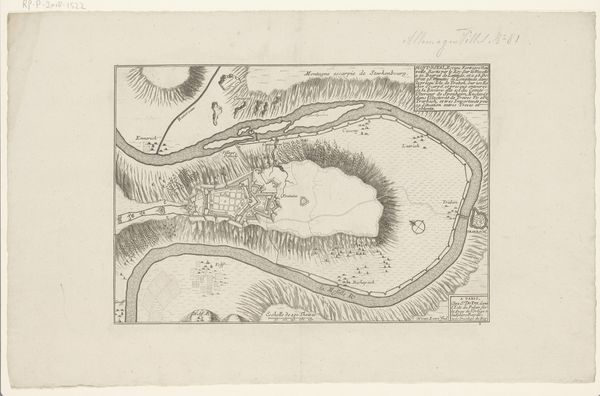
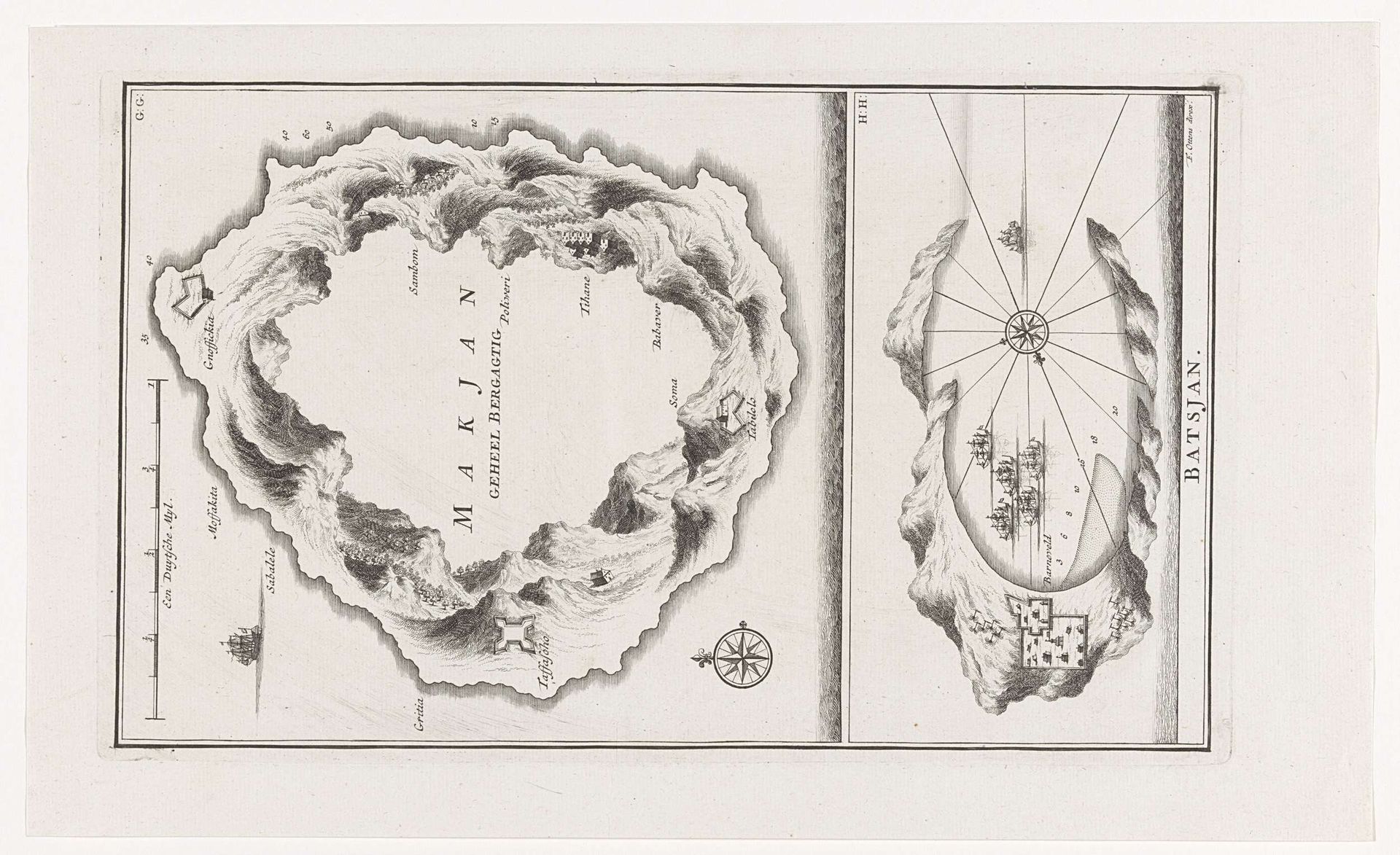
This print of Makian en Bacan was made by Frederik Ottens in the eighteenth century. It shows two islands meticulously mapped, yet it's the compass rose that truly captivates. The compass rose is a potent symbol, far more than a mere directional guide. It's a visual echo of mankind's yearning to chart the unknown, an emblem deeply rooted in ancient navigation traditions. Consider its earlier manifestations – wind roses on medieval portolan charts, their numerous points akin to the ribs of a fan. The compass’ symbolism transcends mere geography, reappearing in different guises across eras. We find it in esoteric emblems, a metaphor for navigating the self. Isn't it curious how this tool of exploration becomes internalized, reflecting our own internal journeys? It's as if the subconscious, that vast uncharted sea within us, demands its own map. This image evokes a certain wanderlust, engaging us at a level that whispers of human courage, curiosity, and the eternal quest for what lies beyond. It is a palimpsest of symbols, echoing our ancestors' dreams and our own.