About this artwork
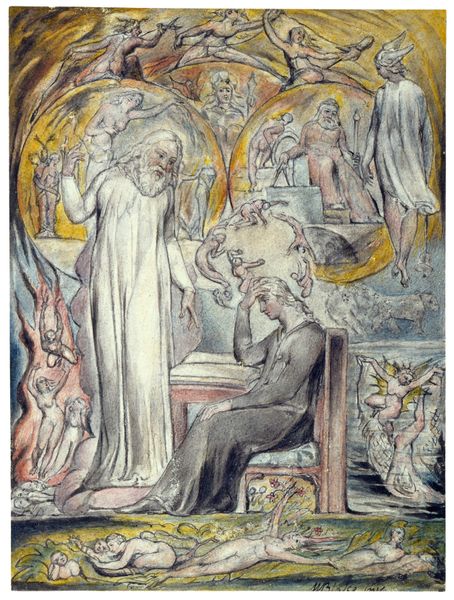
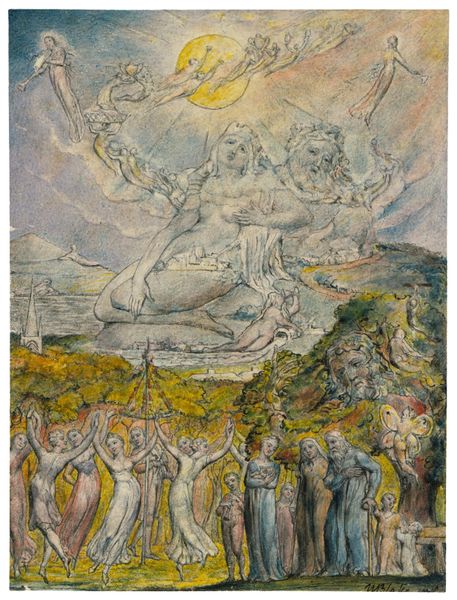
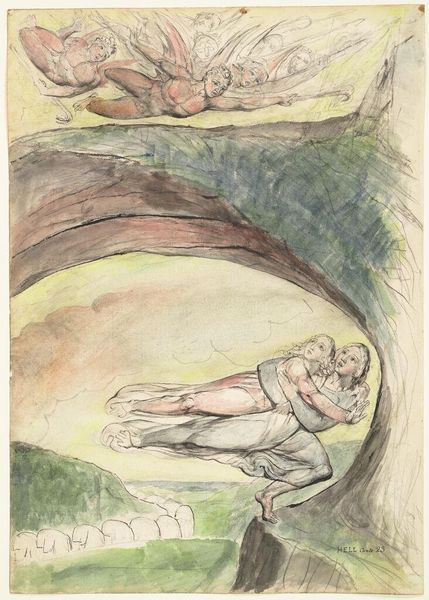
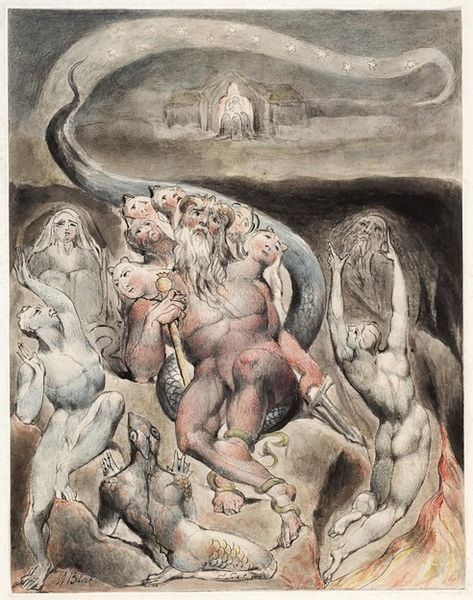
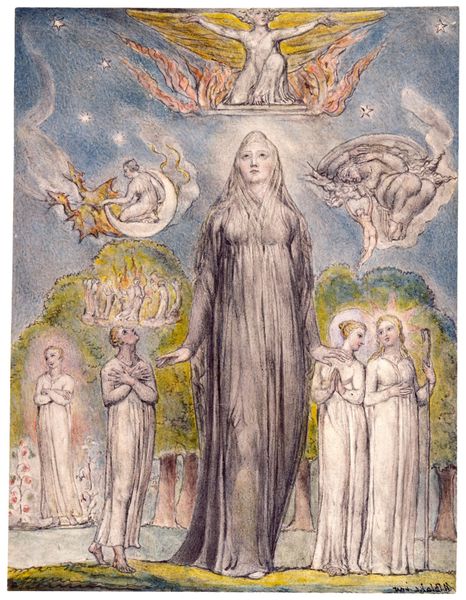
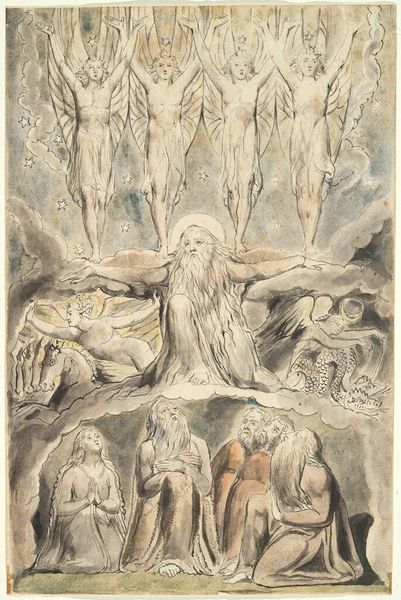
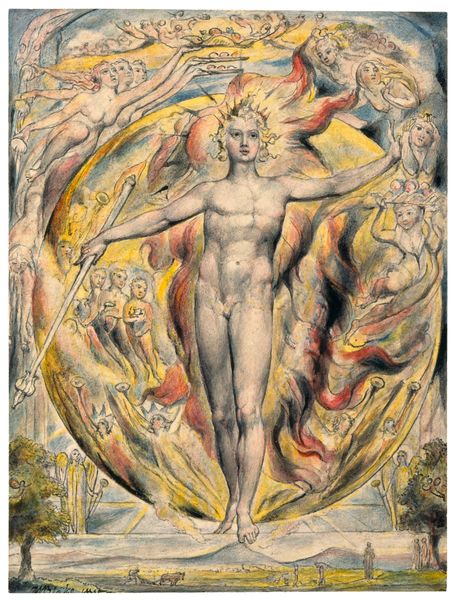
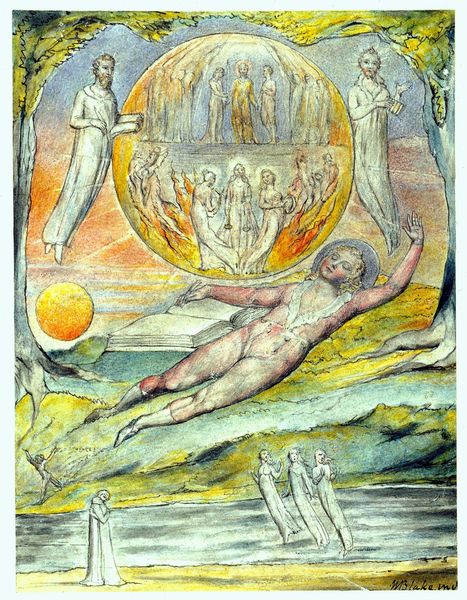
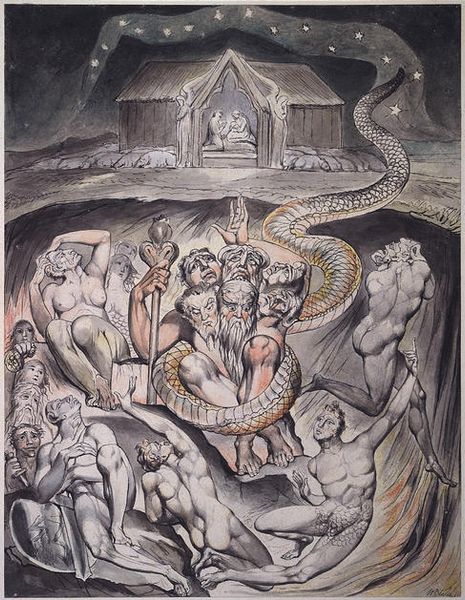
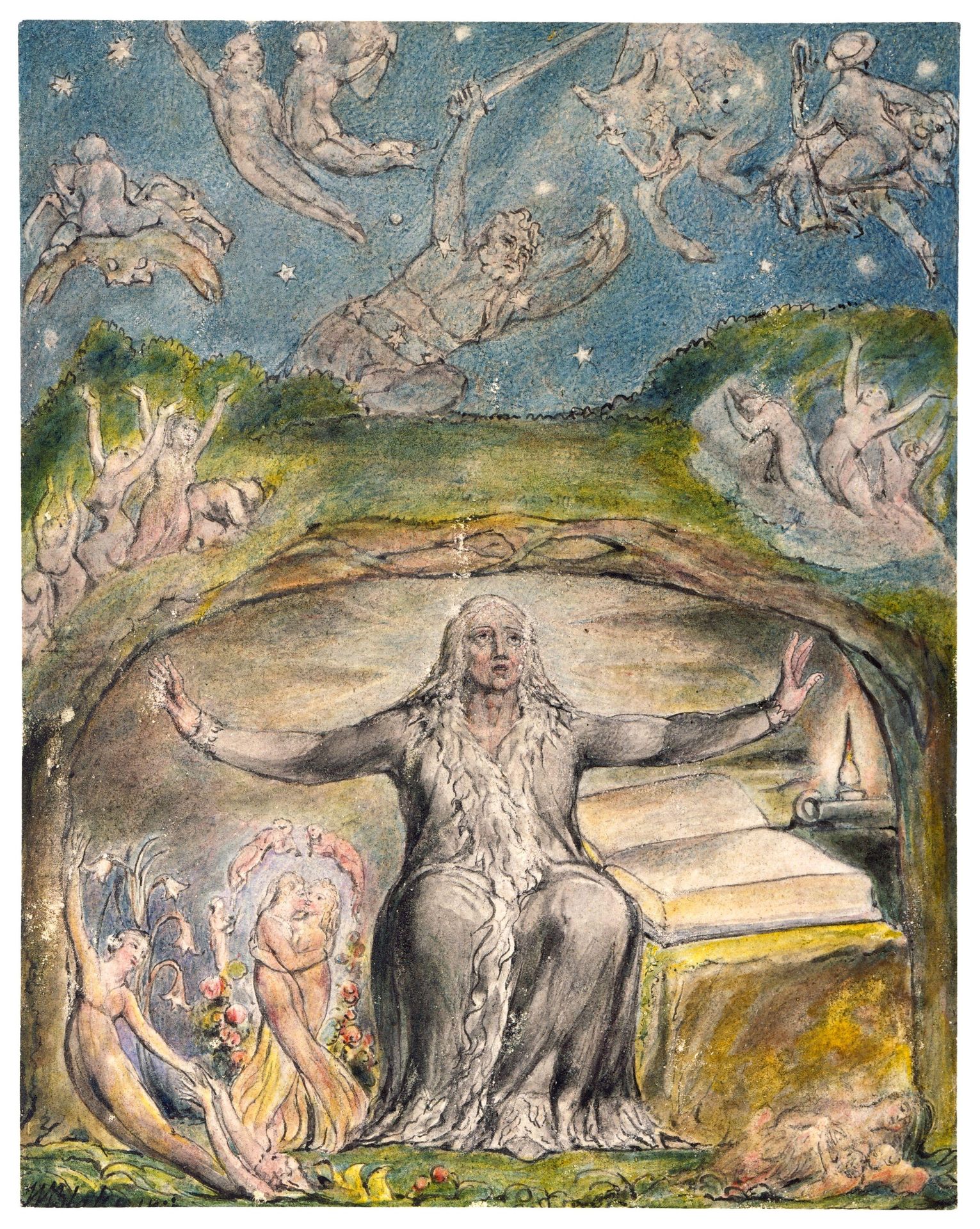
William Blake created this illustration as part of a series inspired by Milton's poems, L'Allegro and Il Penseroso. Blake, living in the late 18th and early 19th centuries, was deeply embedded in a society grappling with shifts in religion and the rise of industrialism. Here, we see a figure, possibly representing melancholy or deep thought, seated with an open book, flanked by celestial beings and ethereal figures. Blake was a nonconformist who often challenged societal norms through his art. Consider how he uses the female form here. Blake often associated women with visionary experiences and spiritual insights, countering the patriarchal norms of his time. He once said, "The imagination is not a state: it is human existence itself." Notice the emotional depth of the central figure, radiating both wisdom and sorrow. It's an introspective journey, one that navigates the intersection of personal identity and universal human experience. Blake invites us to consider the power of imagination and introspection.

Artwork details
- Medium
- drawing, watercolor, ink, pen
- Copyright
- Public domain
Tags
Comments
Share your thoughts
About this artwork
William Blake created this illustration as part of a series inspired by Milton's poems, L'Allegro and Il Penseroso. Blake, living in the late 18th and early 19th centuries, was deeply embedded in a society grappling with shifts in religion and the rise of industrialism. Here, we see a figure, possibly representing melancholy or deep thought, seated with an open book, flanked by celestial beings and ethereal figures. Blake was a nonconformist who often challenged societal norms through his art. Consider how he uses the female form here. Blake often associated women with visionary experiences and spiritual insights, countering the patriarchal norms of his time. He once said, "The imagination is not a state: it is human existence itself." Notice the emotional depth of the central figure, radiating both wisdom and sorrow. It's an introspective journey, one that navigates the intersection of personal identity and universal human experience. Blake invites us to consider the power of imagination and introspection.
Comments
Share your thoughts