About this artwork
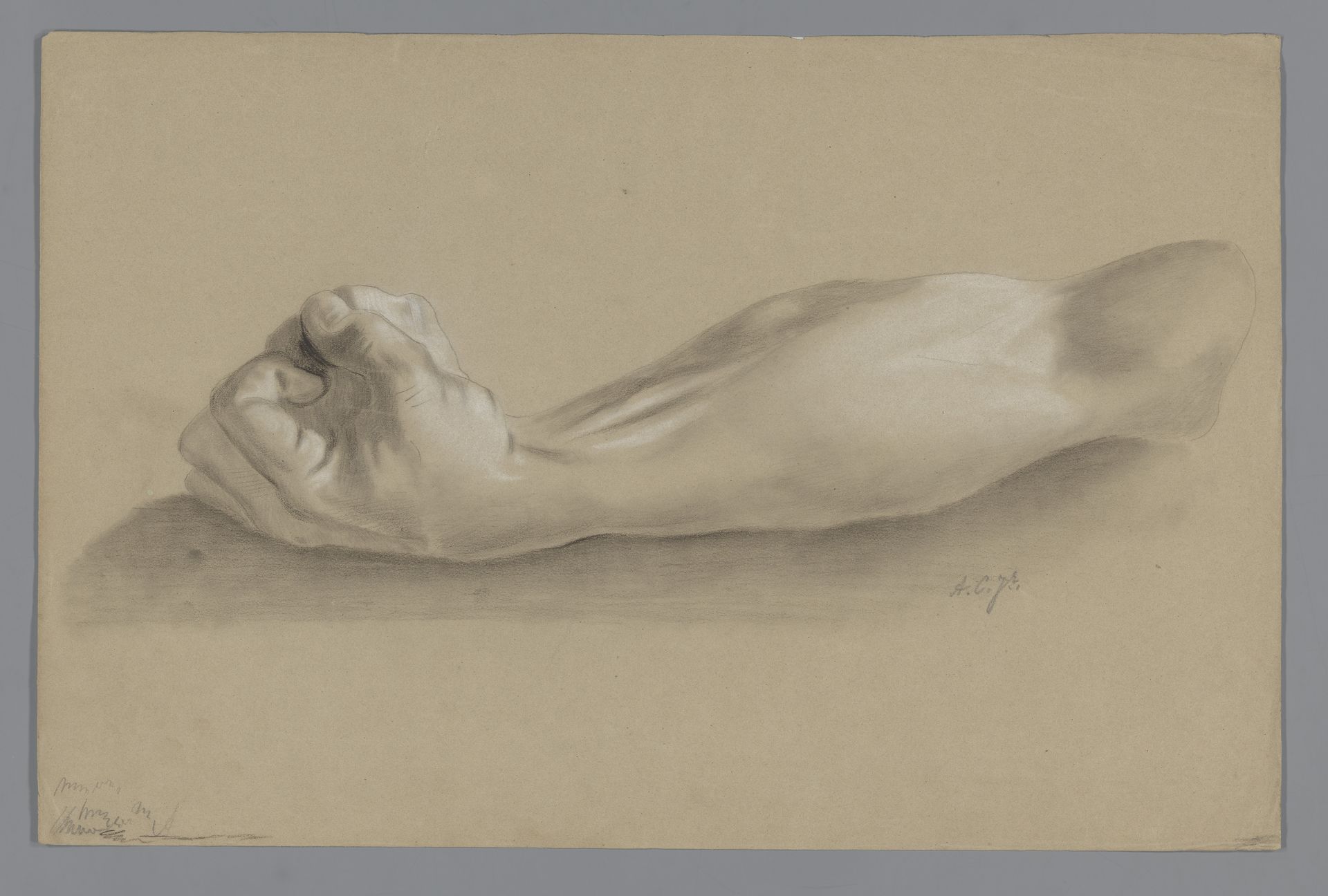
Alexander Cranendoncq created this chalk drawing of a plaster model of an arm with a clenched fist sometime in the first half of the 19th century. During this time in Europe, liberal ideas began to emerge, along with rising tensions and political unrest. Consider the symbolism of a clenched fist. It can be a sign of unity, strength, or resistance. How does this simple drawing relate to the social and political tensions of the period? Did Cranendoncq create this work as an academic exercise, or was there an emotional aspect, a call to action? Academic drawings such as this one were important for the development of an artist's skills. Yet this work may capture a moment of personal expression, preserving a sentiment of defiance. The drawing invites us to reflect on the role of the individual within society.
Gipsmodel van een arm met gebalde vuist
c. 1800 - 1900

Alexander Cranendoncq
1799 - 1869Location
RijksmuseumArtwork details
- Medium
- drawing, dry-media, charcoal
- Dimensions
- height 315 mm, width 480 mm
- Location
- Rijksmuseum
- Copyright
- Rijks Museum: Open Domain
Tags
Comments
Share your thoughts
About this artwork
Alexander Cranendoncq created this chalk drawing of a plaster model of an arm with a clenched fist sometime in the first half of the 19th century. During this time in Europe, liberal ideas began to emerge, along with rising tensions and political unrest. Consider the symbolism of a clenched fist. It can be a sign of unity, strength, or resistance. How does this simple drawing relate to the social and political tensions of the period? Did Cranendoncq create this work as an academic exercise, or was there an emotional aspect, a call to action? Academic drawings such as this one were important for the development of an artist's skills. Yet this work may capture a moment of personal expression, preserving a sentiment of defiance. The drawing invites us to reflect on the role of the individual within society.
Comments
Share your thoughts