About this artwork
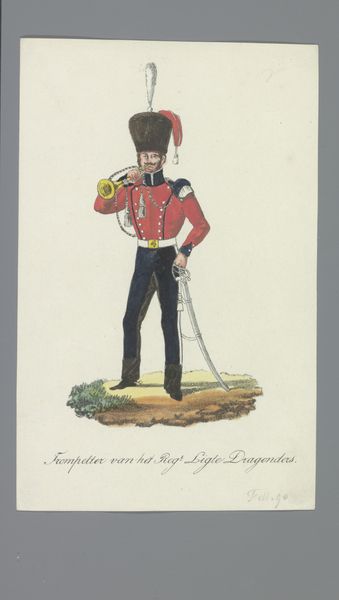
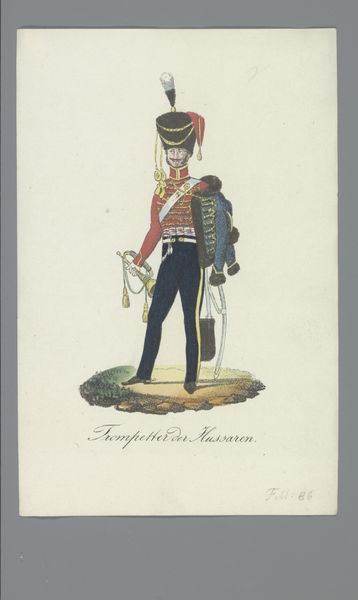
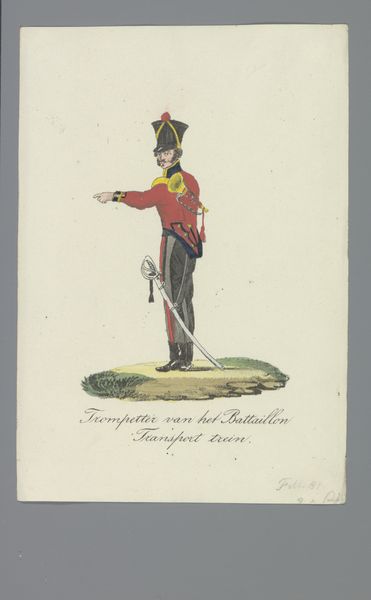
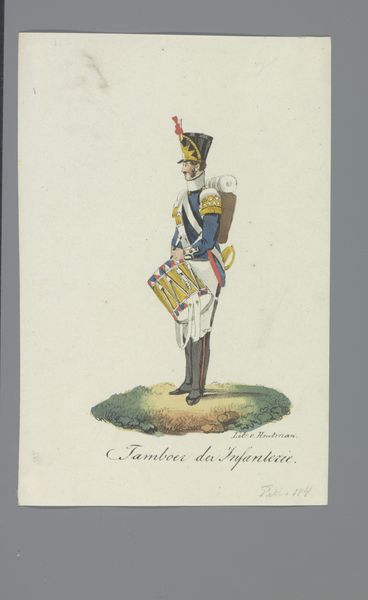
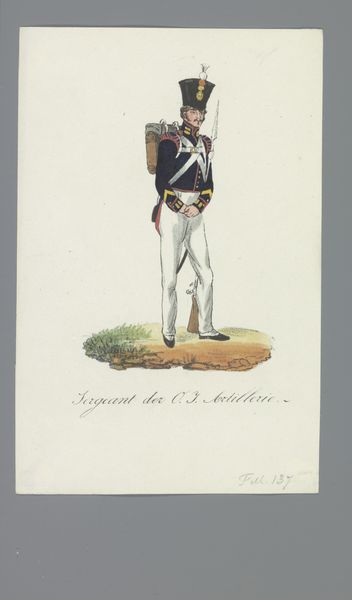
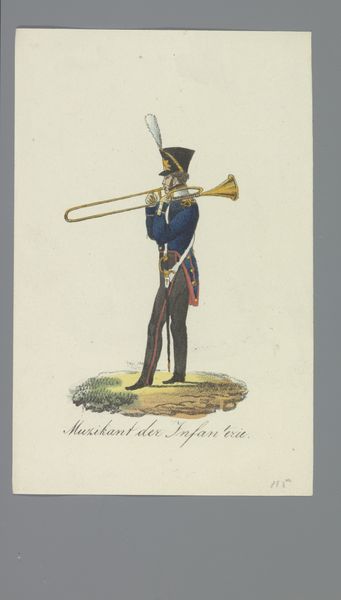
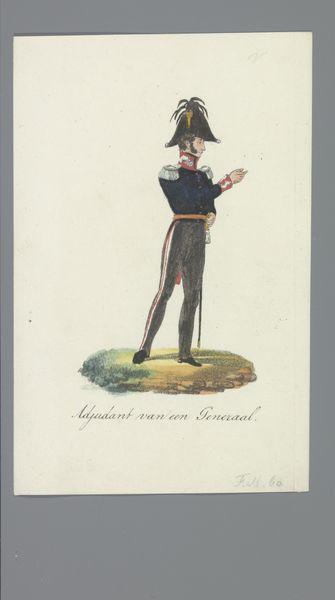
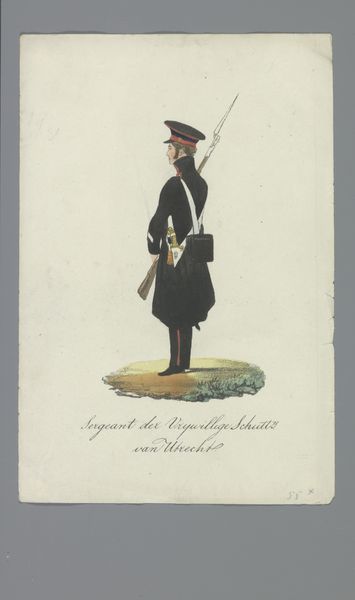
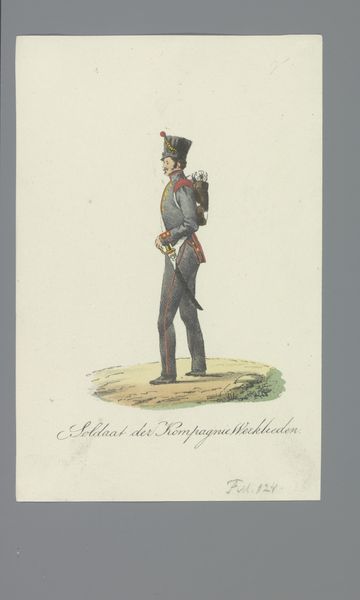
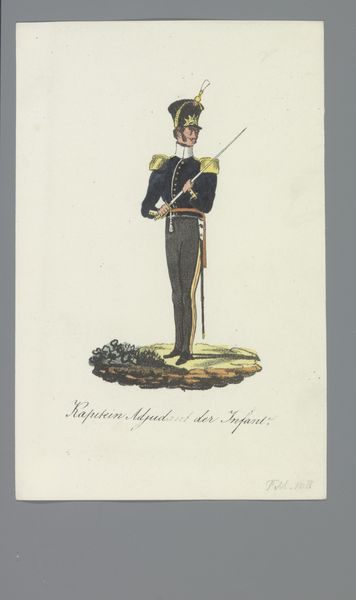
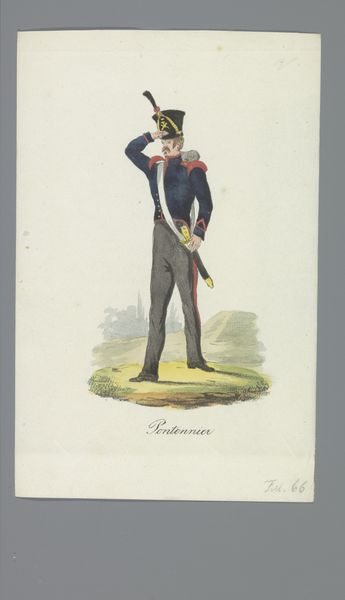
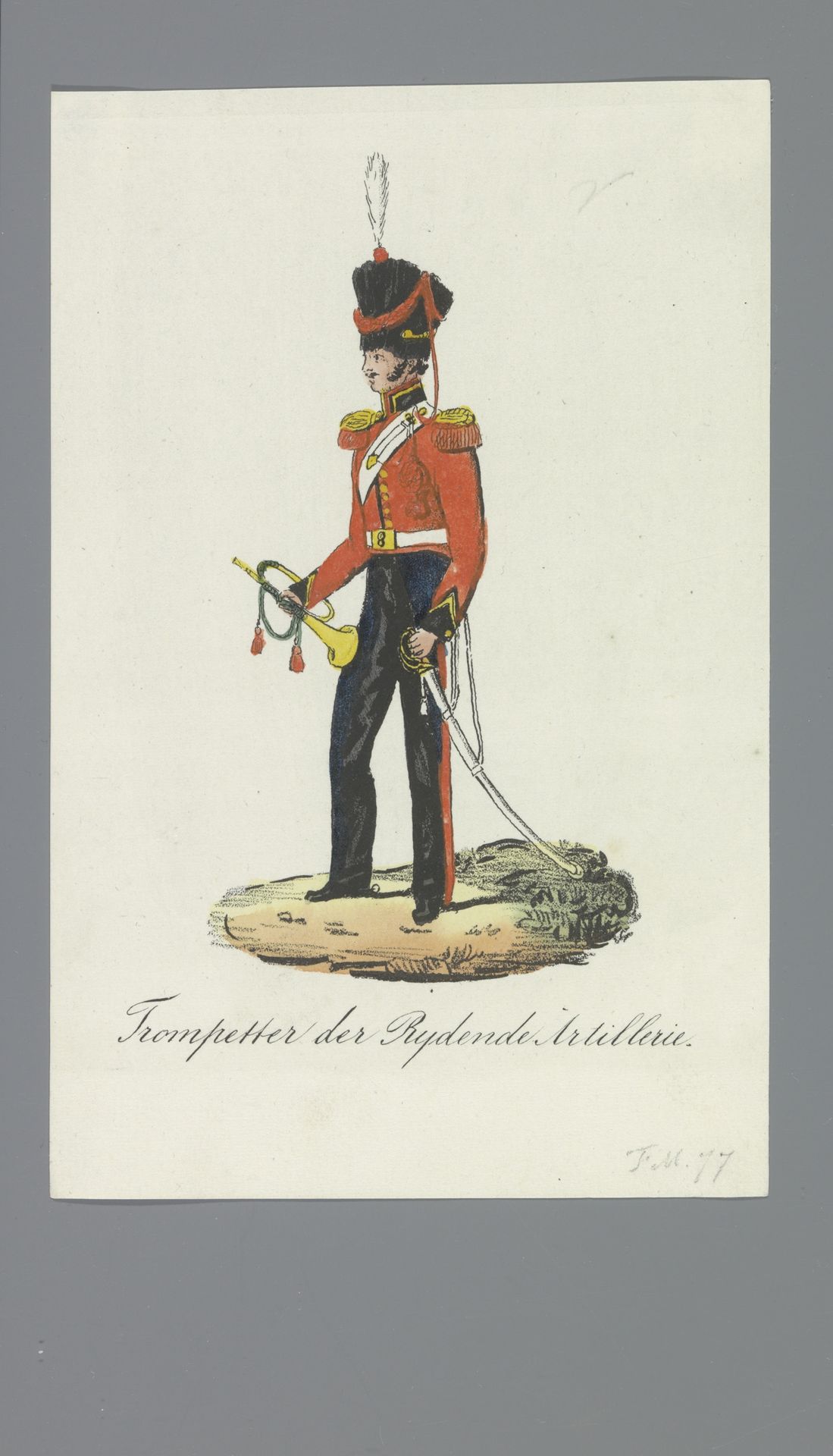
Albertus Verhoesen created this small drawing entitled 'Trompetter der Rijdende Artillerie'. The vertical composition centers on a trumpeter whose figure is constructed with a network of fine lines. Notice how the artist uses line to define the contours of the figure as well as to suggest the folds and textures of the uniform. Verhoesen’s approach is deeply rooted in a semiotic tradition, where each color and form signifies specific social codes and hierarchies. Red, prominently displayed, symbolizes valor and authority. The gleam of gold on the trumpet and epaulettes represents status. Even the white plume atop the trumpeter's hat serves as a visual marker of his role. The figure stands on a small patch of land. This compositional choice grounds the figure, but it also elevates him, suggesting a stage. The artist underscores the theatricality of military display by rendering the figure as if on exhibit. In the context of its time, this work serves not merely as a portrait but as a study in the visual rhetoric of power and identity.
Trompetter der Rijdende Artillerie
1835 - 1850

Albertus Verhoesen
1806 - 1881Location
RijksmuseumArtwork details
- Medium
- drawing, paper, ink
- Dimensions
- height 170 mm, width 110 mm
- Location
- Rijksmuseum
- Copyright
- Rijks Museum: Open Domain
Tags
Comments
Share your thoughts
About this artwork
Albertus Verhoesen created this small drawing entitled 'Trompetter der Rijdende Artillerie'. The vertical composition centers on a trumpeter whose figure is constructed with a network of fine lines. Notice how the artist uses line to define the contours of the figure as well as to suggest the folds and textures of the uniform. Verhoesen’s approach is deeply rooted in a semiotic tradition, where each color and form signifies specific social codes and hierarchies. Red, prominently displayed, symbolizes valor and authority. The gleam of gold on the trumpet and epaulettes represents status. Even the white plume atop the trumpeter's hat serves as a visual marker of his role. The figure stands on a small patch of land. This compositional choice grounds the figure, but it also elevates him, suggesting a stage. The artist underscores the theatricality of military display by rendering the figure as if on exhibit. In the context of its time, this work serves not merely as a portrait but as a study in the visual rhetoric of power and identity.
Comments
Share your thoughts