About this artwork
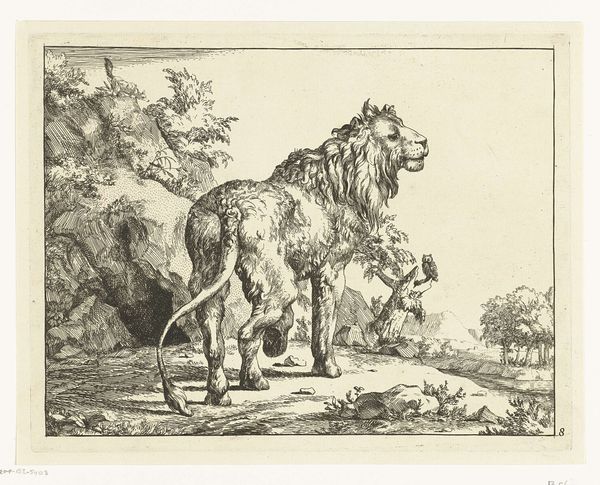
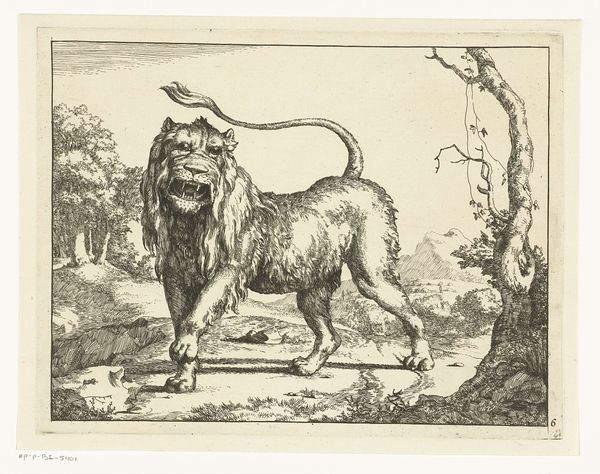
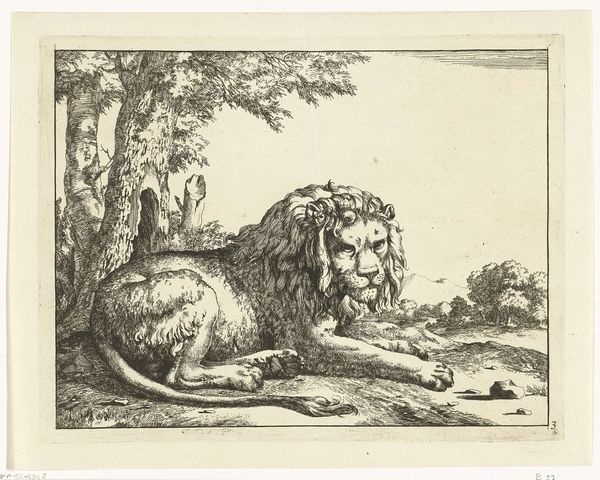
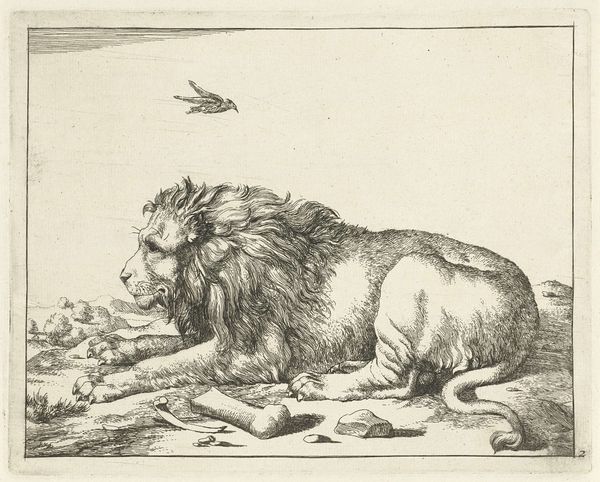
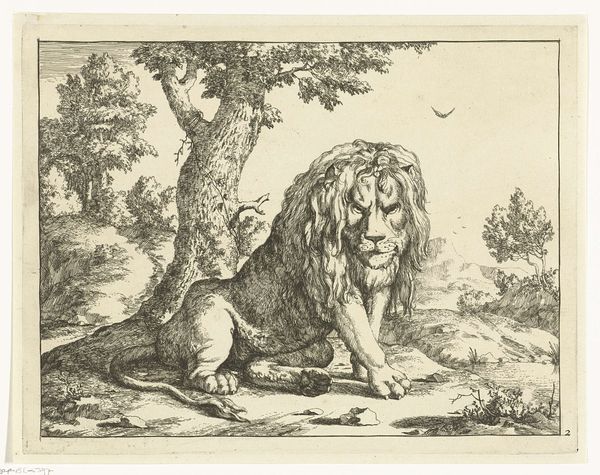
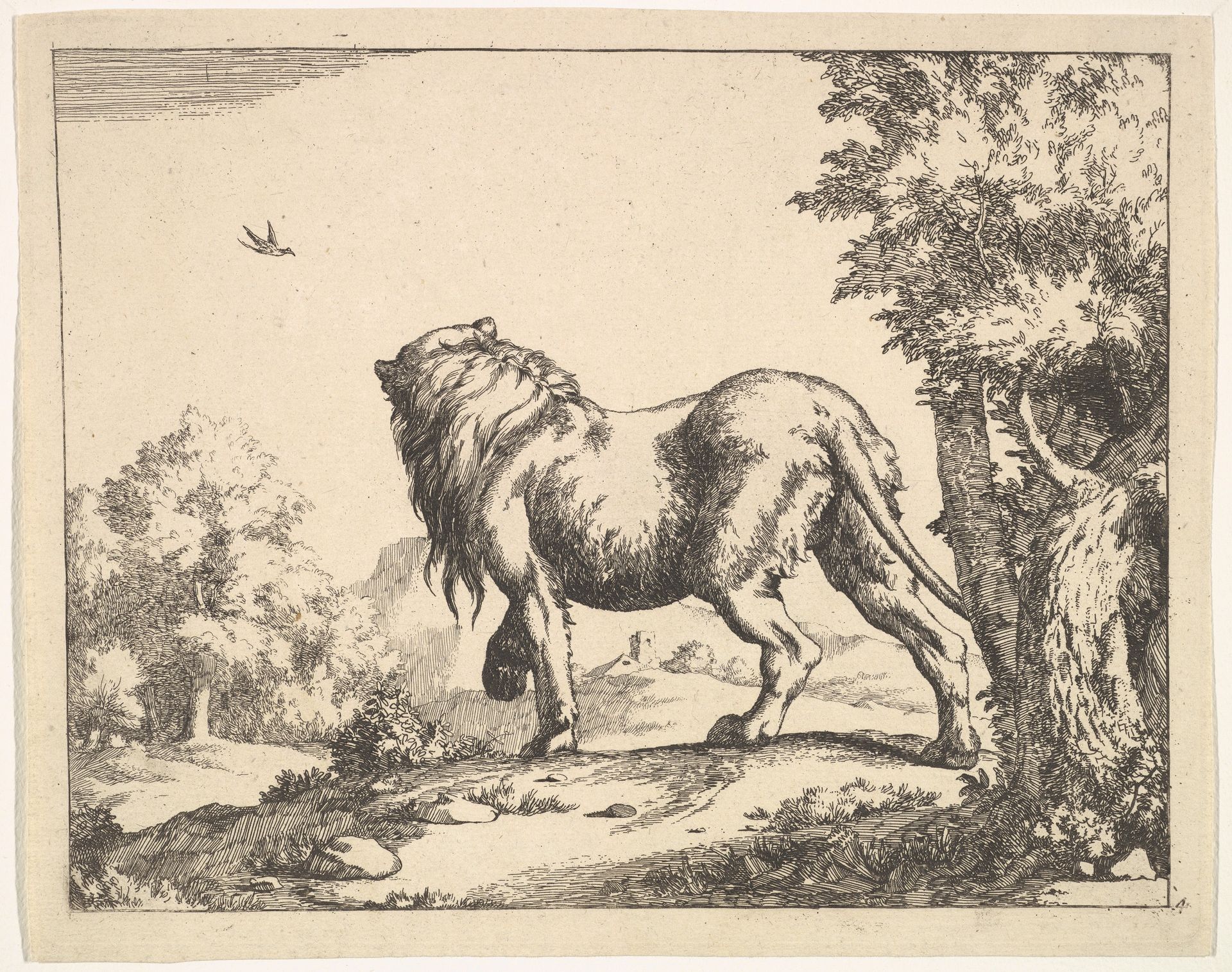
Marcus de Bye created this etching, called "The Lions," one of eight plates, in the Dutch Republic, sometime in the mid-17th century. It depicts a lion looking upwards toward a bird in flight. Lions, of course, were not native to the Netherlands, so de Bye would have had to study them in captivity, or rely on the work of other artists. In either case, his depiction is far from a realistic one: the lion is placed in an identifiably Dutch landscape. The Dutch Golden Age was a period of unprecedented economic and cultural growth. The Dutch East India Company brought an influx of exotic commodities and stimulated the growth of a wealthy merchant class. Artists like de Bye found themselves in a competitive market, in which they had to produce works of art that catered to the tastes of this new moneyed class. It has been suggested that prints such as these may have been made for artists to use as inspiration, or simply as decorative novelties.
The Lions (one of eight plates)
1659 - 1669


Artwork details
- Medium
- drawing, print, etching, engraving
- Dimensions
- sheet: 7 1/8 x 8 15/16 in. (18.1 x 22.7 cm) plate: 6 7/8 x 8 13/16 in. (17.5 x 22.4 cm)
- Location
- Metropolitan Museum of Art, New York, NY
- Copyright
- Public Domain
Tags
drawing
ink drawing
narrative-art
baroque
animal
etching
landscape
figuration
engraving
Comments
Be the first to share your thoughts about this work.
About this artwork
Marcus de Bye created this etching, called "The Lions," one of eight plates, in the Dutch Republic, sometime in the mid-17th century. It depicts a lion looking upwards toward a bird in flight. Lions, of course, were not native to the Netherlands, so de Bye would have had to study them in captivity, or rely on the work of other artists. In either case, his depiction is far from a realistic one: the lion is placed in an identifiably Dutch landscape. The Dutch Golden Age was a period of unprecedented economic and cultural growth. The Dutch East India Company brought an influx of exotic commodities and stimulated the growth of a wealthy merchant class. Artists like de Bye found themselves in a competitive market, in which they had to produce works of art that catered to the tastes of this new moneyed class. It has been suggested that prints such as these may have been made for artists to use as inspiration, or simply as decorative novelties.
Comments
Be the first to share your thoughts about this work.