About this artwork
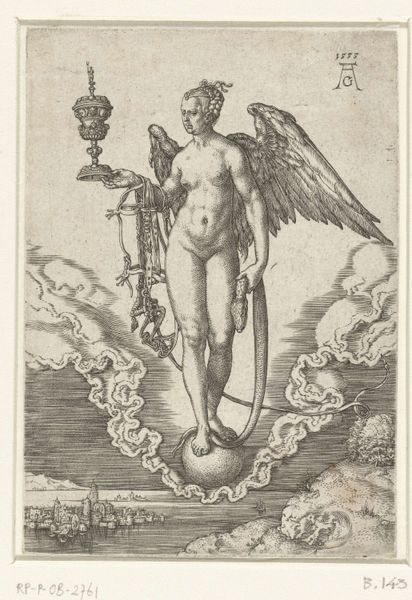
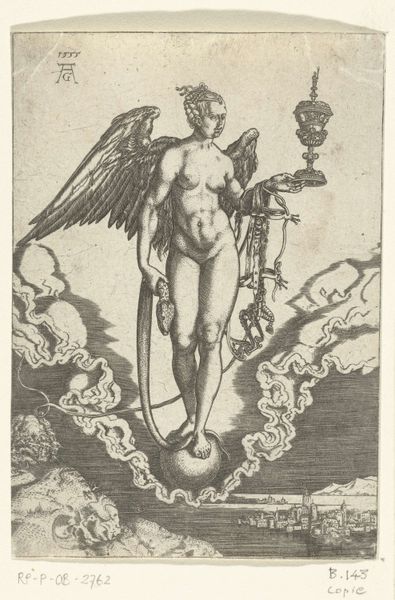
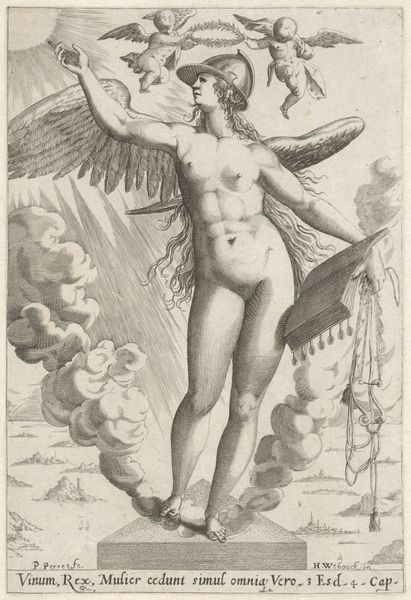
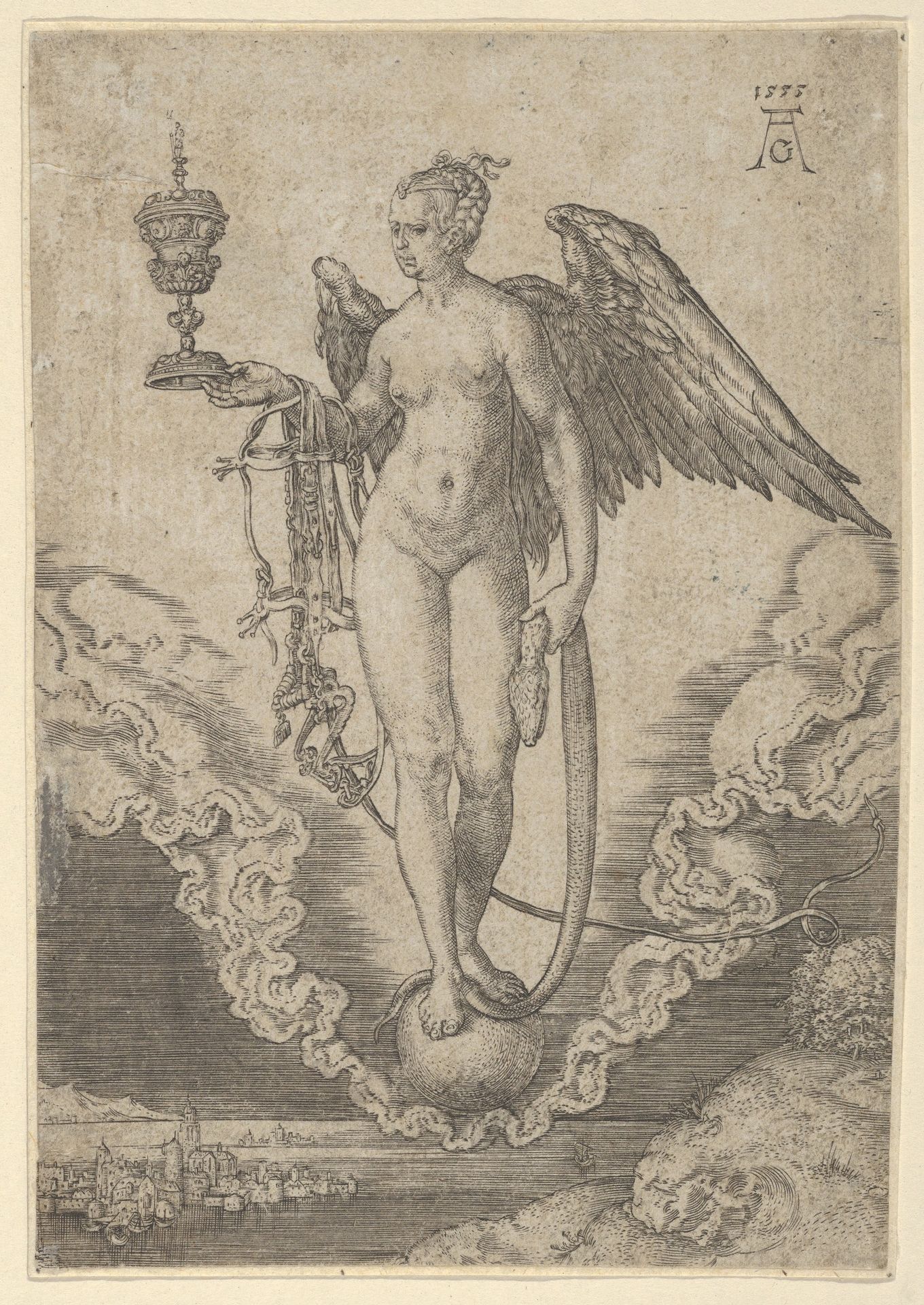
Heinrich Aldegrever etched "Fortune" in 1555, presenting us with a winged figure standing precariously on a sphere, holding both a chalice and a serpent. These symbols are deeply rooted in our cultural psyche. The chalice has long been associated with both spiritual grace and earthly indulgence, while the serpent embodies primal instincts. This duality encapsulates the capricious nature of fortune, a force that can elevate or corrupt. The serpent entwined in her arm reminds us of the caduceus, an ancient symbol that has traveled across time and cultures, initially representing commerce and negotiation in ancient Greece, and now symbolizing medicine. Its transformation speaks to our collective fascination with symbols of transformation, and the subconscious understanding that fortune, much like health, can be both a blessing and a curse. Aldegrever presents Fortune not as a benevolent goddess, but as an ambivalent force. This resonates with the ever-present human struggle to reconcile our aspirations with our fears, our desires with our moral compass. This engraving encapsulates the cyclical, ever-shifting nature of fortune.
Fortune
1555

Heinrich Aldegrever
1502 - 1561
The Metropolitan Museum of Art
Metropolitan Museum of Art, New York, NYArtwork details
- Medium
- drawing, print, metal, engraving
- Dimensions
- Sheet: 3 1/8 × 4 1/2 in. (8 × 11.4 cm)
- Location
- Metropolitan Museum of Art, New York, NY
- Copyright
- Public Domain
Tags
drawing
allegory
metal
mannerism
figuration
history-painting
nude
engraving
Comments
Be the first to share your thoughts about this work.
About this artwork
Heinrich Aldegrever etched "Fortune" in 1555, presenting us with a winged figure standing precariously on a sphere, holding both a chalice and a serpent. These symbols are deeply rooted in our cultural psyche. The chalice has long been associated with both spiritual grace and earthly indulgence, while the serpent embodies primal instincts. This duality encapsulates the capricious nature of fortune, a force that can elevate or corrupt. The serpent entwined in her arm reminds us of the caduceus, an ancient symbol that has traveled across time and cultures, initially representing commerce and negotiation in ancient Greece, and now symbolizing medicine. Its transformation speaks to our collective fascination with symbols of transformation, and the subconscious understanding that fortune, much like health, can be both a blessing and a curse. Aldegrever presents Fortune not as a benevolent goddess, but as an ambivalent force. This resonates with the ever-present human struggle to reconcile our aspirations with our fears, our desires with our moral compass. This engraving encapsulates the cyclical, ever-shifting nature of fortune.
Comments
Be the first to share your thoughts about this work.