About this artwork
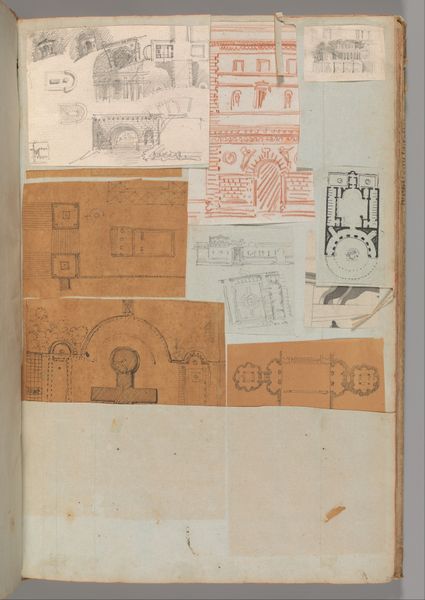
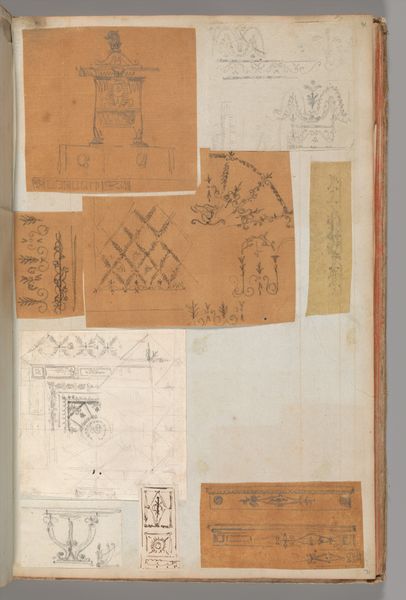
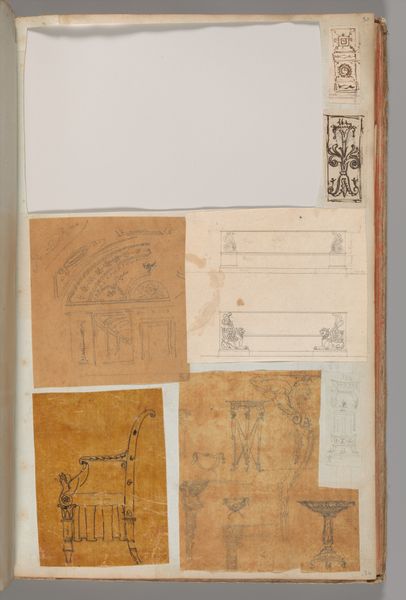
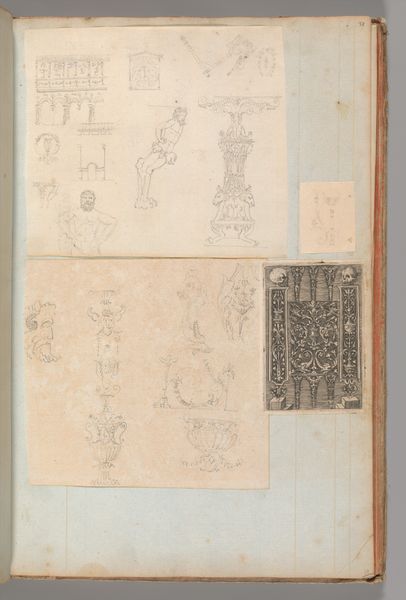
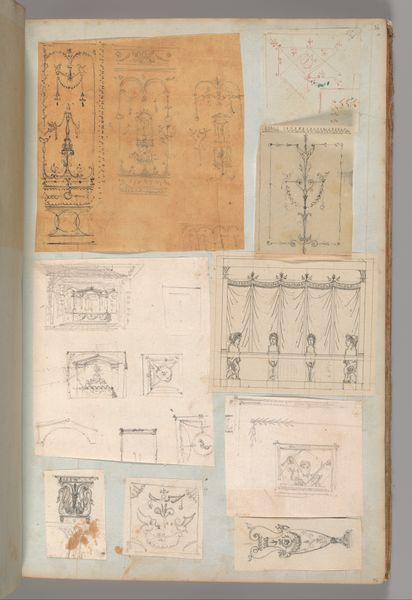
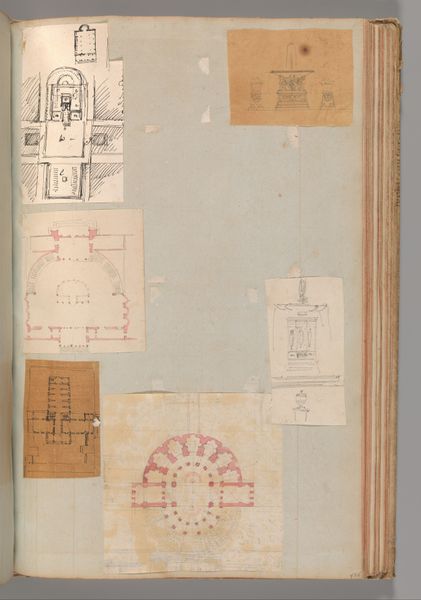
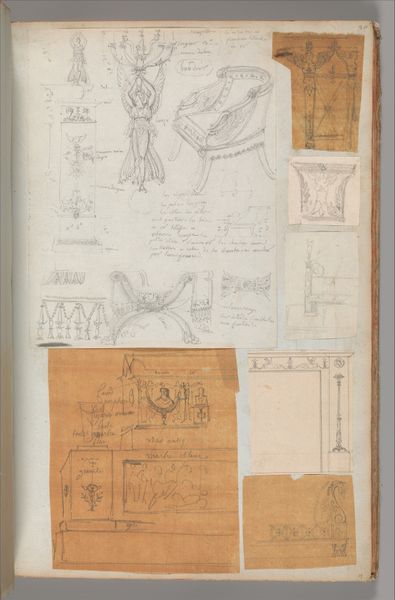
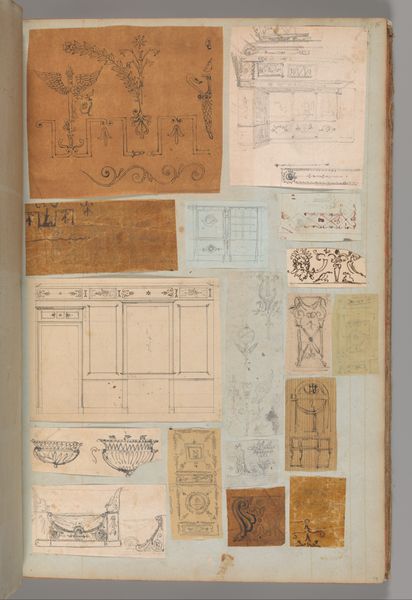
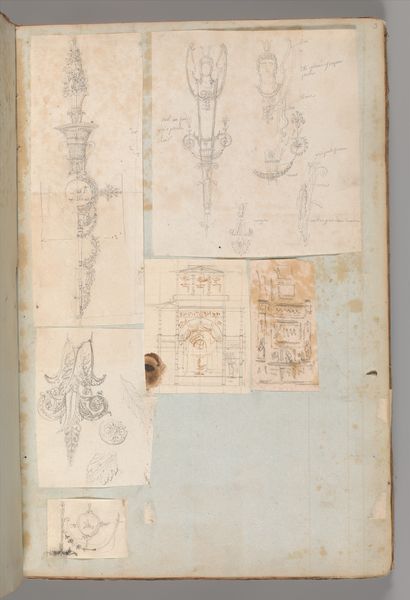
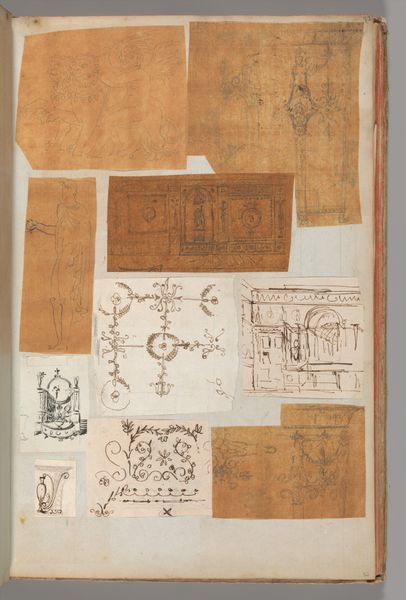
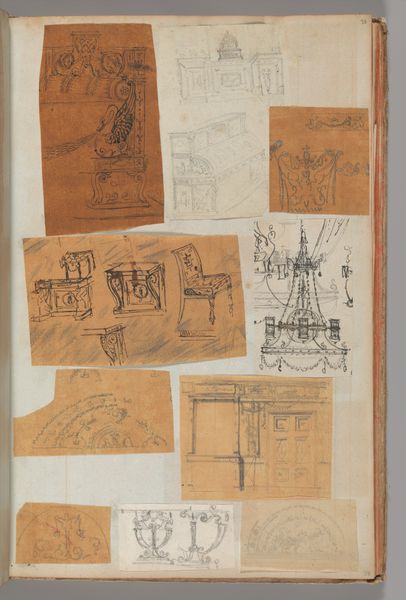
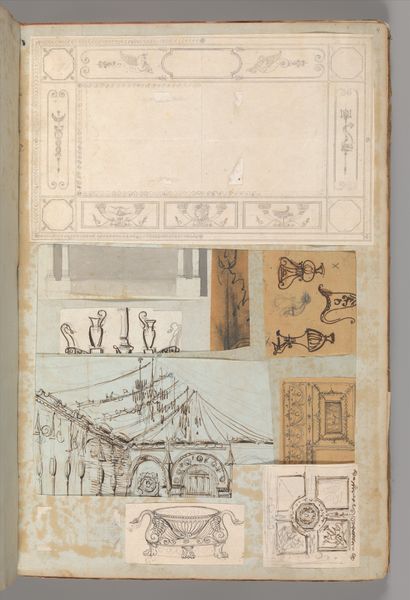
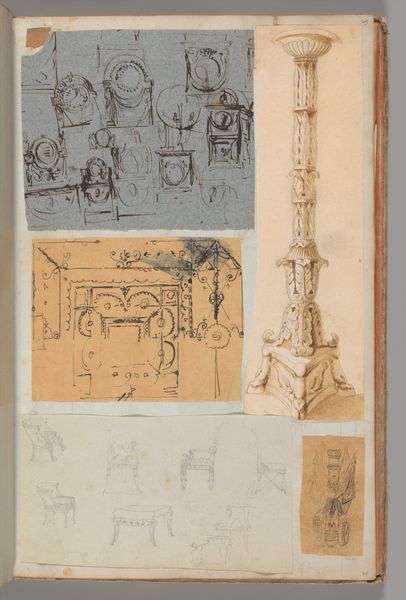
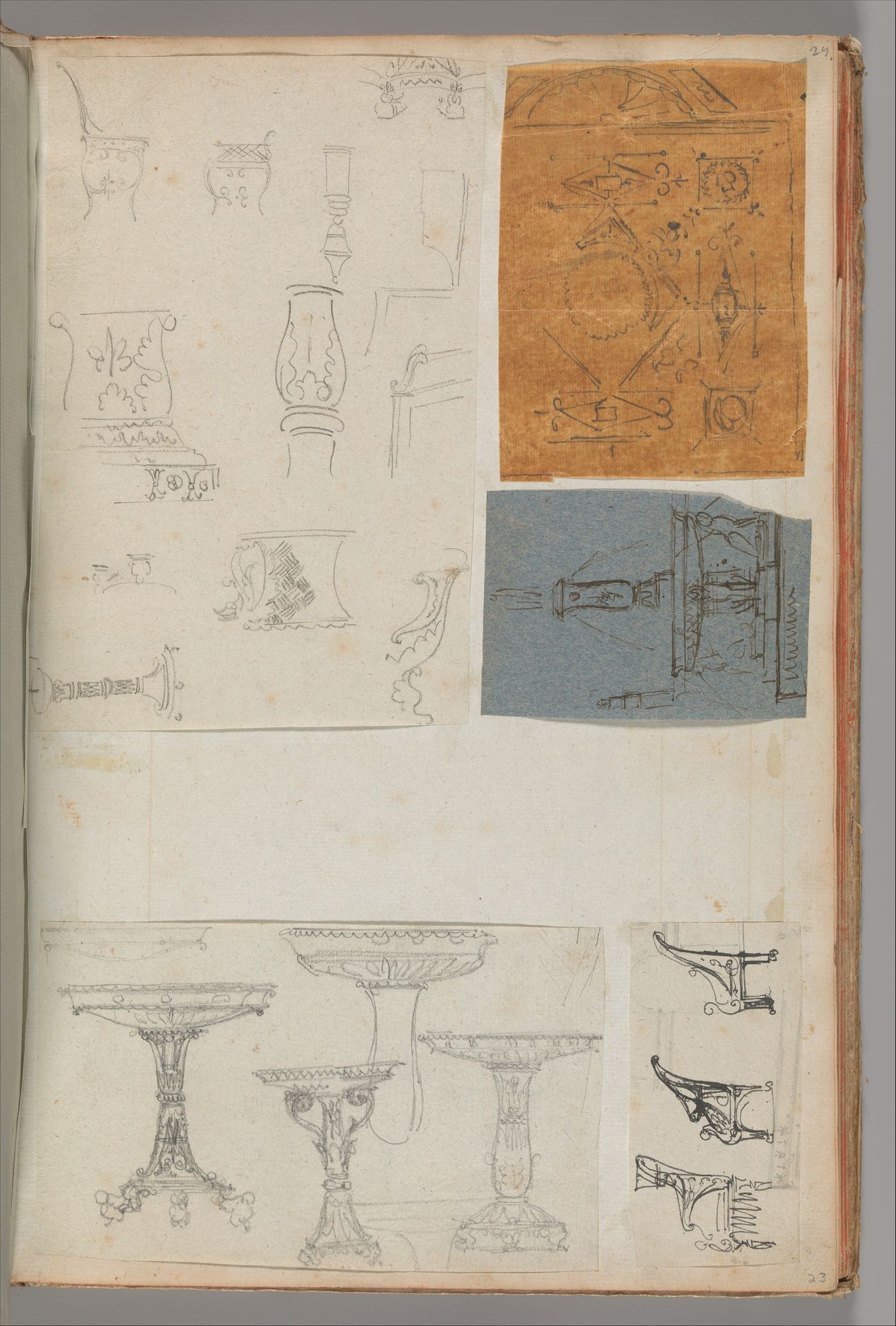
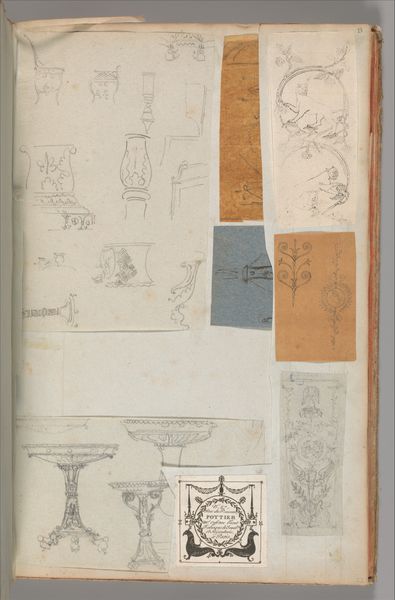
This page of a scrapbook by Charles Percier presents a collection of drawings and prints depicting architectural elements, interiors, furniture, and various objects, capturing the Neoclassical style of the late 18th and early 19th centuries. Here, the recurring motif is ornamentation, manifesting as stylized foliage, geometric patterns, and classical figures, echoing motifs from ancient Greece and Rome. Observe the tables. Their legs are adorned with acanthus leaves, a symbol of enduring life and regeneration, frequently employed since antiquity. This motif transcends time; from its presence in the Corinthian capitals of ancient temples to its re-emergence during the Renaissance and now in Percier's designs, it represents a connection to the past. It's a psychological bridge, linking us to the collective memory of human civilization. The emotional power lies in the symbolic language of these forms. The acanthus leaves, meticulously rendered, evoke a sense of classical grandeur and order, tapping into our subconscious desires for stability and harmony. This symbol resurfaces, evolves, and adapts, continuously carrying echoes of history.
Page from a Scrapbook containing Drawings and Several Prints of Architecture, Interiors, Furniture and Other Objects
1795 - 1805
Artwork details
- Medium
- drawing, print, paper, ink, pencil, architecture
- Dimensions
- 15 11/16 x 10 in. (39.8 x 25.4 cm)
- Location
- Metropolitan Museum of Art, New York, NY
- Copyright
- Public Domain
Tags
Comments
Share your thoughts
About this artwork
This page of a scrapbook by Charles Percier presents a collection of drawings and prints depicting architectural elements, interiors, furniture, and various objects, capturing the Neoclassical style of the late 18th and early 19th centuries. Here, the recurring motif is ornamentation, manifesting as stylized foliage, geometric patterns, and classical figures, echoing motifs from ancient Greece and Rome. Observe the tables. Their legs are adorned with acanthus leaves, a symbol of enduring life and regeneration, frequently employed since antiquity. This motif transcends time; from its presence in the Corinthian capitals of ancient temples to its re-emergence during the Renaissance and now in Percier's designs, it represents a connection to the past. It's a psychological bridge, linking us to the collective memory of human civilization. The emotional power lies in the symbolic language of these forms. The acanthus leaves, meticulously rendered, evoke a sense of classical grandeur and order, tapping into our subconscious desires for stability and harmony. This symbol resurfaces, evolves, and adapts, continuously carrying echoes of history.
Comments
Share your thoughts