About this artwork
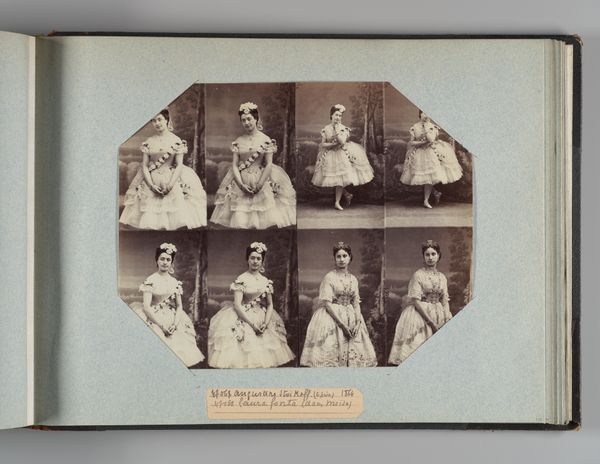
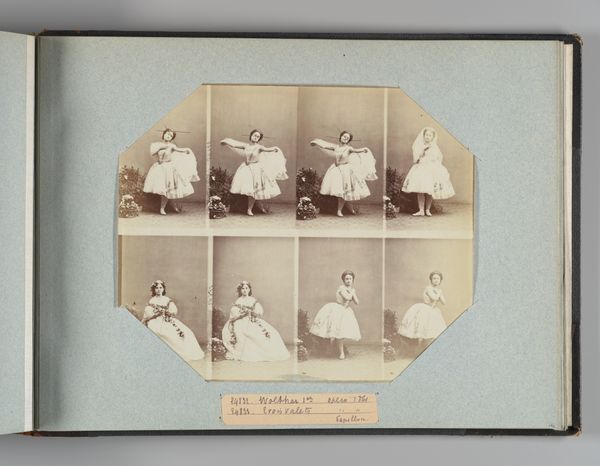
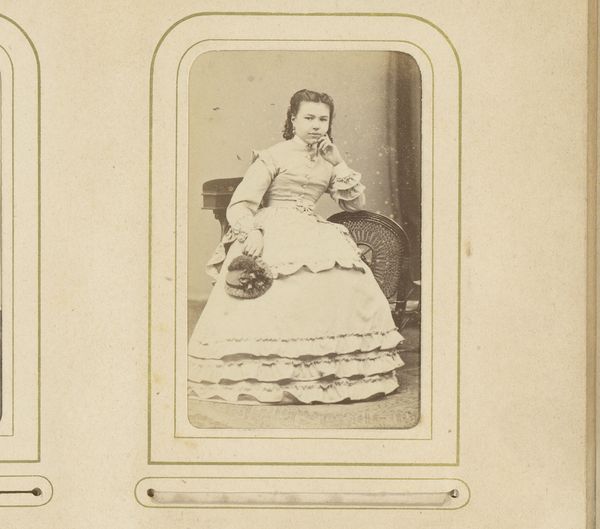
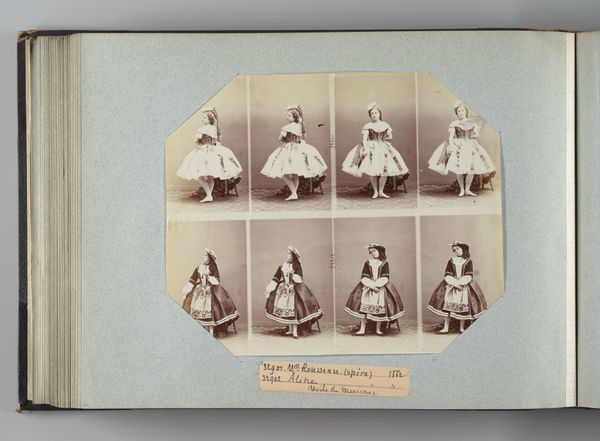
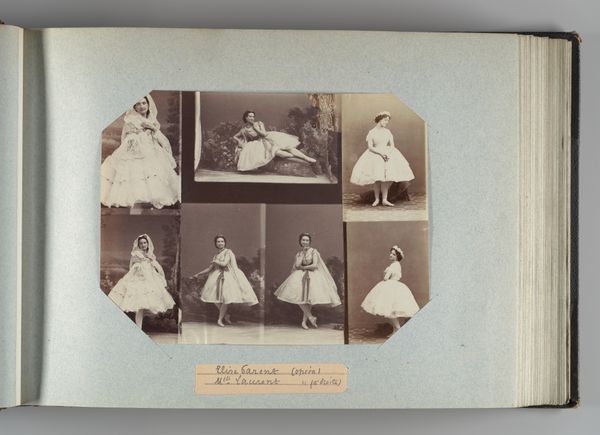
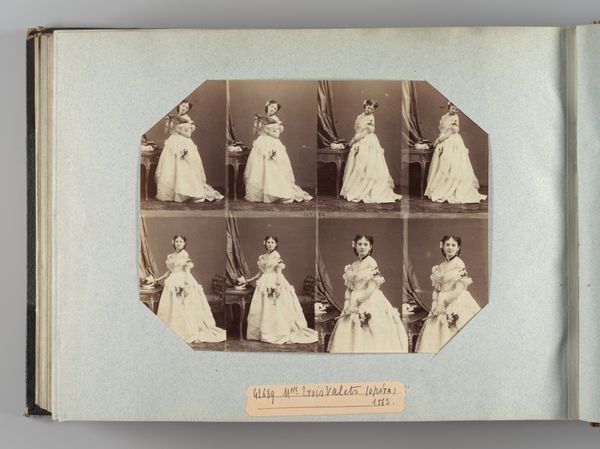
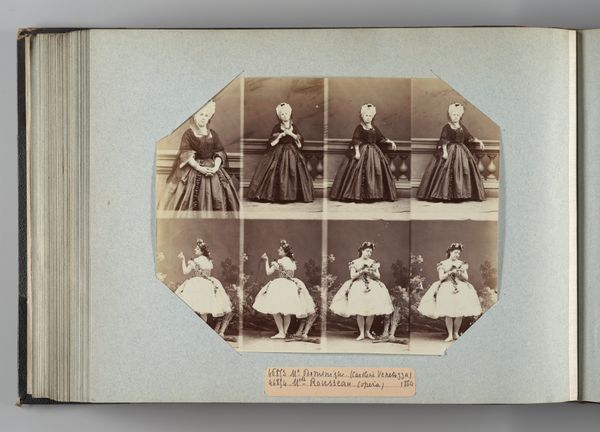
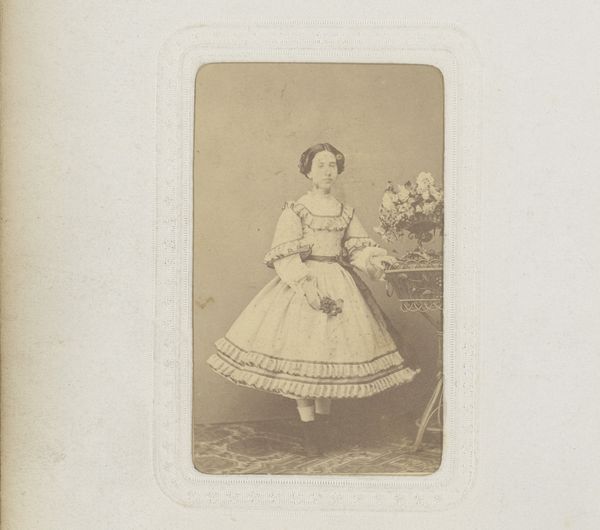
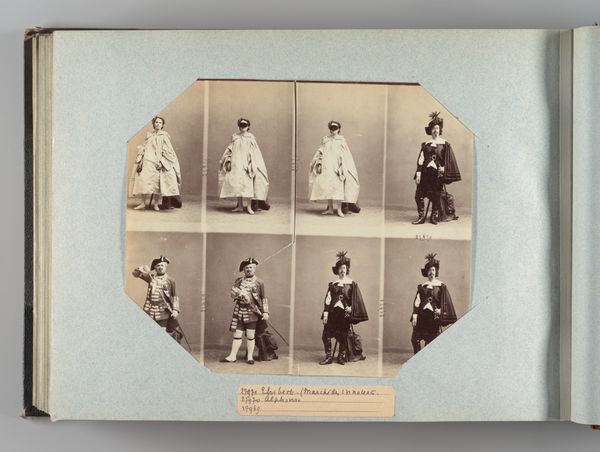
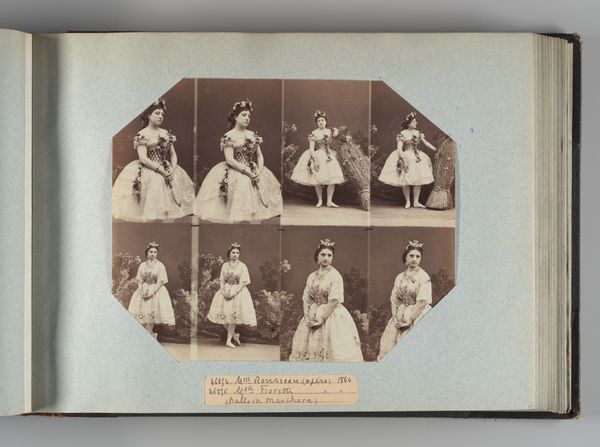
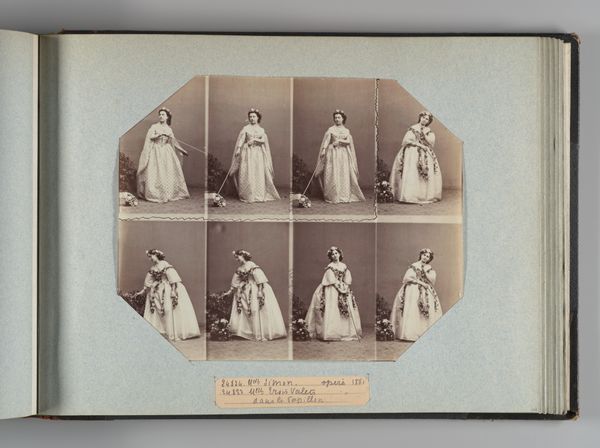
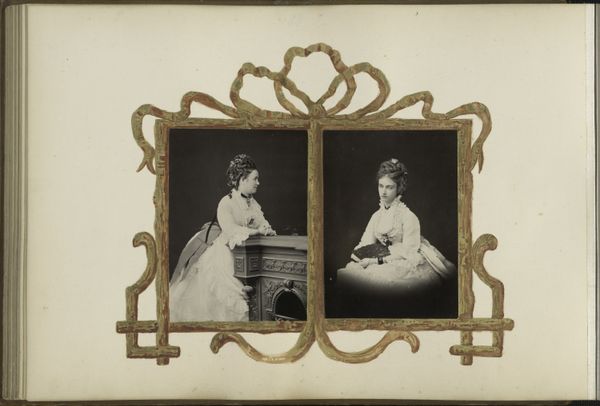
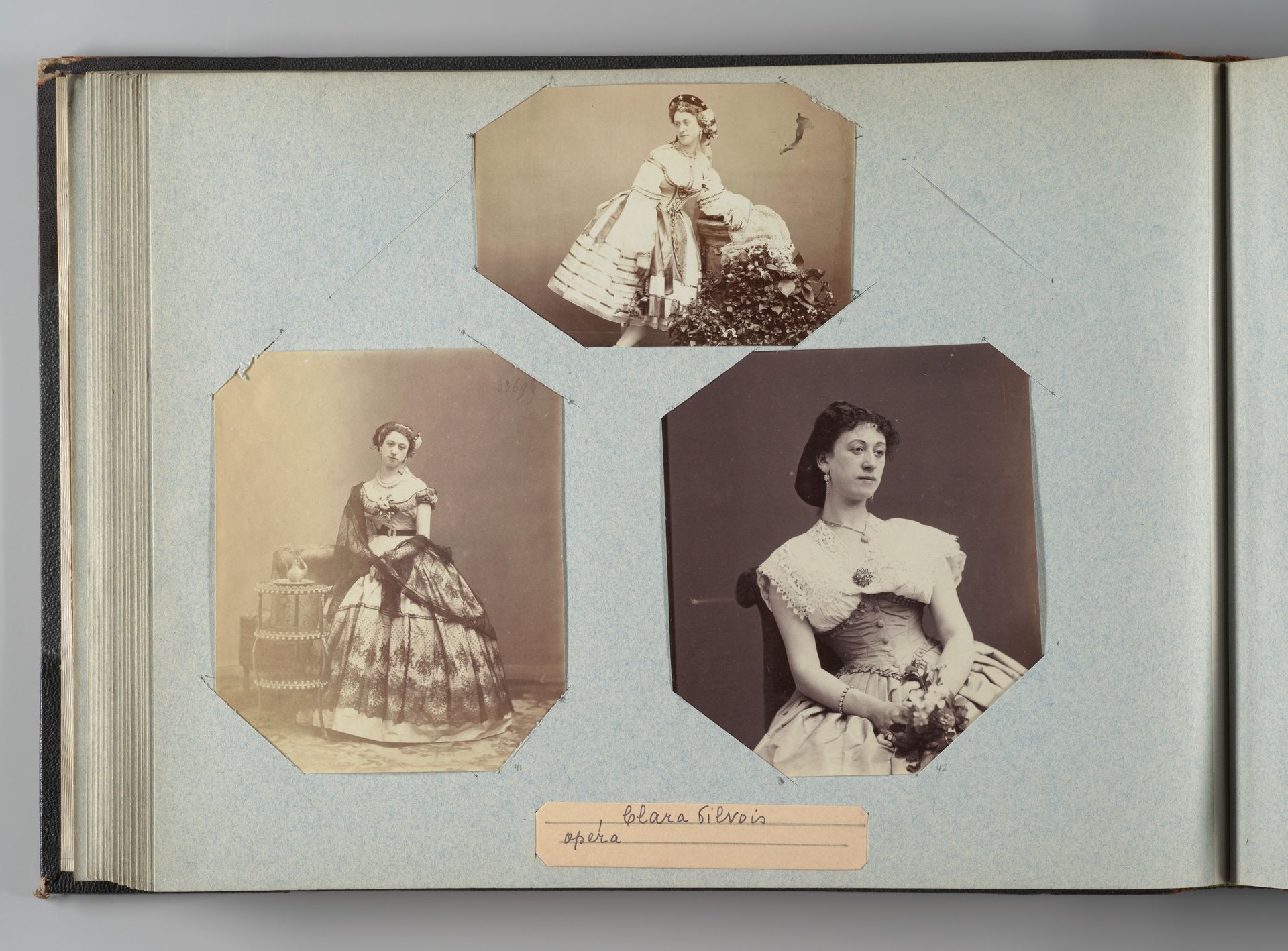
André-Adolphe-Eugène Disdéri created this photographic print of Clara Pilvois. The album sheet presents three portraits, each encased in geometric frames. They show the opera singer in distinct poses and costumes. The sepia tones and soft lighting give a nostalgic quality, yet the formal arrangement of the portraits suggests a structured narrative. Consider the framing: each octagon isolates the sitter, emphasizing her as a composed figure. The high-contrast sepia palette creates a semiotic interplay between light and shadow. Disdéri's choice of photographic methods captures not just an image, but a calculated construction of persona. The material presentation, mounted on a larger sheet, invites questions about seriality and display. The photographs create meaning through their juxtaposition and arrangement. These portraits are not mere likenesses, but carefully constructed representations of identity, class, and artistry. They ask us to consider how photography functions both as documentation and as a form of visual rhetoric.
Clara Pilvois
1850s - 1860s

André-Adolphe-Eugène Disdéri
1819 - 1889
The Metropolitan Museum of Art
Metropolitan Museum of Art, New York, NYArtwork details
- Dimensions
- Image: 5 3/8 × 4 5/8 in. (13.6 × 11.8 cm) Sheet: 10 3/8 × 13 3/4 in. (26.3 × 35 cm)
- Location
- Metropolitan Museum of Art, New York, NY
- Copyright
- Public Domain
Tags
aged paper
book binding
homemade paper
paper non-digital material
paperlike
sketch book
personal sketchbook
watercolour illustration
paper medium
watercolor
Comments
Be the first to share your thoughts about this work.
About this artwork
André-Adolphe-Eugène Disdéri created this photographic print of Clara Pilvois. The album sheet presents three portraits, each encased in geometric frames. They show the opera singer in distinct poses and costumes. The sepia tones and soft lighting give a nostalgic quality, yet the formal arrangement of the portraits suggests a structured narrative. Consider the framing: each octagon isolates the sitter, emphasizing her as a composed figure. The high-contrast sepia palette creates a semiotic interplay between light and shadow. Disdéri's choice of photographic methods captures not just an image, but a calculated construction of persona. The material presentation, mounted on a larger sheet, invites questions about seriality and display. The photographs create meaning through their juxtaposition and arrangement. These portraits are not mere likenesses, but carefully constructed representations of identity, class, and artistry. They ask us to consider how photography functions both as documentation and as a form of visual rhetoric.
Comments
Be the first to share your thoughts about this work.