c. 1680
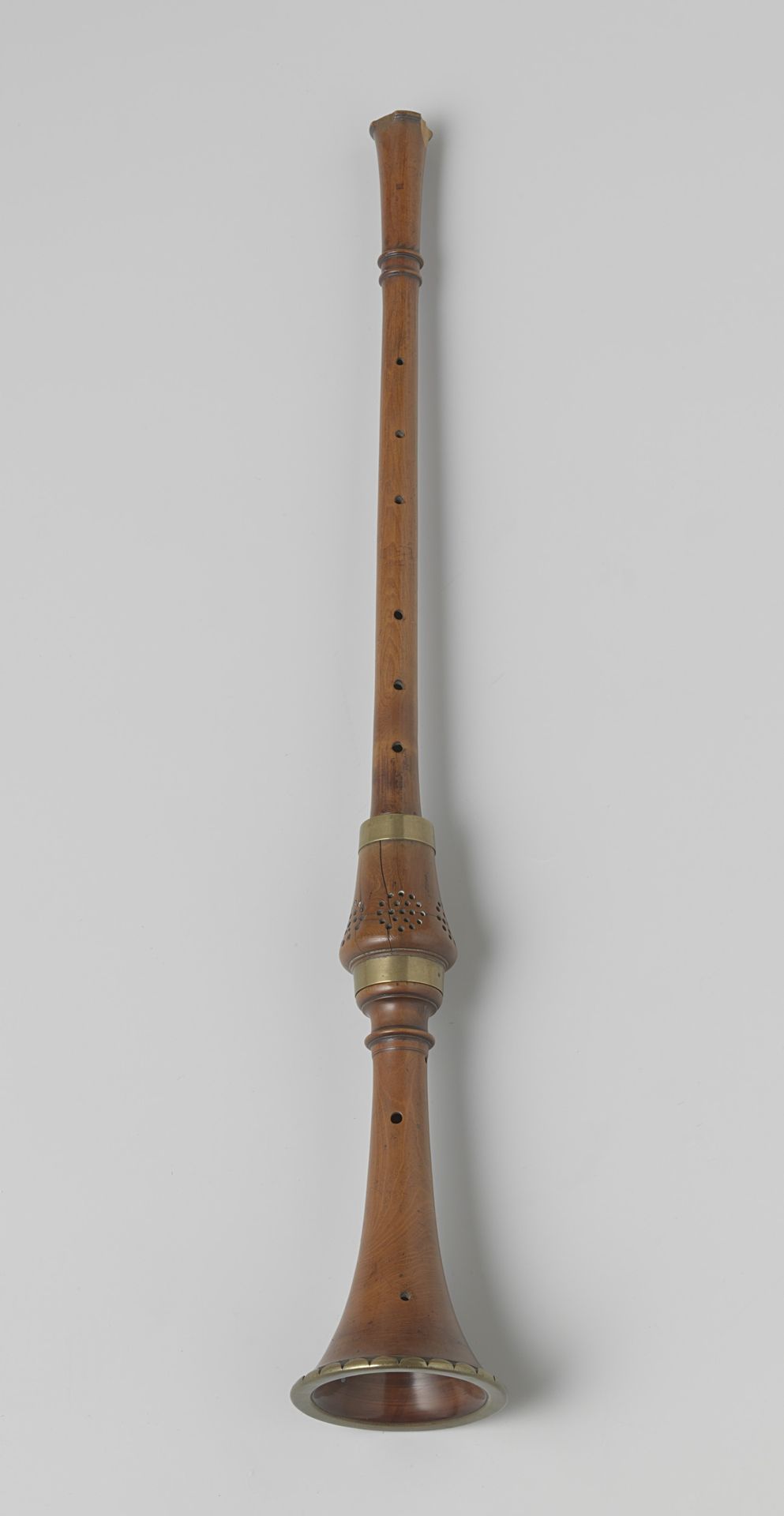
Soprano ‘Duytse Schalmey’ (Shawm)

Listen to curator's interpretation
Curatorial notes
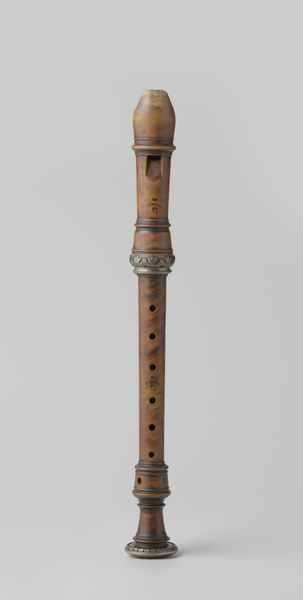
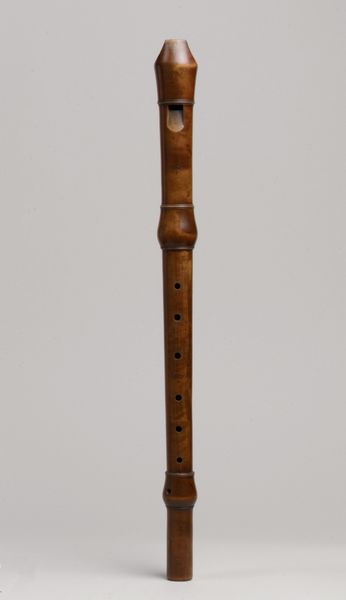
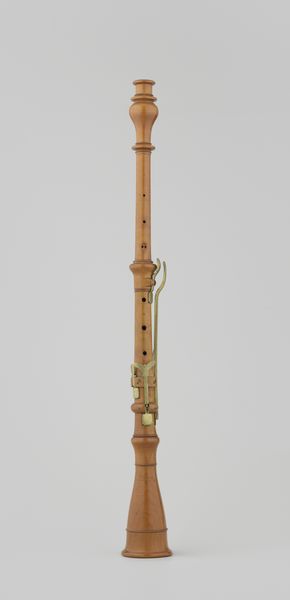
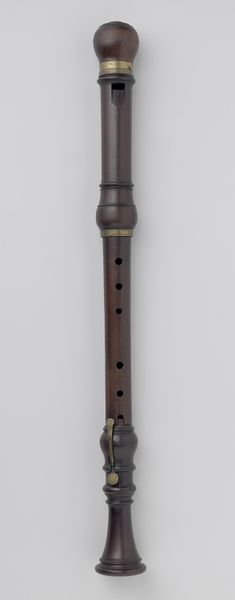
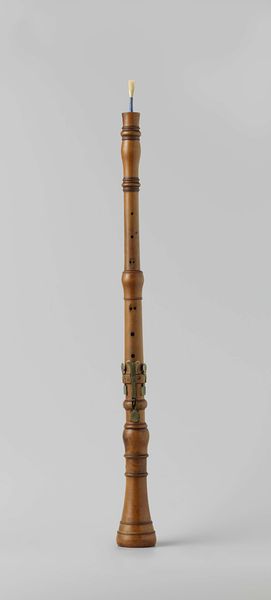
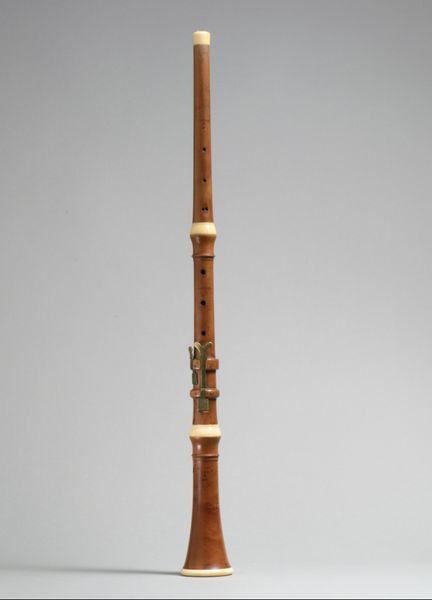
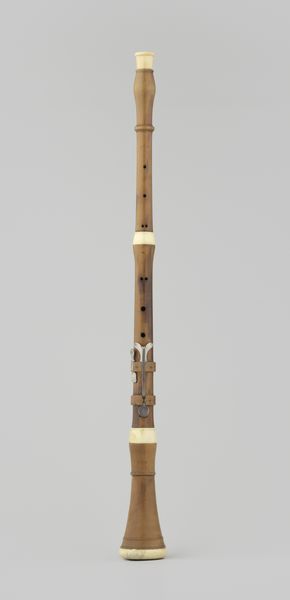
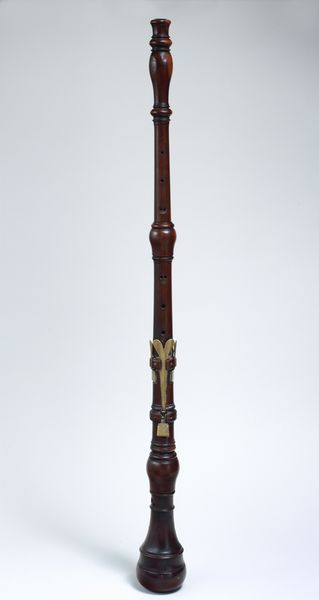
This is a ‘Duytse Schalmey’ made by Richard Haka, a Dutch instrument maker, sometime between 1646 and 1705. The shawm presents a study in wood and metal, its form both functional and decorative. Notice how the cylindrical body transitions into a flared bell, creating a visual rhythm that is punctuated by metal bands. These bands aren’t merely decorative; they define the structure and the instrument's acoustic properties. The careful placement of finger holes along the shaft suggests a deliberate calibration of space and sound. Consider how the material contributes to the overall aesthetic. The wood, warm in tone, is juxtaposed against the cool gleam of metal, a contrast that highlights both texture and form. The shawm is not just an instrument of sound; it is a sculpted object, its shape dictating the very air it moves. As such, it embodies the philosophical and aesthetic values of its time, where utility and beauty were inextricably linked.