About this artwork
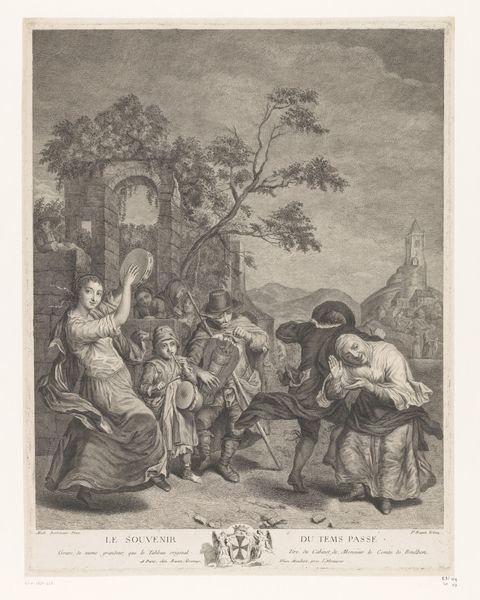
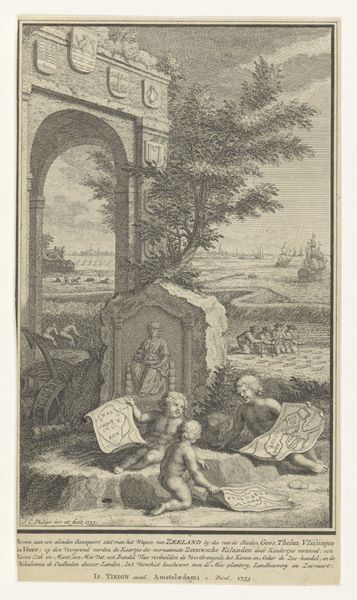
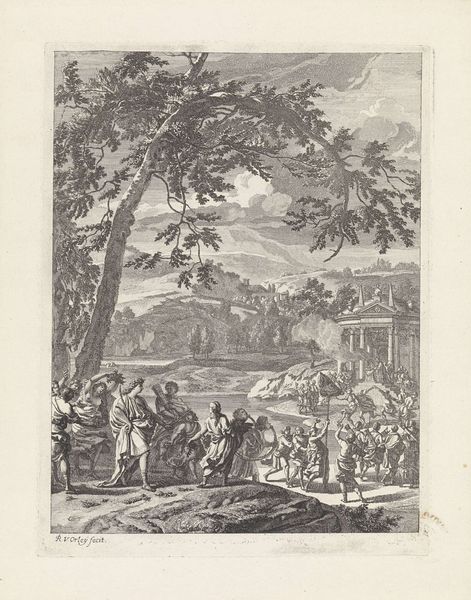
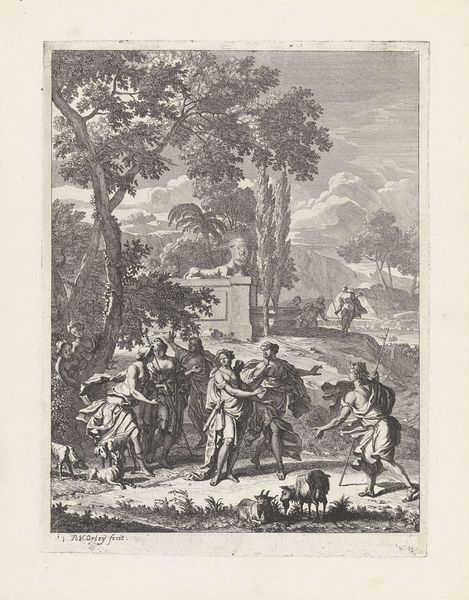
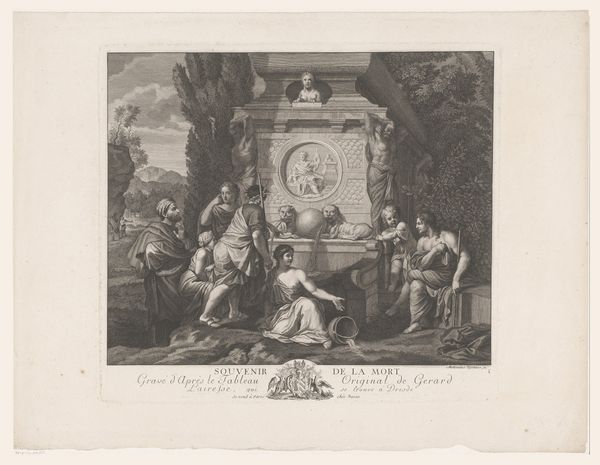
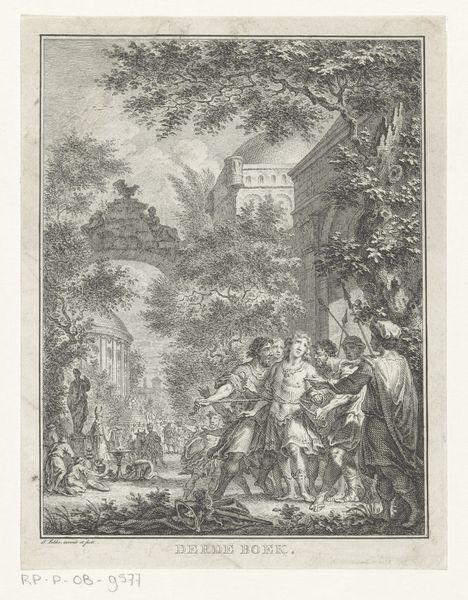
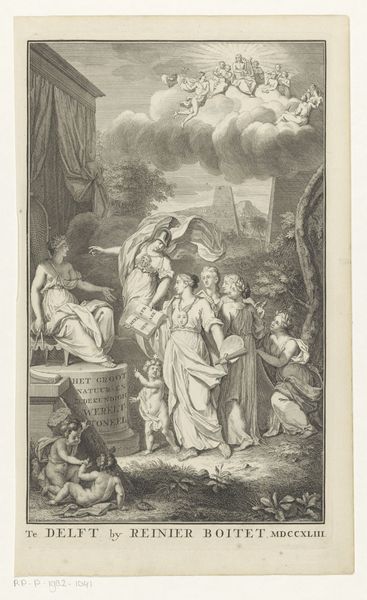
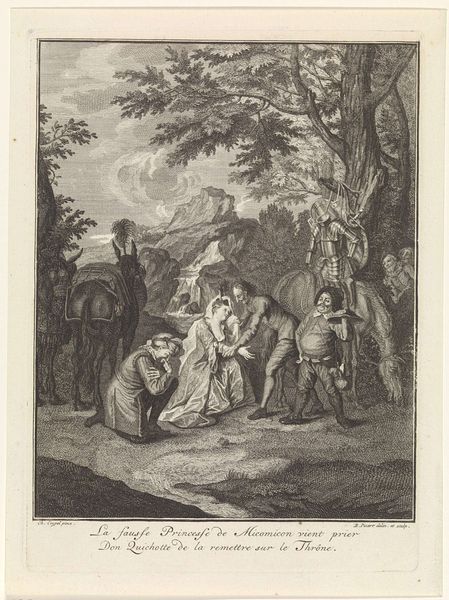
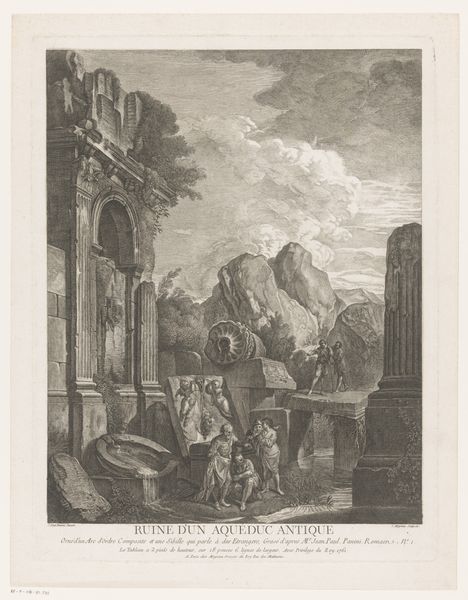
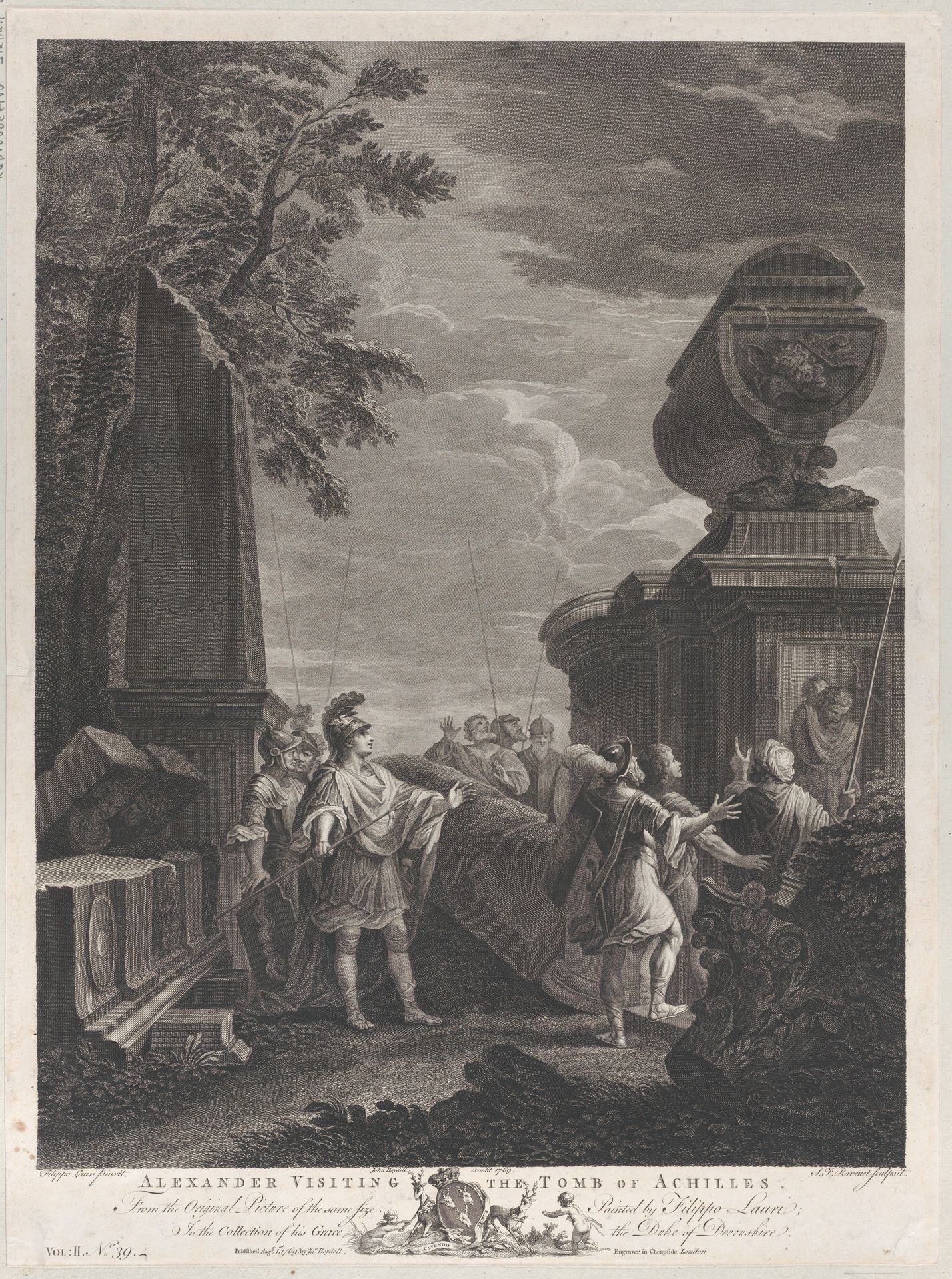
This print, Alexander visiting the tomb of Achilles, was made by Simon Francis Ravenet the elder in the 18th century. It's created using engraving, a printmaking process where lines are incised into a metal plate, which is then inked and pressed onto paper. The image presents a classical scene with a strong sense of drama. Ravenet's skill in engraving is evident in the intricate details and tonal variations he achieves. The material qualities of the print – the fineness of the lines, the contrast between light and shadow, and the texture of the paper – all contribute to its aesthetic impact. Consider the labor involved in creating such a work. Every line is painstakingly cut by hand, a testament to the engraver's skill and patience. The print could be reproduced and distributed widely, contributing to the spread of knowledge and ideas, but the labor is intense and highly skilled, far from the industrialized processes we know today. This print prompts us to consider the relationship between art, labor, and commerce in the 18th century.
Alexander visiting the tomb of Achilles 1769

Simon Francis Ravenet, the elder
1706 - 1774
The Metropolitan Museum of Art
Metropolitan Museum of Art, New York, NYArtwork details
- Medium
- drawing, print, etching, engraving
- Dimensions
- Sheet (Trimmed): 20 1/16 × 14 15/16 in. (51 × 38 cm)
- Location
- Metropolitan Museum of Art, New York, NY
- Copyright
- Public Domain
Tags
drawing
neoclacissism
etching
landscape
figuration
history-painting
academic-art
engraving
Comments
No comments
About this artwork
This print, Alexander visiting the tomb of Achilles, was made by Simon Francis Ravenet the elder in the 18th century. It's created using engraving, a printmaking process where lines are incised into a metal plate, which is then inked and pressed onto paper. The image presents a classical scene with a strong sense of drama. Ravenet's skill in engraving is evident in the intricate details and tonal variations he achieves. The material qualities of the print – the fineness of the lines, the contrast between light and shadow, and the texture of the paper – all contribute to its aesthetic impact. Consider the labor involved in creating such a work. Every line is painstakingly cut by hand, a testament to the engraver's skill and patience. The print could be reproduced and distributed widely, contributing to the spread of knowledge and ideas, but the labor is intense and highly skilled, far from the industrialized processes we know today. This print prompts us to consider the relationship between art, labor, and commerce in the 18th century.
Comments
No comments