About this artwork
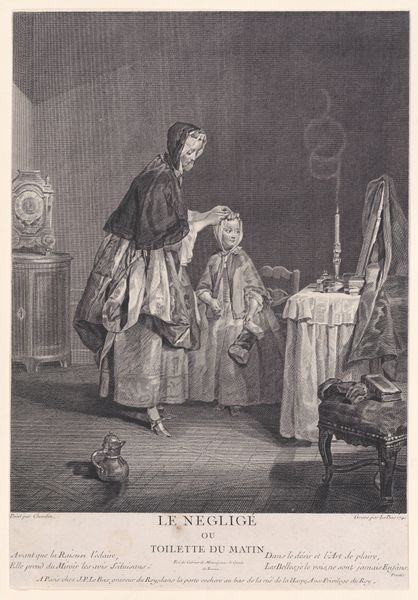
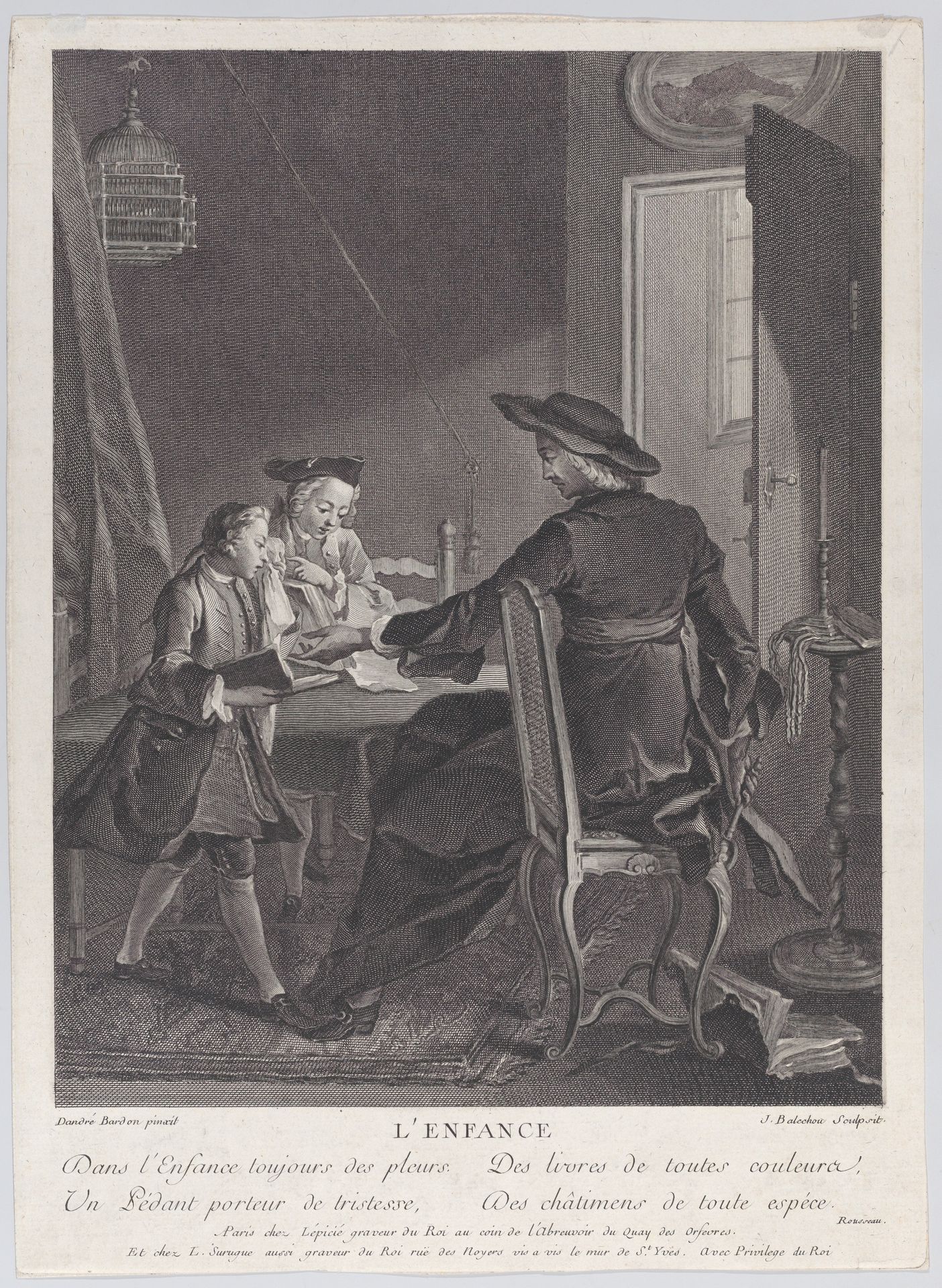
Jean-Joseph Baléchou created this engraving, "L'Enfance," which translates to "Childhood," in the 18th century, offering us a glimpse into the world of privileged youth. It encapsulates the paradox of childhood within the rigid class structures of the era. At first glance, the scene suggests domestic tranquility: well-dressed children at their lessons. But look closer, and we see a narrative of confinement and discipline. The engraving subtly critiques the social expectations placed on young members of the aristocracy, particularly the emphasis on academic achievement and moral rectitude. The birdcage in the background serves as a metaphor for the gilded cage of upper-class childhood, where material comforts come at the cost of freedom and self-discovery. Baléchou’s work invites us to consider how social class shapes individual experience and the complex negotiations between personal desire and social expectation.
L'Enfance 1739 - 1749

Jean-Joseph Baléchou
1716 - 1764
The Metropolitan Museum of Art
Metropolitan Museum of Art, New York, NYArtwork details
- Medium
- drawing, print, engraving
- Dimensions
- Sheet (Trimmed): 15 1/16 × 10 15/16 in. (38.2 × 27.8 cm)
- Location
- Metropolitan Museum of Art, New York, NY
- Copyright
- Public Domain
Tags
portrait
drawing
baroque
line
genre-painting
engraving
Comments
No comments
About this artwork
Jean-Joseph Baléchou created this engraving, "L'Enfance," which translates to "Childhood," in the 18th century, offering us a glimpse into the world of privileged youth. It encapsulates the paradox of childhood within the rigid class structures of the era. At first glance, the scene suggests domestic tranquility: well-dressed children at their lessons. But look closer, and we see a narrative of confinement and discipline. The engraving subtly critiques the social expectations placed on young members of the aristocracy, particularly the emphasis on academic achievement and moral rectitude. The birdcage in the background serves as a metaphor for the gilded cage of upper-class childhood, where material comforts come at the cost of freedom and self-discovery. Baléchou’s work invites us to consider how social class shapes individual experience and the complex negotiations between personal desire and social expectation.
Comments
No comments