About this artwork
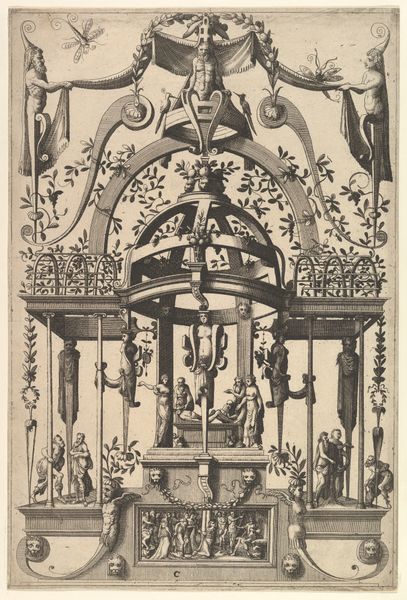
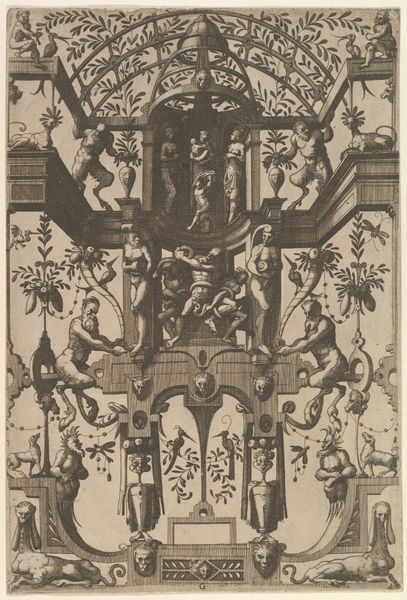
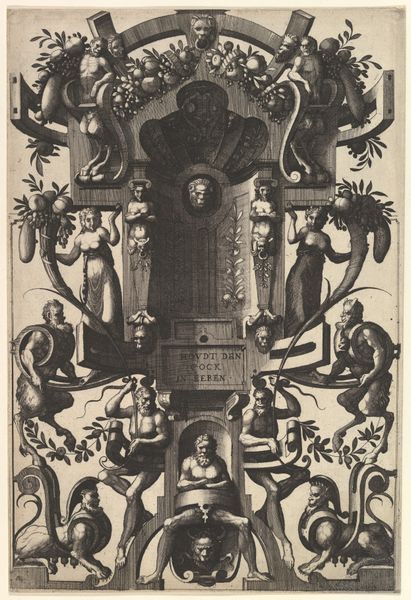
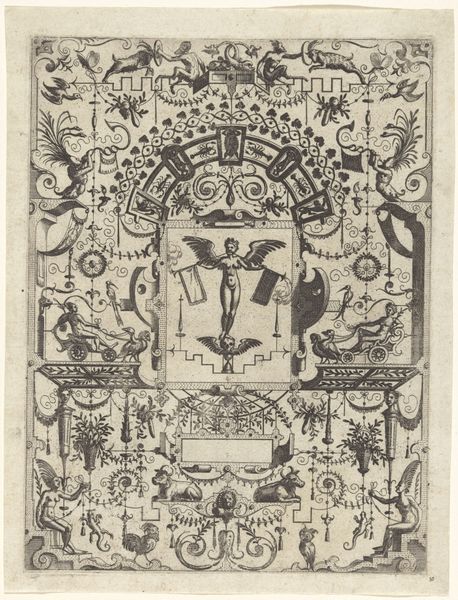
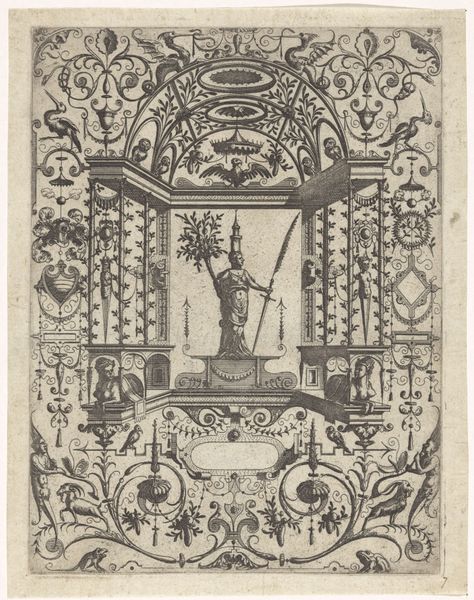
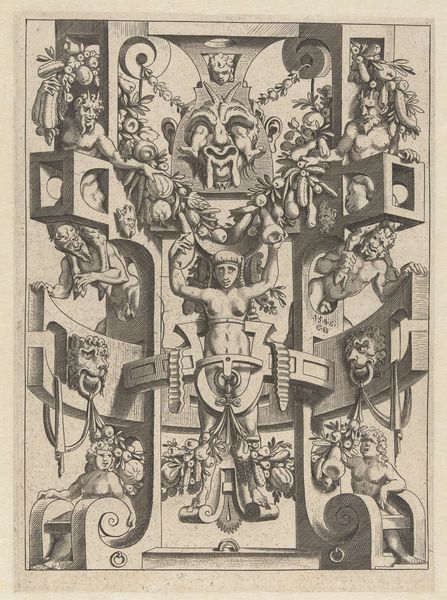
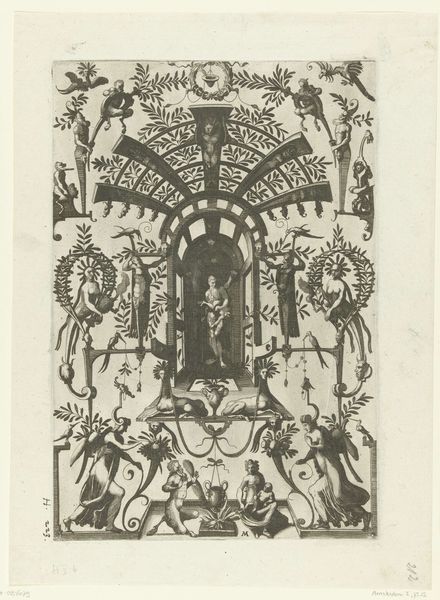
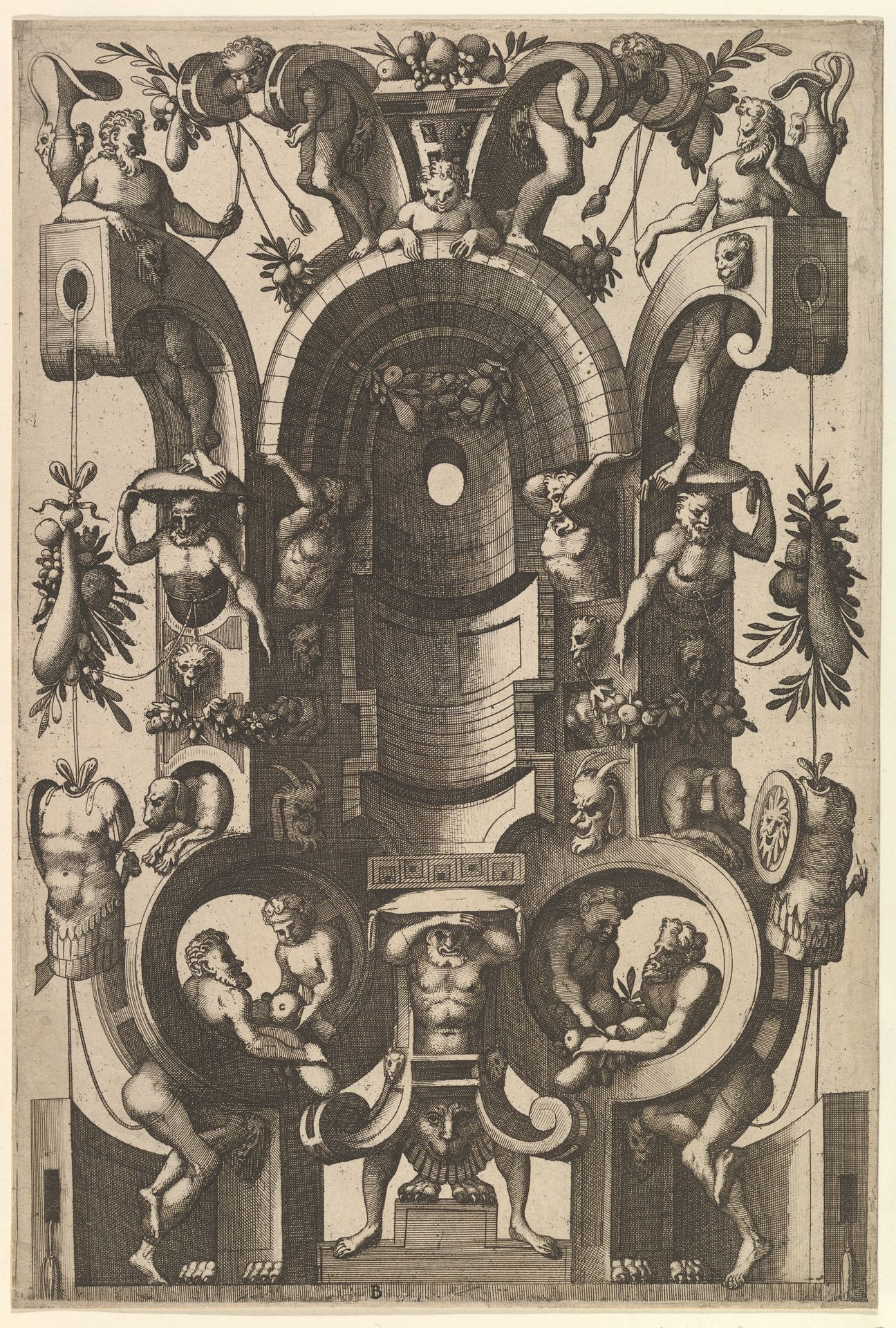
This print, "Niche in the Form of a Cartouche," was created by Johannes van Doetecum I in the 16th century using etching. The composition is an intricate assembly of architectural and figural elements, primarily in monochrome. The cartouche form is densely populated with classical motifs, creating a visual experience that is both ornamental and slightly overwhelming. The figures, ranging from human to grotesque, are arranged symmetrically around the central niche, contributing to a balanced yet complex structure. This elaborate design reflects the Mannerist style, which favored complexity, exaggeration, and a departure from the harmonious ideals of the High Renaissance. The artist uses these classical forms to destabilize established meanings. The symmetry offers a sense of order, but the grotesque figures and dense ornamentation challenge any fixed interpretation, engaging with new ways of thinking about representation.
Niche in the Form of a Cartouche from Veelderleij Veranderinghe van grotissen ende Compertimenten...Libro Primo 1556

Johannes van Doetecum I
1528 - 1605
The Metropolitan Museum of Art
Metropolitan Museum of Art, New York, NYArtwork details
- Medium
- drawing, print, engraving, architecture
- Dimensions
- Sheet: 12 3/16 x 8 1/4 in. (31 x 20.9 cm)
- Location
- Metropolitan Museum of Art, New York, NY
- Copyright
- Public Domain
Tags
drawing
pen drawing
book
old engraving style
figuration
11_renaissance
engraving
architecture
Comments
No comments
About this artwork
This print, "Niche in the Form of a Cartouche," was created by Johannes van Doetecum I in the 16th century using etching. The composition is an intricate assembly of architectural and figural elements, primarily in monochrome. The cartouche form is densely populated with classical motifs, creating a visual experience that is both ornamental and slightly overwhelming. The figures, ranging from human to grotesque, are arranged symmetrically around the central niche, contributing to a balanced yet complex structure. This elaborate design reflects the Mannerist style, which favored complexity, exaggeration, and a departure from the harmonious ideals of the High Renaissance. The artist uses these classical forms to destabilize established meanings. The symmetry offers a sense of order, but the grotesque figures and dense ornamentation challenge any fixed interpretation, engaging with new ways of thinking about representation.
Comments
No comments