About this artwork
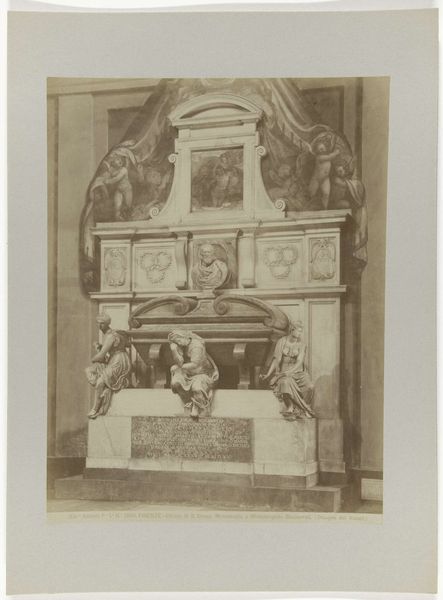
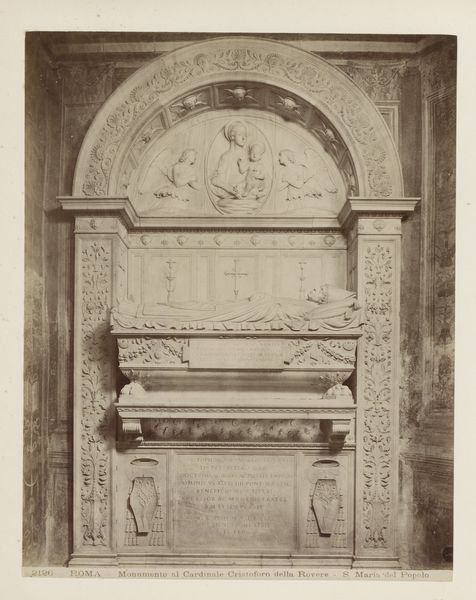
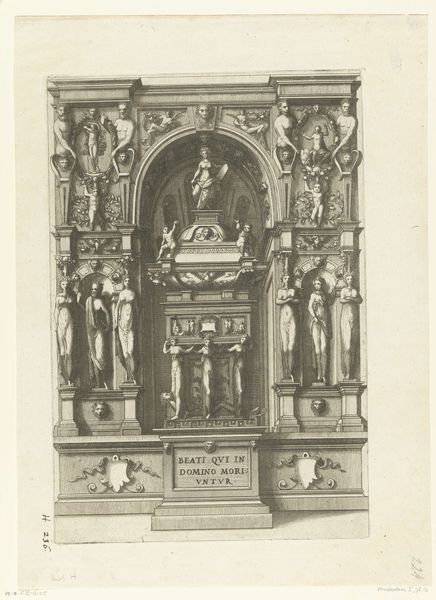
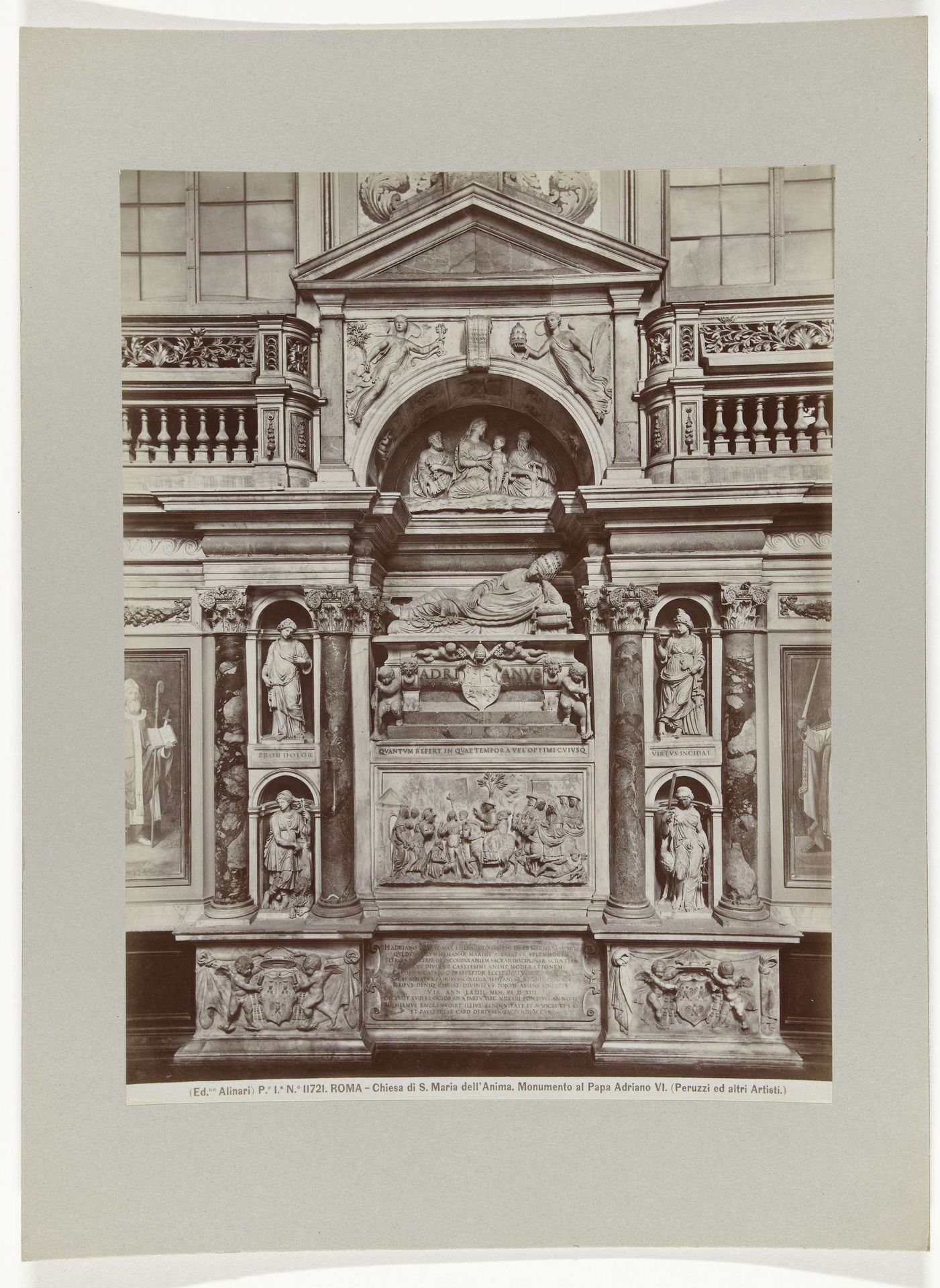
This photograph by Fratelli Alinari captures the grand marble monument of Pope Adrian VI, located in the Santa Maria dell’Anima church in Rome. As the only Dutch pope in history, Adrian VI's brief reign in the early 16th century occurred during the tumultuous years of the Reformation. The monument immortalizes him as a figure of piety and intellectualism. The sculpture is a study in contrasts, where the pope is depicted in repose above a relief showing him among scholars, and the figures of Justice, Prudence, Strength, and Temperance. The monument seeks to establish Adrian VI's legacy within a patriarchal and religious framework. He sought to reform the Catholic Church, but his efforts were met with resistance from within the institution. This monument then becomes not just a memorial, but also a statement of power. It reflects a complex moment in history when traditional authority was challenged, and new voices began to emerge. The monument invites us to reflect on how individuals are remembered, and how power is perpetuated through art.
Monument voor Adrianus VI in de Santa Maria dell'Anima
c. 1880 - 1895

Fratelli Alinari
@fratellialinariLocation
RijksmuseumArtwork details
- Dimensions
- height 249 mm, width 188 mm, height 328 mm, width 241 mm
- Location
- Rijksmuseum
- Copyright
- Rijks Museum: Open Domain
Tags
Comments
Share your thoughts
About this artwork
This photograph by Fratelli Alinari captures the grand marble monument of Pope Adrian VI, located in the Santa Maria dell’Anima church in Rome. As the only Dutch pope in history, Adrian VI's brief reign in the early 16th century occurred during the tumultuous years of the Reformation. The monument immortalizes him as a figure of piety and intellectualism. The sculpture is a study in contrasts, where the pope is depicted in repose above a relief showing him among scholars, and the figures of Justice, Prudence, Strength, and Temperance. The monument seeks to establish Adrian VI's legacy within a patriarchal and religious framework. He sought to reform the Catholic Church, but his efforts were met with resistance from within the institution. This monument then becomes not just a memorial, but also a statement of power. It reflects a complex moment in history when traditional authority was challenged, and new voices began to emerge. The monument invites us to reflect on how individuals are remembered, and how power is perpetuated through art.
Comments
Share your thoughts