About this artwork
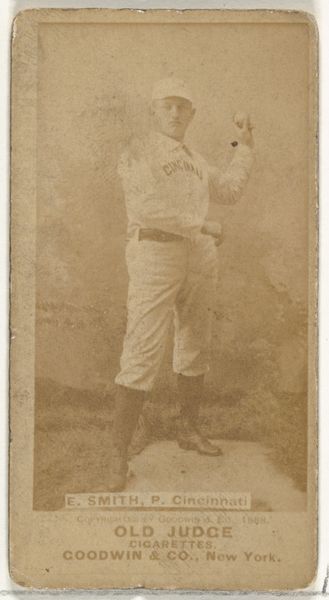
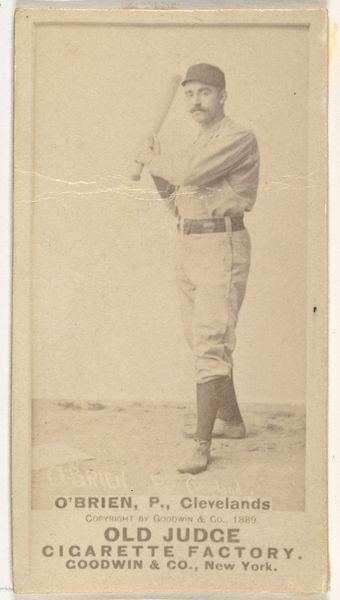
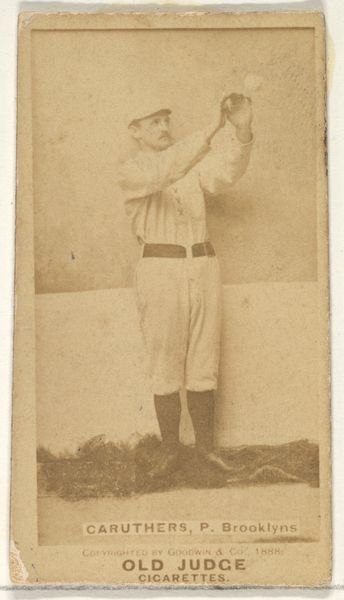
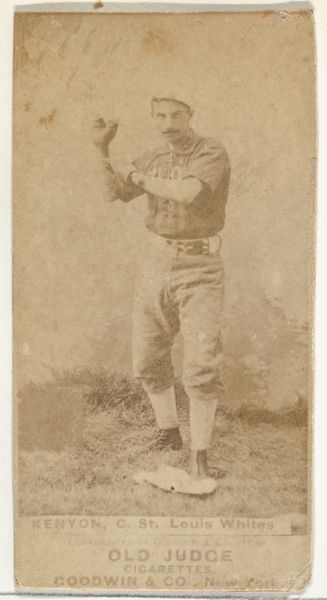
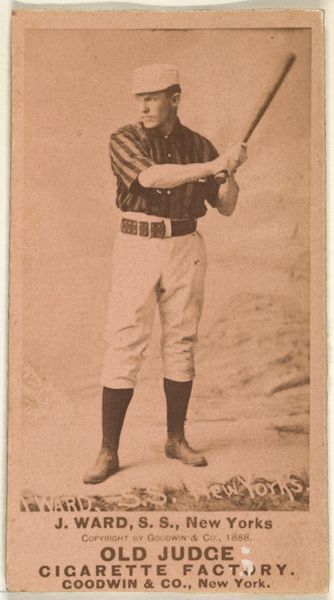
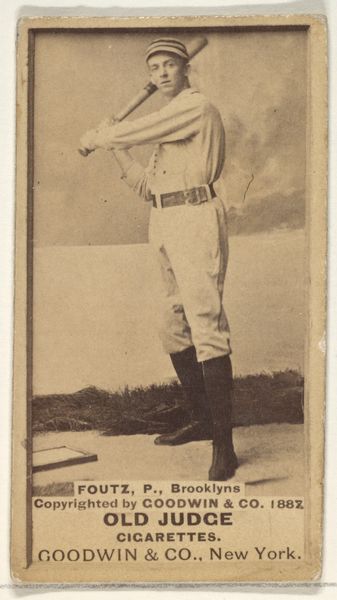
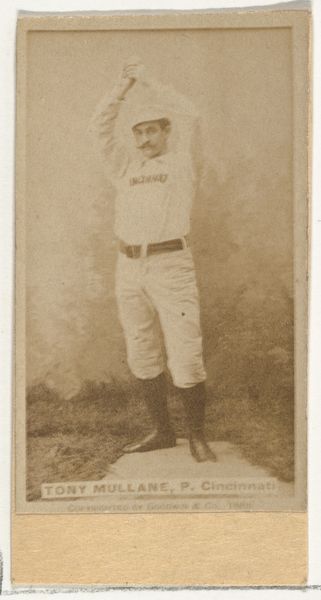
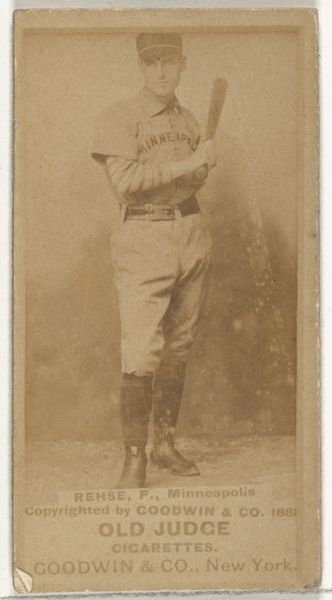
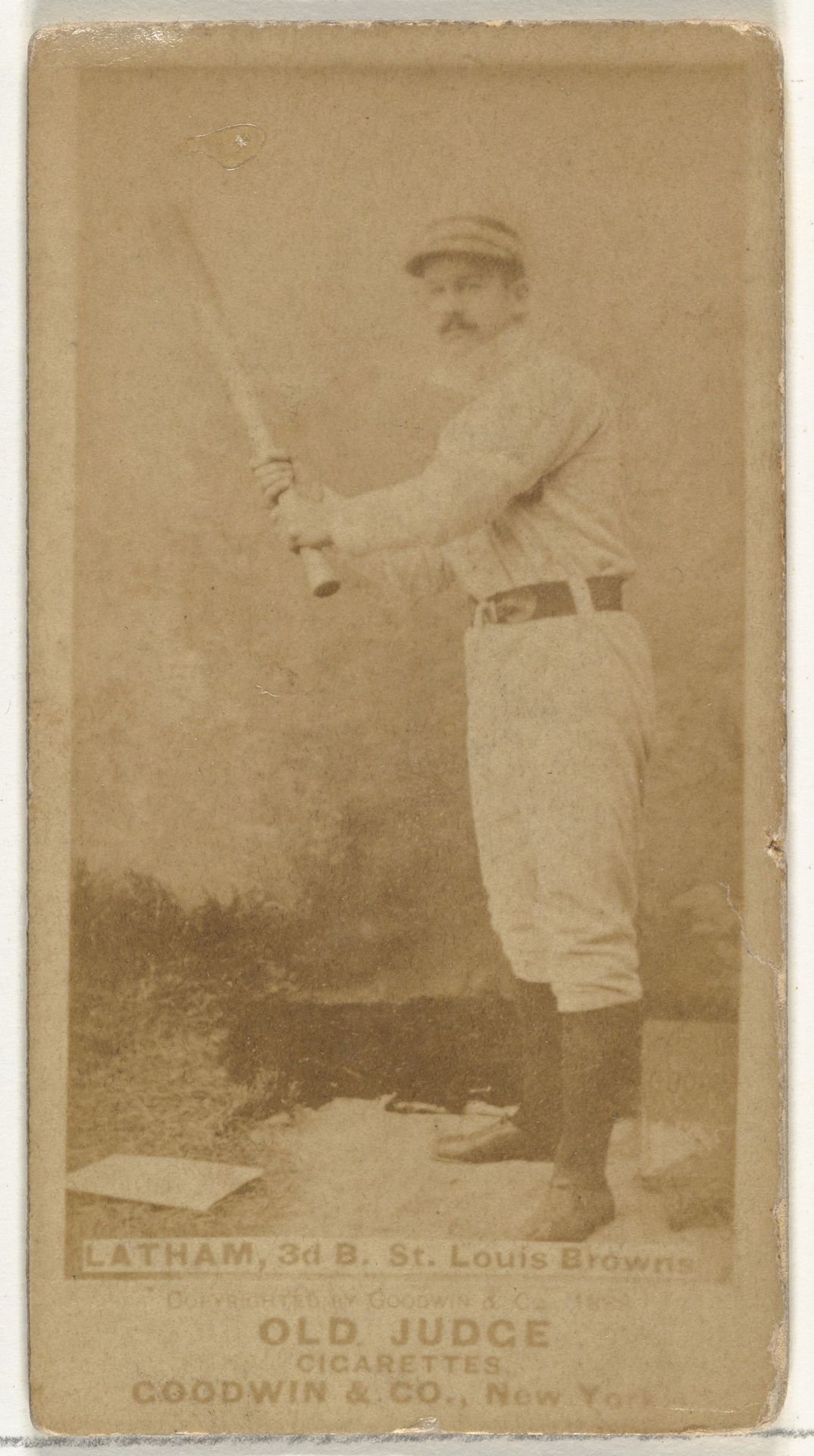
This is a baseball card of Arlie Latham, 3rd Baseman for the St. Louis Browns, created by Goodwin & Company as part of the Old Judge Cigarettes series. The sepia tones and the player's static pose give it a sense of a bygone era. The photograph presents a study in contrasts, between light and shadow. Latham is shown in the act of poised readiness, which intersects with the commercial function of the card as advertisement. The composition is structured by Latham’s figure, which is rendered in soft focus, set against the backdrop of a blurred field, that draws our attention to the product advertised. What this baseball card signifies is not just a portrait of an athlete but also a complex interplay of representation, consumption, and early commercial culture. The use of photography and the act of distribution reflects changing ideas about identity, and the commodification of sports.
Arlie Latham, 3rd Base, St. Louis Browns, from the Old Judge series (N172) for Old Judge Cigarettes 1887 - 1889


Artwork details
- Medium
- print, photography
- Dimensions
- sheet: 2 11/16 x 1 3/8 in. (6.9 x 3.5 cm)
- Location
- Metropolitan Museum of Art, New York, NY
- Copyright
- Public Domain
Tags
portrait
toned paper
baseball
street-photography
photography
men
athlete
watercolor
Comments
No comments
About this artwork
This is a baseball card of Arlie Latham, 3rd Baseman for the St. Louis Browns, created by Goodwin & Company as part of the Old Judge Cigarettes series. The sepia tones and the player's static pose give it a sense of a bygone era. The photograph presents a study in contrasts, between light and shadow. Latham is shown in the act of poised readiness, which intersects with the commercial function of the card as advertisement. The composition is structured by Latham’s figure, which is rendered in soft focus, set against the backdrop of a blurred field, that draws our attention to the product advertised. What this baseball card signifies is not just a portrait of an athlete but also a complex interplay of representation, consumption, and early commercial culture. The use of photography and the act of distribution reflects changing ideas about identity, and the commodification of sports.
Comments
No comments