About this artwork
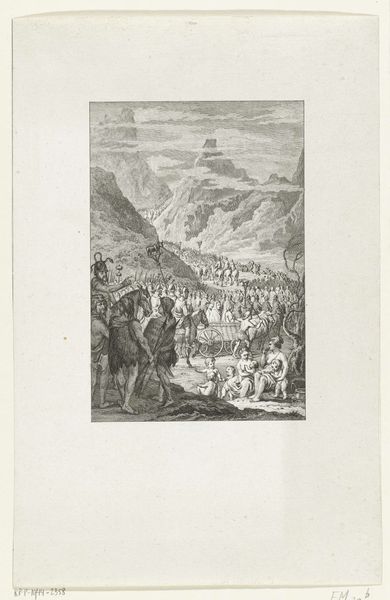
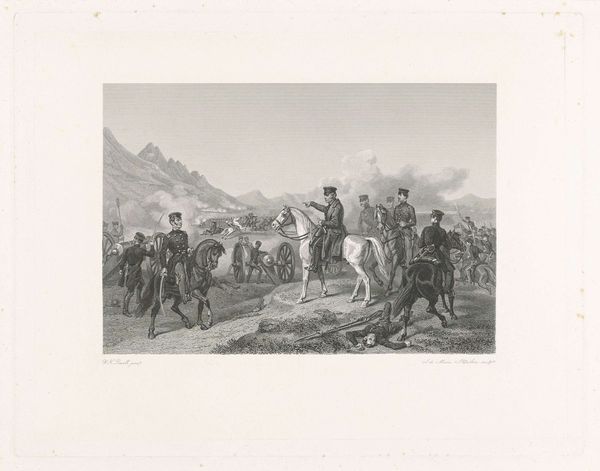
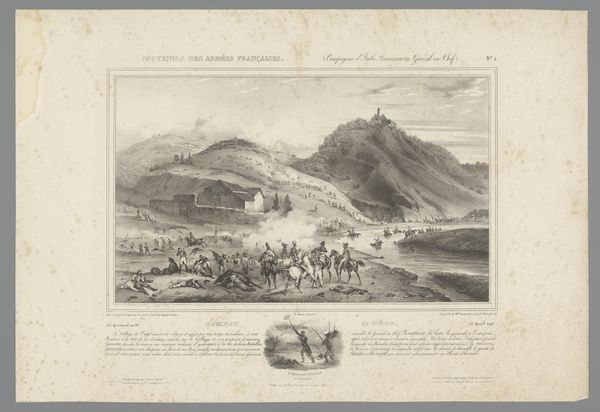
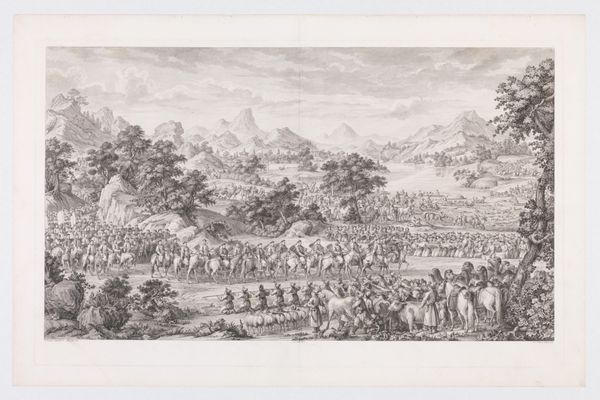
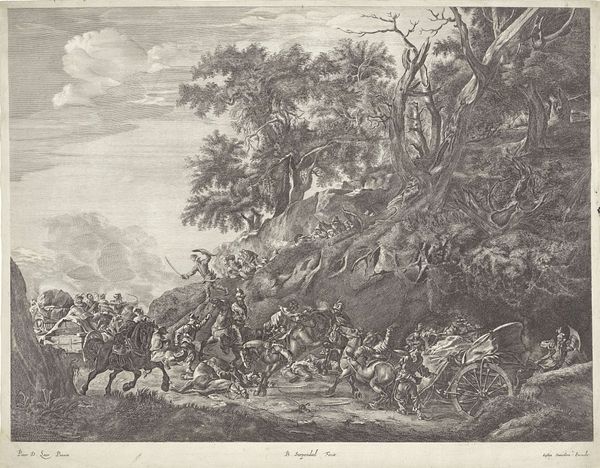
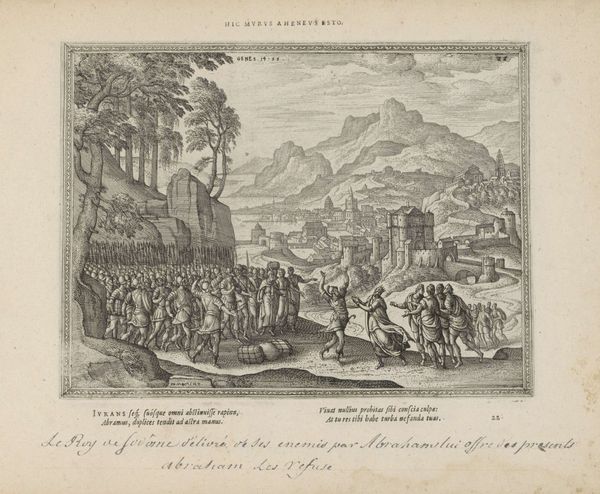
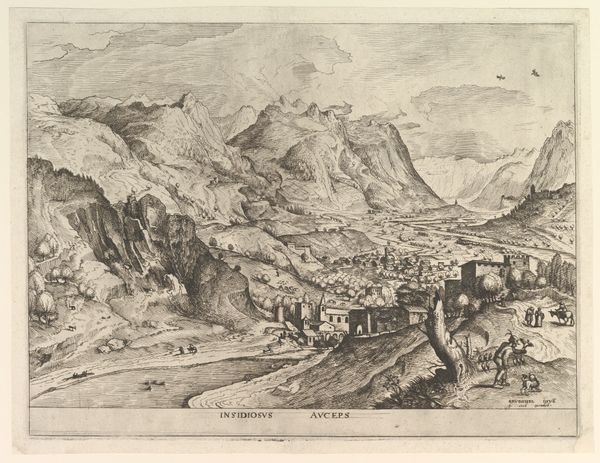
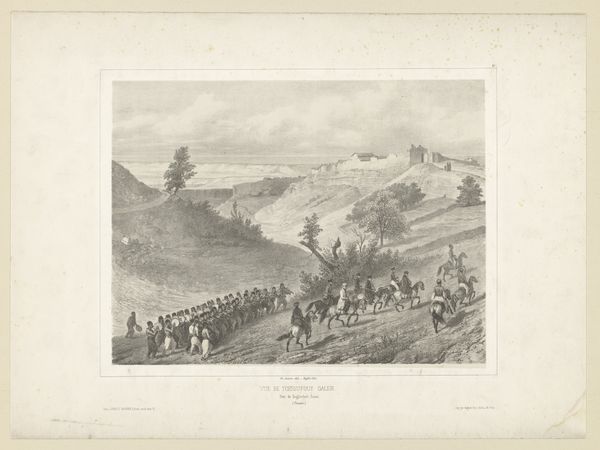
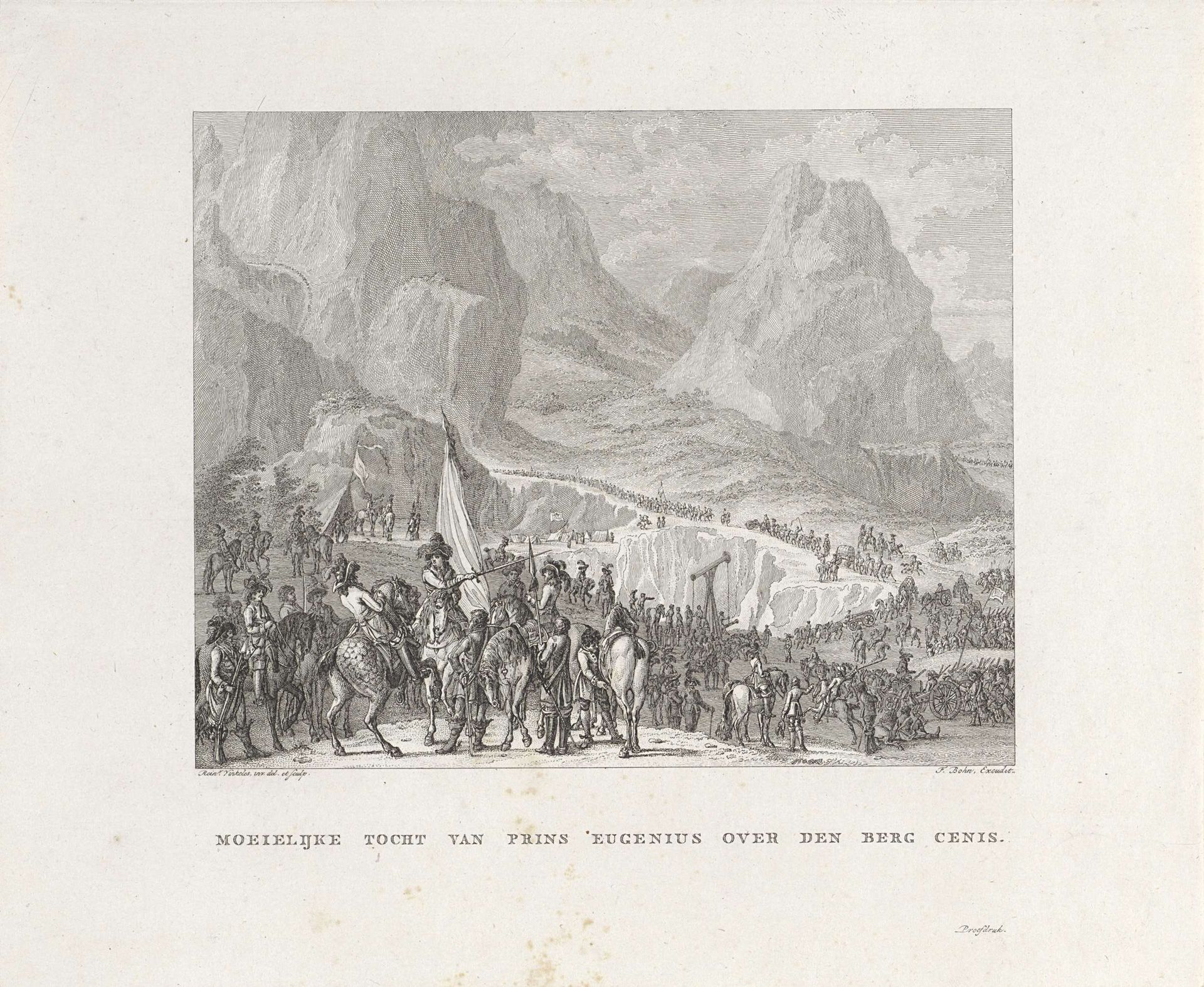
Reinier Vinkeles created this print, "Eugenius van Savoye met zijn troepen bij Mont Cenis," using engraving, a painstaking method of cutting lines into a metal plate, likely copper, with a tool called a burin. Look closely, and you can see how the density of these lines creates tone and texture, defining the landscape and figures. Printmaking was a key technology in the 18th century, allowing for the wide dissemination of images. It played a crucial role in shaping public perception and documenting historical events. Consider the labor involved in producing this print; from the initial design to the physical act of engraving, and the many impressions made, each requiring careful inking and pressing. Think, too, about the social context of its creation. This wasn't just an artistic endeavor; it was a commercial one, tied to networks of patronage, production, and consumption. By understanding the material processes and social context of its creation, we can appreciate the full depth of this print's meaning.
Eugenius van Savoye met zijn troepen bij Mont Cenis
1799 - 1801

Reinier Vinkeles
1741 - 1816Location
RijksmuseumArtwork details
- Medium
- print, engraving
- Dimensions
- height 227 mm, width 276 mm
- Location
- Rijksmuseum
- Copyright
- Rijks Museum: Open Domain
Tags
old engraving style
landscape
figuration
history-painting
academic-art
engraving
Comments
Be the first to share your thoughts about this work.
About this artwork
Reinier Vinkeles created this print, "Eugenius van Savoye met zijn troepen bij Mont Cenis," using engraving, a painstaking method of cutting lines into a metal plate, likely copper, with a tool called a burin. Look closely, and you can see how the density of these lines creates tone and texture, defining the landscape and figures. Printmaking was a key technology in the 18th century, allowing for the wide dissemination of images. It played a crucial role in shaping public perception and documenting historical events. Consider the labor involved in producing this print; from the initial design to the physical act of engraving, and the many impressions made, each requiring careful inking and pressing. Think, too, about the social context of its creation. This wasn't just an artistic endeavor; it was a commercial one, tied to networks of patronage, production, and consumption. By understanding the material processes and social context of its creation, we can appreciate the full depth of this print's meaning.
Comments
Be the first to share your thoughts about this work.