About this artwork
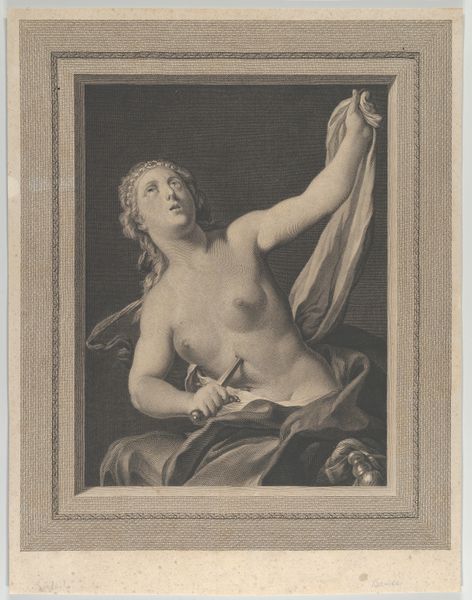
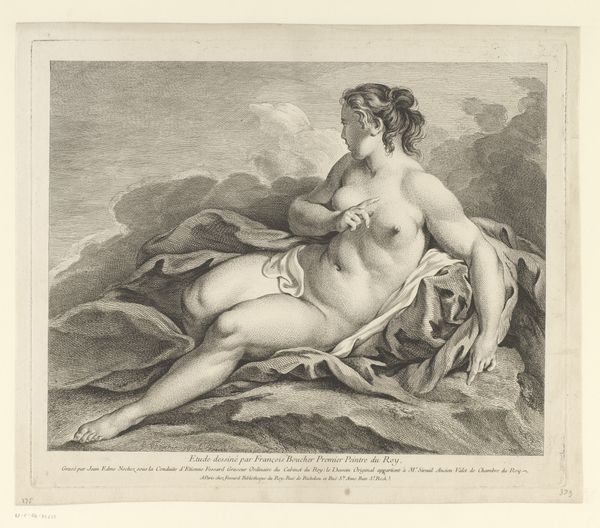
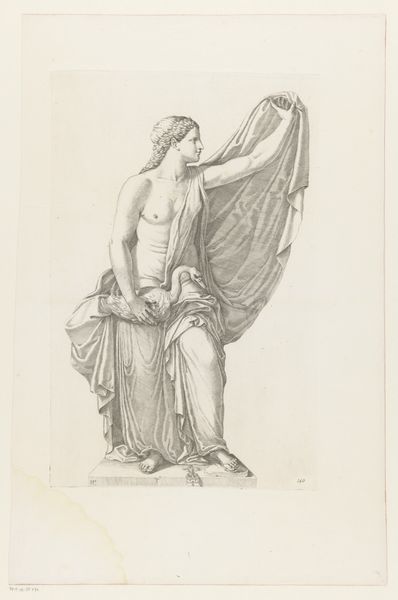
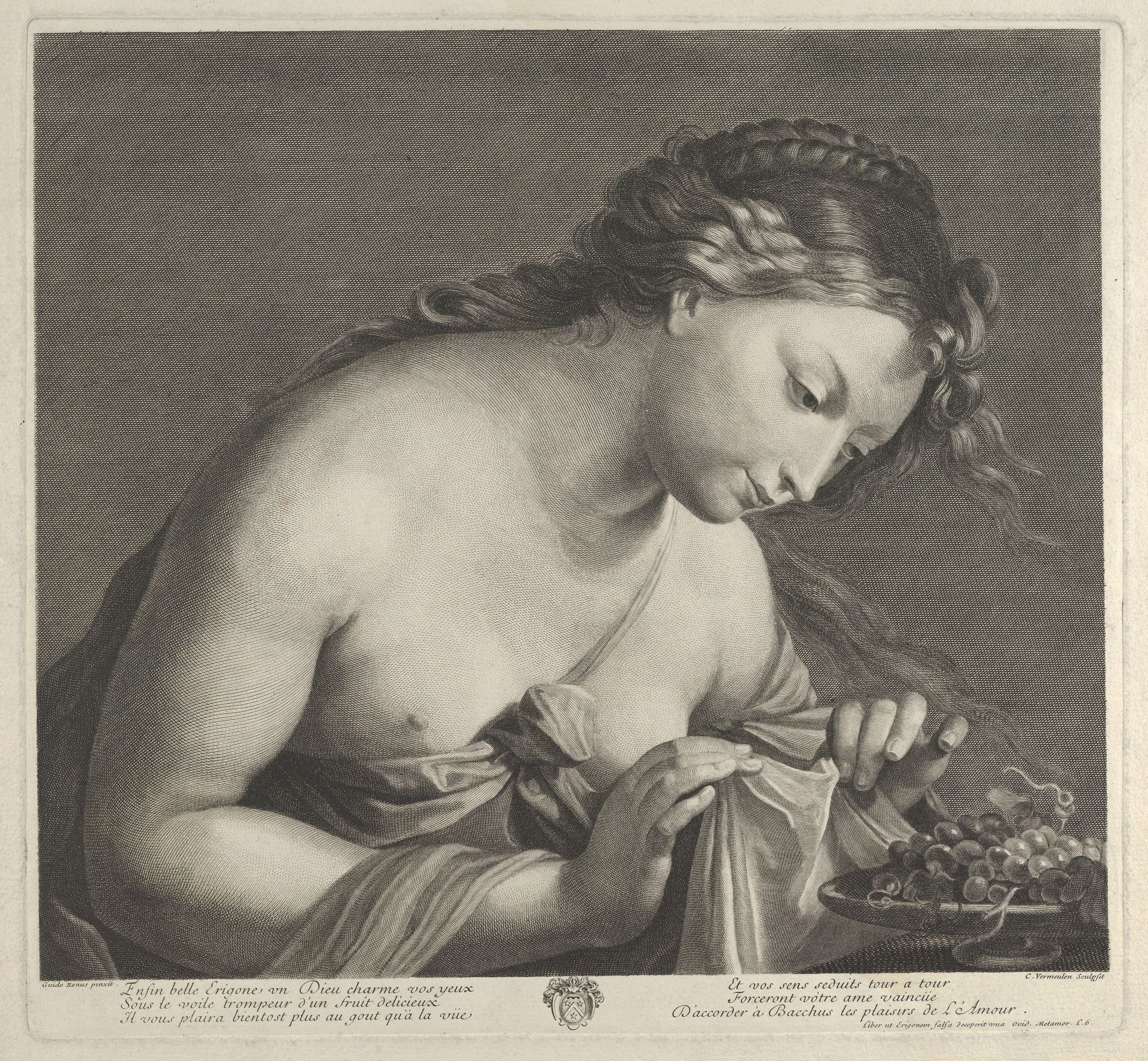
This engraving by Cornelius Vermeulen, after Reni, depicts Erigone with a platter of grapes, lifting a cloth—symbols deeply rooted in classical mythology. Erigone, daughter of Icarius, is forever linked with the vine, and her story speaks of loss and transformation. Note the grapes—a motif tied to Dionysus, the god of wine, ecstasy, and theatre. Consider how this fruit transcends mere sustenance, symbolizing fertility and the intoxicating loss of self. We see echoes of this in the Bacchic rituals of antiquity, frenzied dances intended to connect the worshippers with a primal energy. The act of Erigone lifting the cloth reminds us of similar gestures in classical art, like veiled figures representing modesty or revelation. This motif is also present in funerary art, where veils or shrouds are lifted to mark the deceased. These symbols are non-linear; they resurface and evolve, taking on new meanings as they intertwine in an unending cycle of cultural expression.
Erigone leaning over a platter of grapes and lifting a piece of cloth with both hands, after Reni
1695 - 1705

Cornelius Vermeulen
1644 - 1702
The Metropolitan Museum of Art
Metropolitan Museum of Art, New York, NYArtwork details
- Medium
- drawing, print, engraving
- Dimensions
- Sheet: 14 1/8 × 16 7/16 in. (35.9 × 41.8 cm) Plate: 12 1/2 × 13 9/16 in. (31.8 × 34.5 cm)
- Location
- Metropolitan Museum of Art, New York, NY
- Copyright
- Public Domain
Tags
Comments
Share your thoughts
About this artwork
This engraving by Cornelius Vermeulen, after Reni, depicts Erigone with a platter of grapes, lifting a cloth—symbols deeply rooted in classical mythology. Erigone, daughter of Icarius, is forever linked with the vine, and her story speaks of loss and transformation. Note the grapes—a motif tied to Dionysus, the god of wine, ecstasy, and theatre. Consider how this fruit transcends mere sustenance, symbolizing fertility and the intoxicating loss of self. We see echoes of this in the Bacchic rituals of antiquity, frenzied dances intended to connect the worshippers with a primal energy. The act of Erigone lifting the cloth reminds us of similar gestures in classical art, like veiled figures representing modesty or revelation. This motif is also present in funerary art, where veils or shrouds are lifted to mark the deceased. These symbols are non-linear; they resurface and evolve, taking on new meanings as they intertwine in an unending cycle of cultural expression.
Comments
Share your thoughts