About this artwork
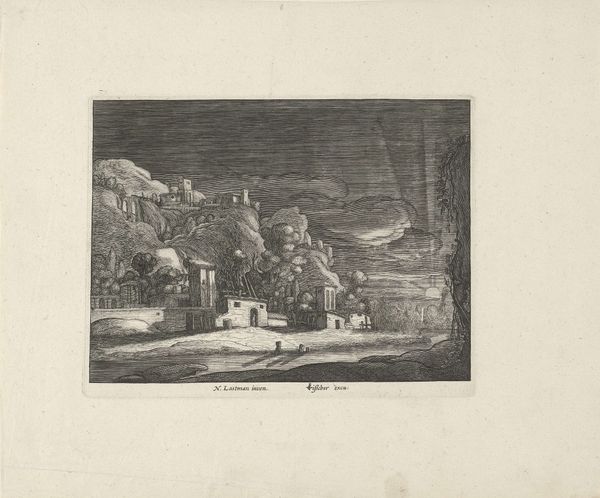
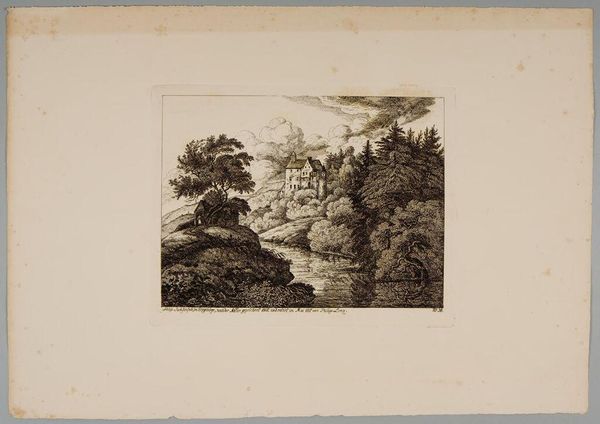
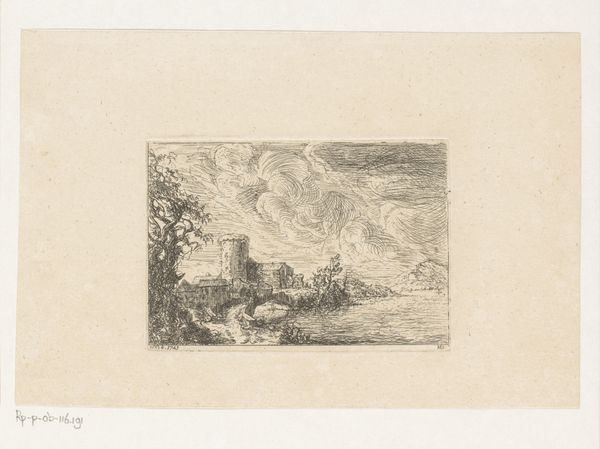
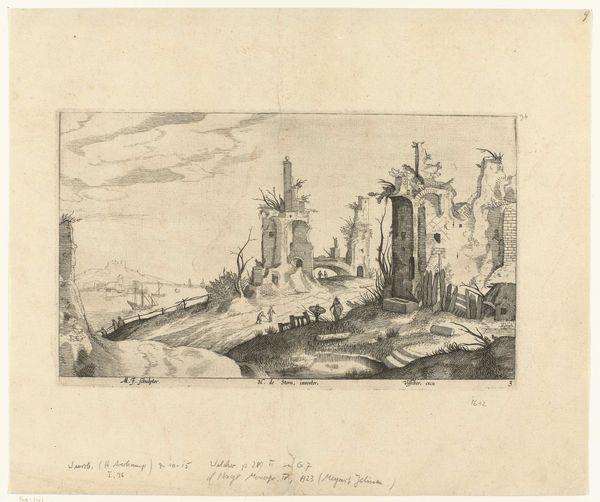
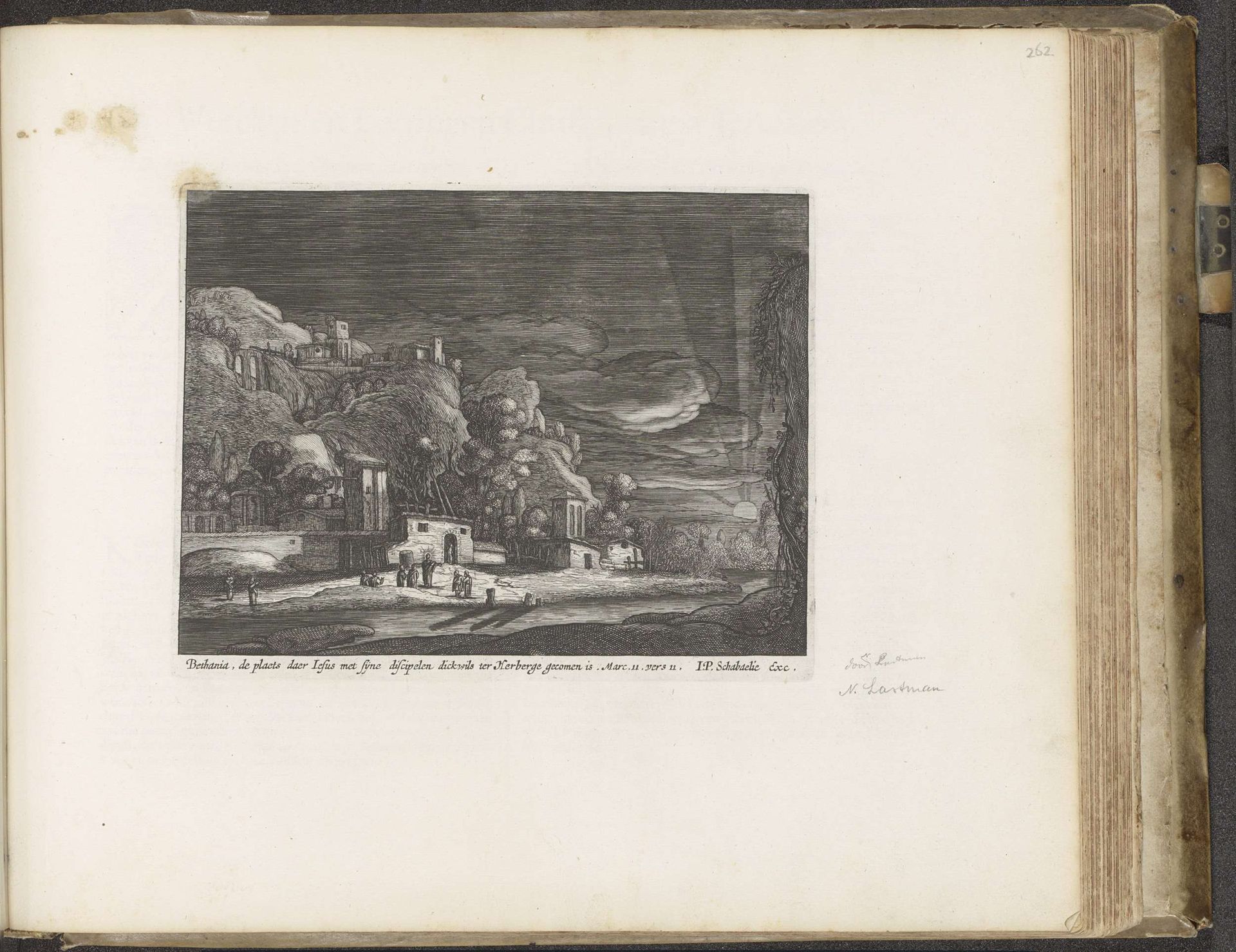
This engraving presents Bethany, with figures traversing a bridge into the village. Note the looming sky and the architectural structures rising dramatically from the rock; elements that evoke both aspiration and vulnerability. This ascent recalls the ‘Ladder of Divine Ascent’, a motif found as early as ancient Egypt, symbolizing the soul's journey toward enlightenment. The figures clustered near the buildings echo similar gatherings in Renaissance paintings depicting biblical scenes. But here, the mood is subdued, almost foreboding. It is as if the artist tapped into the collective subconscious, a repository of shared human experiences. The shadows hint at the darker aspects of our own spiritual quests, the sacrifices, and the inevitable confrontations with our inner selves. The symbols and motifs aren't frozen in time. They recur, echo, and are continuously transformed across cultures and epochs.

Artwork details
- Medium
- print, etching, graphite, engraving
- Dimensions
- height 161 mm, width 208 mm
- Copyright
- Rijks Museum: Open Domain
Tags
dutch-golden-age
etching
landscape
coloured pencil
graphite
engraving
Comments
No comments
About this artwork
This engraving presents Bethany, with figures traversing a bridge into the village. Note the looming sky and the architectural structures rising dramatically from the rock; elements that evoke both aspiration and vulnerability. This ascent recalls the ‘Ladder of Divine Ascent’, a motif found as early as ancient Egypt, symbolizing the soul's journey toward enlightenment. The figures clustered near the buildings echo similar gatherings in Renaissance paintings depicting biblical scenes. But here, the mood is subdued, almost foreboding. It is as if the artist tapped into the collective subconscious, a repository of shared human experiences. The shadows hint at the darker aspects of our own spiritual quests, the sacrifices, and the inevitable confrontations with our inner selves. The symbols and motifs aren't frozen in time. They recur, echo, and are continuously transformed across cultures and epochs.
Comments
No comments