About this artwork
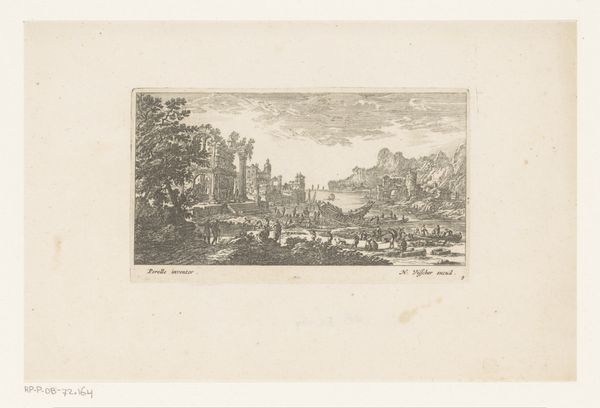
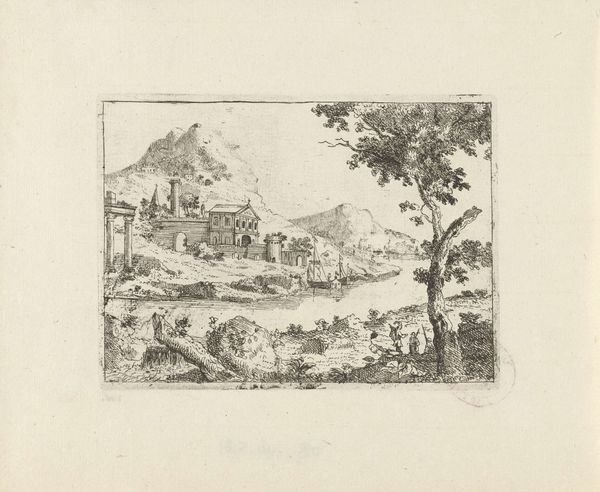
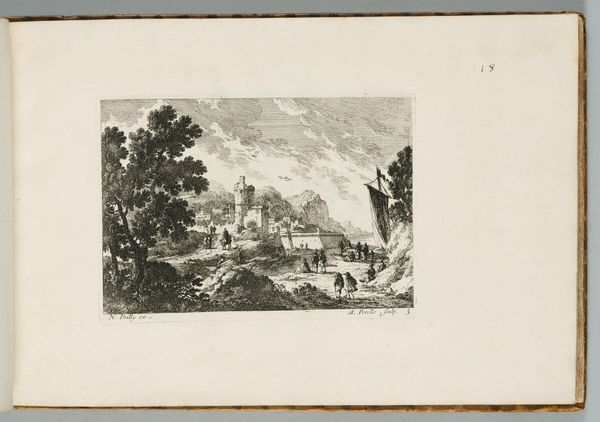
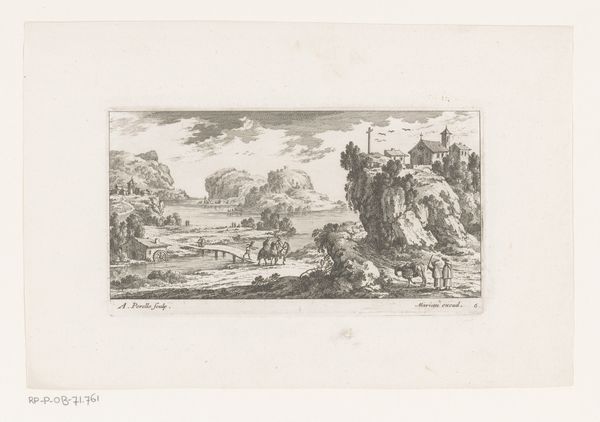
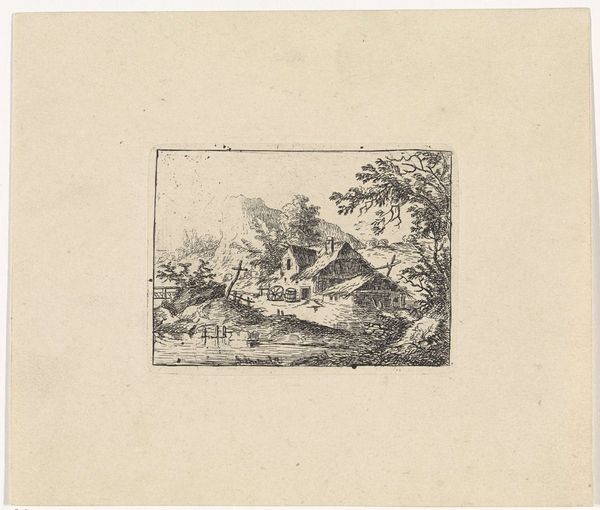
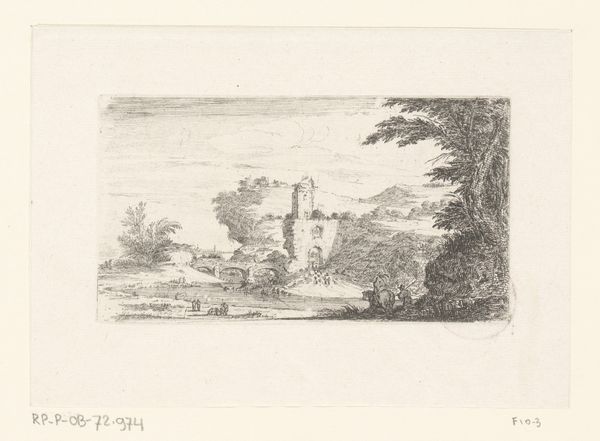
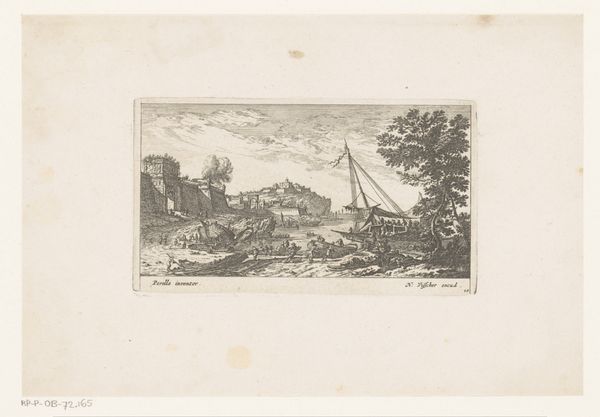
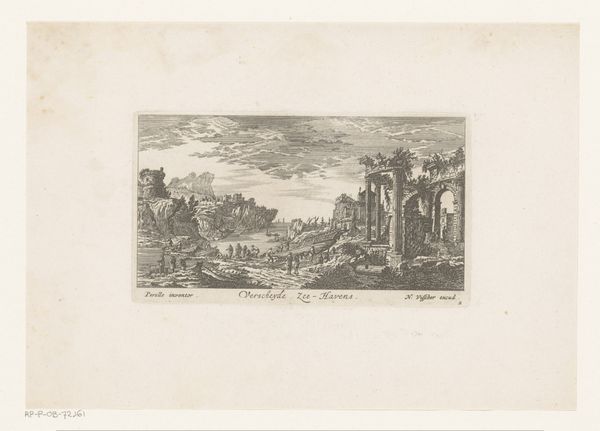
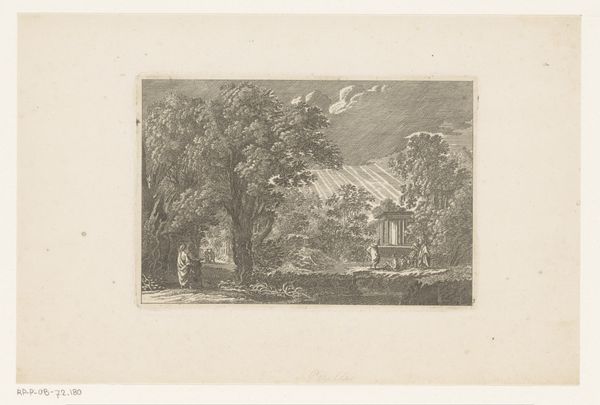
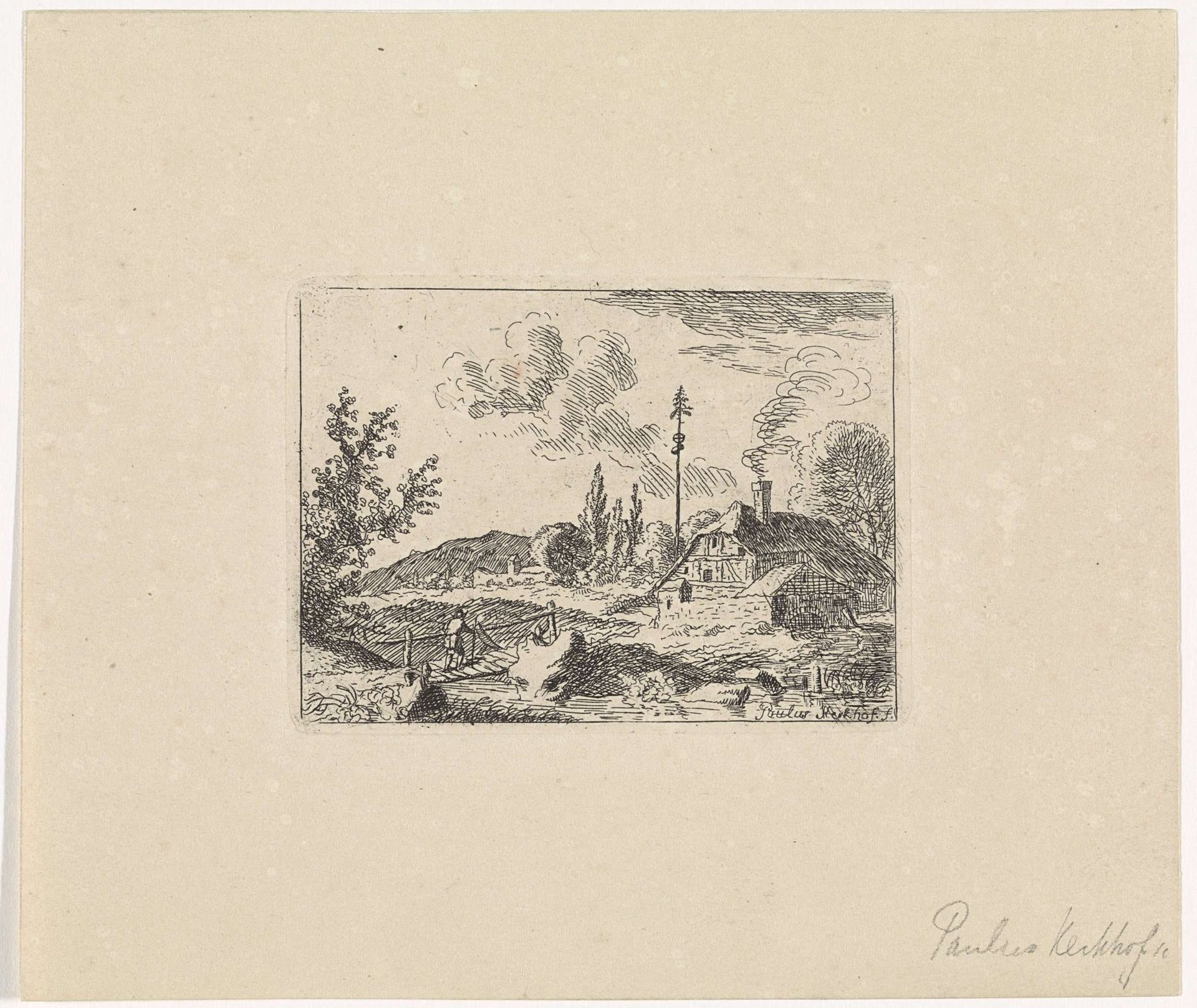
This is Paulus Kerkhof's etching titled 'Boerenhoeve in heuvellandschap'—or 'Farmhouse in a Hilly Landscape'—a small, intricate work defined by its detailed lines and contrasts. The composition, though modest in size, presents a scene with surprising depth. The artist employs the etching technique to create varying densities of lines, thereby articulating the forms and textures within the landscape. We see the farmhouse, rendered with sharp lines to define its structure, contrasted against the softer, more blurred background. This creates a visual hierarchy that draws our attention to the man-made structure amidst nature. Kerkhof's approach engages with ideas around landscape art and its construction. How does the human element—the farmhouse—sit within the natural landscape? Does it dominate, or is it harmoniously integrated? Through the formal qualities of line and composition, this tiny artwork invites us to consider the relationship between architecture and nature. The delicate lines and careful arrangement are not just aesthetically pleasing, but also a discourse on the act of seeing and interpreting the spaces we inhabit.

Artwork details
- Medium
- print, etching
- Dimensions
- height 70 mm, width 95 mm
- Copyright
- Rijks Museum: Open Domain
Tags
dutch-golden-age
etching
landscape
etching
realism
Comments
No comments
About this artwork
This is Paulus Kerkhof's etching titled 'Boerenhoeve in heuvellandschap'—or 'Farmhouse in a Hilly Landscape'—a small, intricate work defined by its detailed lines and contrasts. The composition, though modest in size, presents a scene with surprising depth. The artist employs the etching technique to create varying densities of lines, thereby articulating the forms and textures within the landscape. We see the farmhouse, rendered with sharp lines to define its structure, contrasted against the softer, more blurred background. This creates a visual hierarchy that draws our attention to the man-made structure amidst nature. Kerkhof's approach engages with ideas around landscape art and its construction. How does the human element—the farmhouse—sit within the natural landscape? Does it dominate, or is it harmoniously integrated? Through the formal qualities of line and composition, this tiny artwork invites us to consider the relationship between architecture and nature. The delicate lines and careful arrangement are not just aesthetically pleasing, but also a discourse on the act of seeing and interpreting the spaces we inhabit.
Comments
No comments