About this artwork
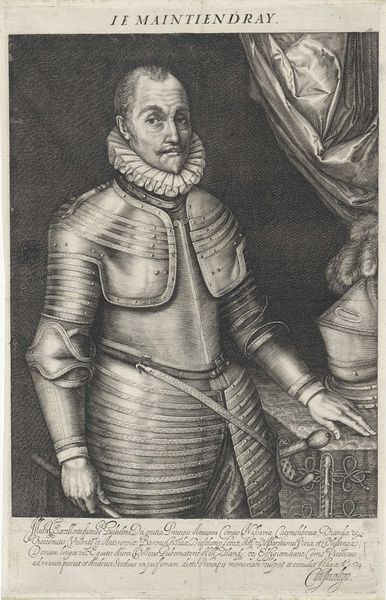
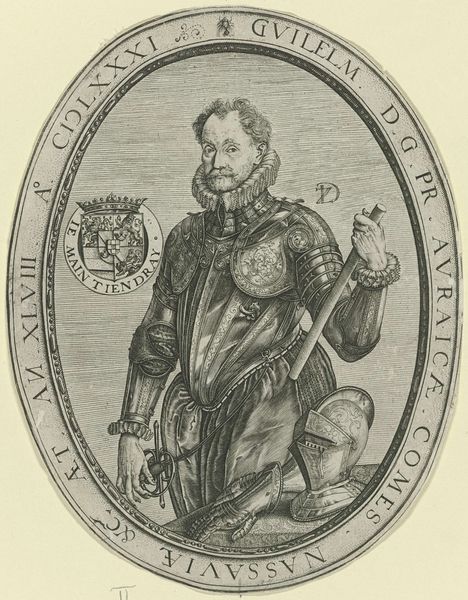
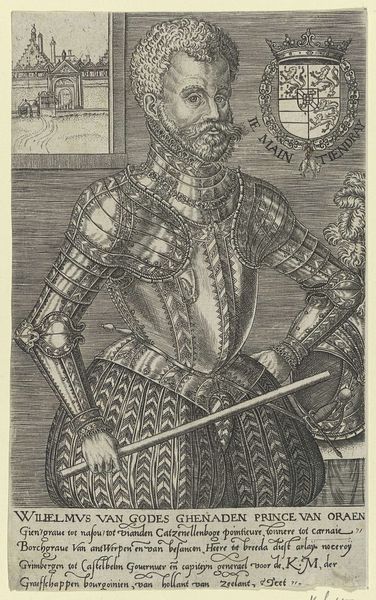
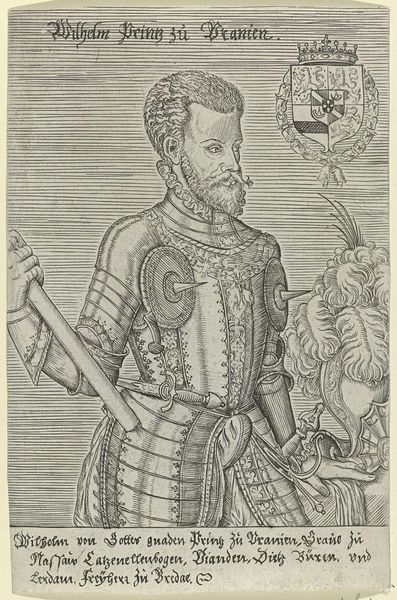
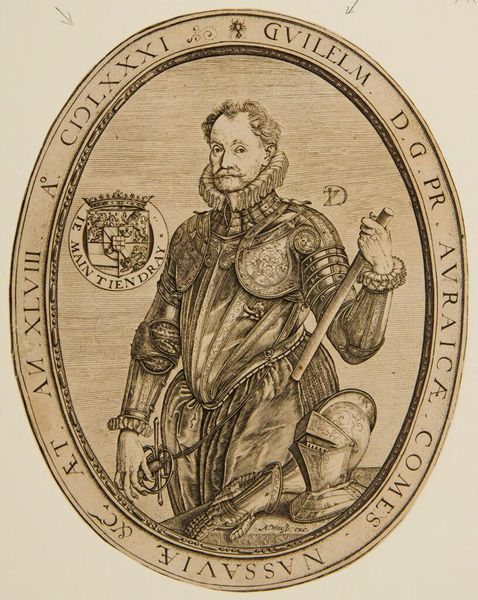
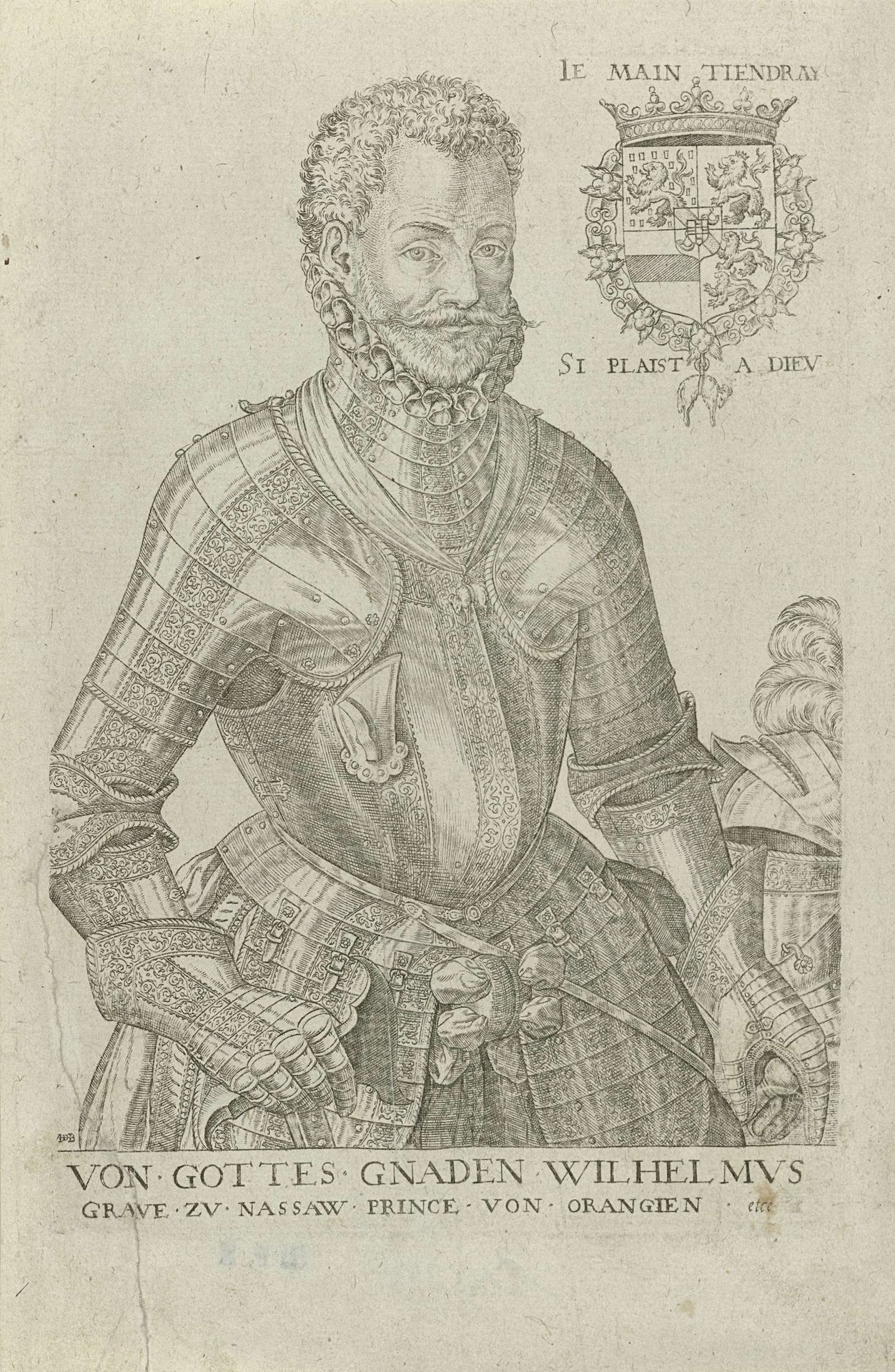
This print of Willem I, Prince of Orange, was made by Abraham de Bruyn in the late 16th century, a time of immense upheaval in the Netherlands. De Bruyn’s engraving would have served a clear political purpose. Consider the emphasis on Willem’s armour, the heraldry, and the mottos in French; all these visual cues present the Prince as a figure of noble authority. The inscription ‘By God’s Grace’ tells us that his power comes from above. But this was a period of religious war, of complex alliances and rapidly shifting power. The Eighty Years' War against the Spanish Habsburgs, and the emerging Dutch Republic, provide the historical backdrop. Willem of Orange became a key figure in the Dutch Revolt, leading the fight for independence. It is clear that this image creates meaning through the cultural references of nobility but also through the social conditions and political movements of the time. Understanding this print requires that we see it in the context of its time, as a piece of political propaganda designed to shore up support for Willem of Orange and the Dutch cause. Studying the pamphlets, political tracts, and popular songs of the time helps us to better understand the social function of images like this.
Portret van Willem I, prins van Oranje
after 1556

Abraham de Bruyn
1540 - 1587Location
RijksmuseumArtwork details
- Medium
- print, engraving
- Dimensions
- height 207 mm, width 135 mm
- Location
- Rijksmuseum
- Copyright
- Rijks Museum: Open Domain
Tags
Comments
Share your thoughts
About this artwork
This print of Willem I, Prince of Orange, was made by Abraham de Bruyn in the late 16th century, a time of immense upheaval in the Netherlands. De Bruyn’s engraving would have served a clear political purpose. Consider the emphasis on Willem’s armour, the heraldry, and the mottos in French; all these visual cues present the Prince as a figure of noble authority. The inscription ‘By God’s Grace’ tells us that his power comes from above. But this was a period of religious war, of complex alliances and rapidly shifting power. The Eighty Years' War against the Spanish Habsburgs, and the emerging Dutch Republic, provide the historical backdrop. Willem of Orange became a key figure in the Dutch Revolt, leading the fight for independence. It is clear that this image creates meaning through the cultural references of nobility but also through the social conditions and political movements of the time. Understanding this print requires that we see it in the context of its time, as a piece of political propaganda designed to shore up support for Willem of Orange and the Dutch cause. Studying the pamphlets, political tracts, and popular songs of the time helps us to better understand the social function of images like this.
Comments
Share your thoughts