About this artwork
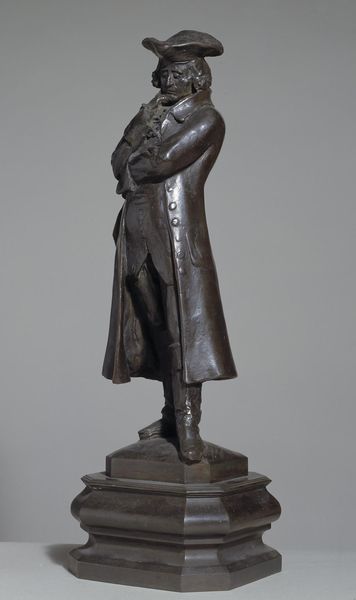
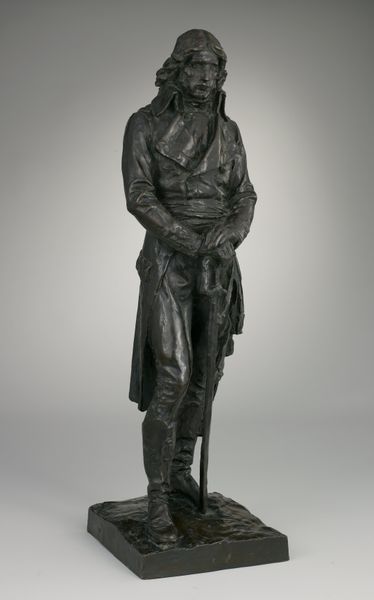
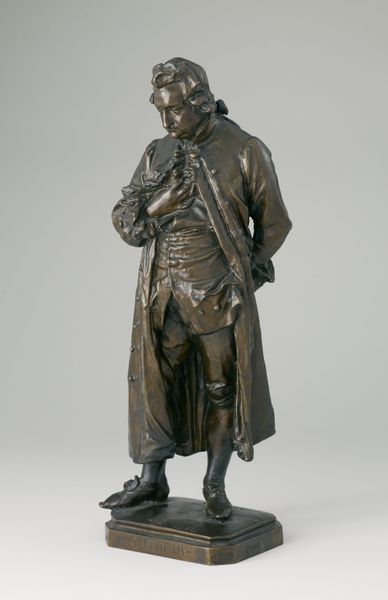
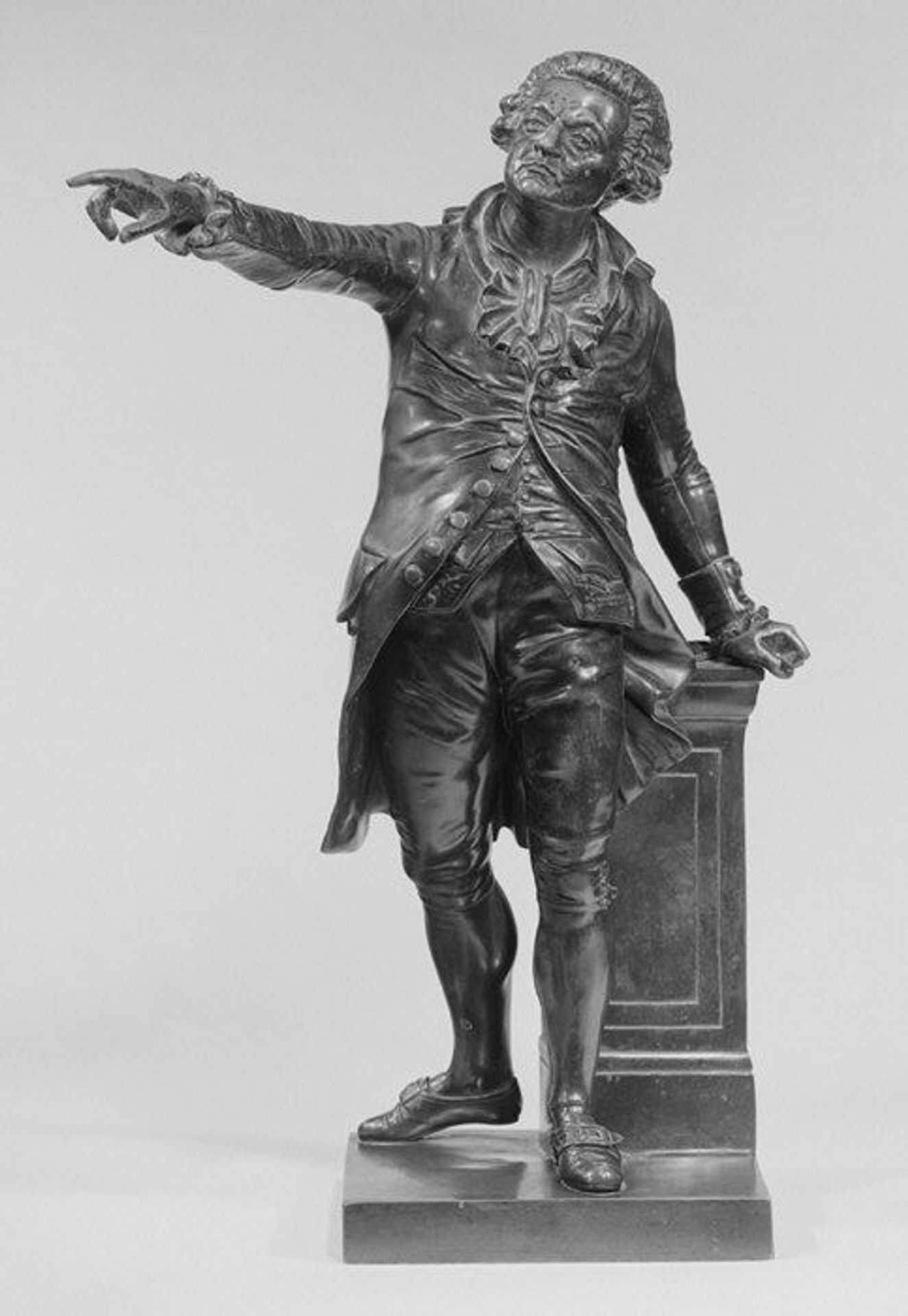
Andre-François-Joseph Truphême created this bronze sculpture, Mirabeau Before the Convention, during the 19th century. It memorializes Honoré Gabriel Riqueti, comte de Mirabeau, a prominent figure in the early stages of the French Revolution. Mirabeau was a nobleman, yet he advocated for the rights of the Third Estate, the common people. The sculpture depicts him in a moment of impassioned speech, his arm outstretched as if addressing the National Convention. Notice his clothing: though a revolutionary, he remains adorned in the trappings of aristocracy, his powdered wig and elaborate coat a visual reminder of the complexities of identity during a time of immense social upheaval. This sculpture invites us to reflect on how individuals navigate their roles within larger political movements, and how historical narratives are constructed and remembered. It prompts questions about loyalty, social class, and the shifting sands of power during revolutionary times.
Mirabeau Before the Convention 1857 - 1872

Andre-François-Joseph Truphême
1820 - 1888
The Metropolitan Museum of Art
Metropolitan Museum of Art, New York, NYArtwork details
- Dimensions
- Height: 18 in. (45.7 cm)
- Location
- Metropolitan Museum of Art, New York, NY
- Copyright
- Public Domain
Comments
No comments
About this artwork
Andre-François-Joseph Truphême created this bronze sculpture, Mirabeau Before the Convention, during the 19th century. It memorializes Honoré Gabriel Riqueti, comte de Mirabeau, a prominent figure in the early stages of the French Revolution. Mirabeau was a nobleman, yet he advocated for the rights of the Third Estate, the common people. The sculpture depicts him in a moment of impassioned speech, his arm outstretched as if addressing the National Convention. Notice his clothing: though a revolutionary, he remains adorned in the trappings of aristocracy, his powdered wig and elaborate coat a visual reminder of the complexities of identity during a time of immense social upheaval. This sculpture invites us to reflect on how individuals navigate their roles within larger political movements, and how historical narratives are constructed and remembered. It prompts questions about loyalty, social class, and the shifting sands of power during revolutionary times.
Comments
No comments