About this artwork
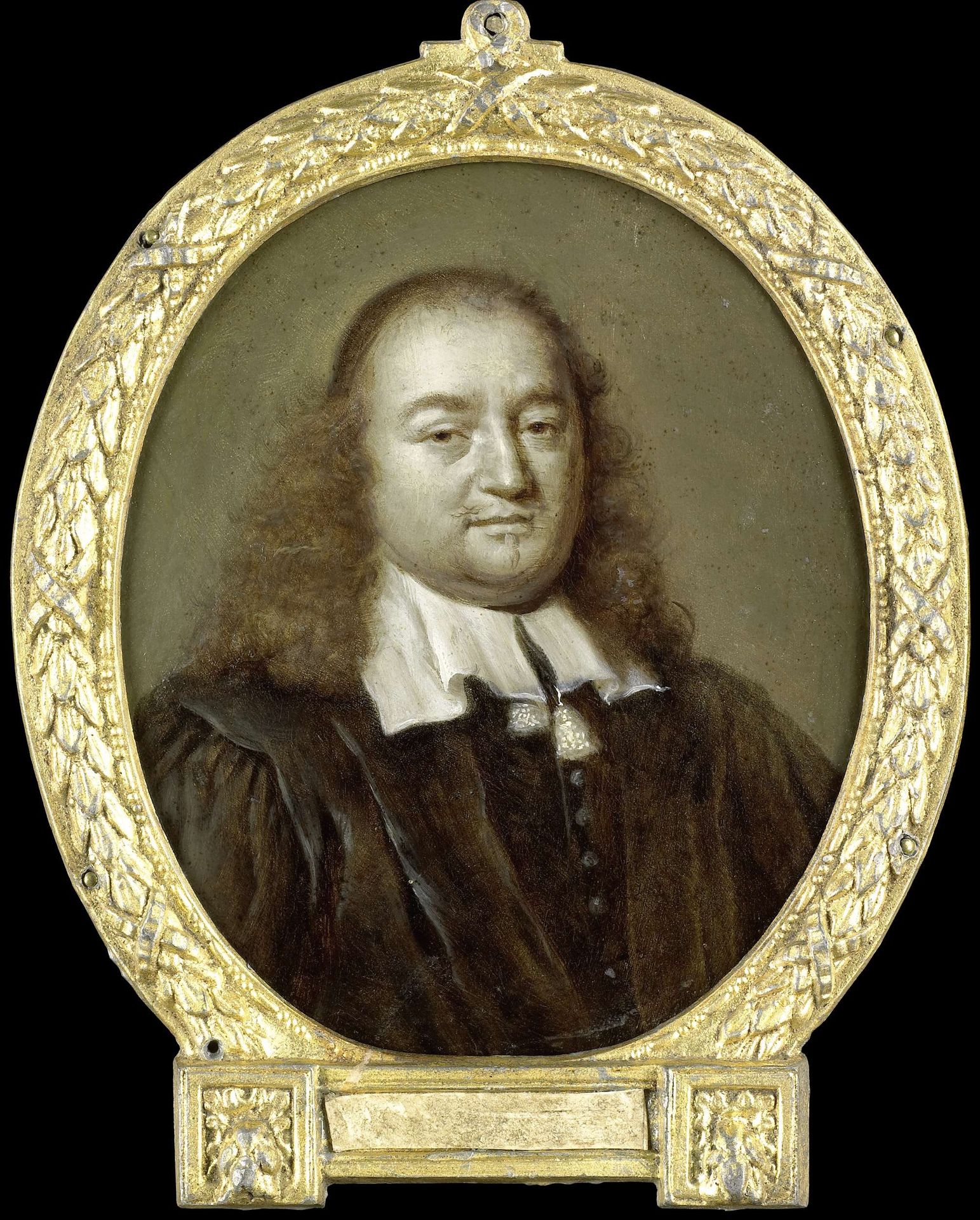
Jan Maurits Quinkhard painted this miniature portrait of Joannes Fredericus Gronovius, a professor at Leiden, in the Dutch Republic during the 18th century. It reflects the cultural value placed on scholarship and intellectual achievement within the Dutch Golden Age. Gronovius's profession is conveyed through his formal attire and serious expression, visual cues that speak to the status and respect afforded to academics in Dutch society. The elaborate gold frame further emphasizes Gronovius's social standing. During this period, institutions like the University of Leiden played a crucial role in shaping intellectual life, promoting the spread of knowledge and fostering a culture of learning. Historians can gain a deeper understanding of this artwork by examining archival records such as university documents, personal letters, and biographical accounts of prominent figures. These primary sources will allow us to better understand the cultural and intellectual context that shaped not only the artwork but also the society in which it was produced.
Portrait of Joannes Fredericus Gronovius, Philologist and Jurist, Professor in Leiden
1732 - 1771

Artwork details
- Medium
- painting, oil-paint
- Dimensions
- height 11 cm, width 9.5 cm, height 41.2 cm, width 47.4 cm, depth 1.6 cm
- Copyright
- Rijks Museum: Open Domain
Tags
Comments
Share your thoughts
About this artwork
Jan Maurits Quinkhard painted this miniature portrait of Joannes Fredericus Gronovius, a professor at Leiden, in the Dutch Republic during the 18th century. It reflects the cultural value placed on scholarship and intellectual achievement within the Dutch Golden Age. Gronovius's profession is conveyed through his formal attire and serious expression, visual cues that speak to the status and respect afforded to academics in Dutch society. The elaborate gold frame further emphasizes Gronovius's social standing. During this period, institutions like the University of Leiden played a crucial role in shaping intellectual life, promoting the spread of knowledge and fostering a culture of learning. Historians can gain a deeper understanding of this artwork by examining archival records such as university documents, personal letters, and biographical accounts of prominent figures. These primary sources will allow us to better understand the cultural and intellectual context that shaped not only the artwork but also the society in which it was produced.
Comments
Share your thoughts