1832
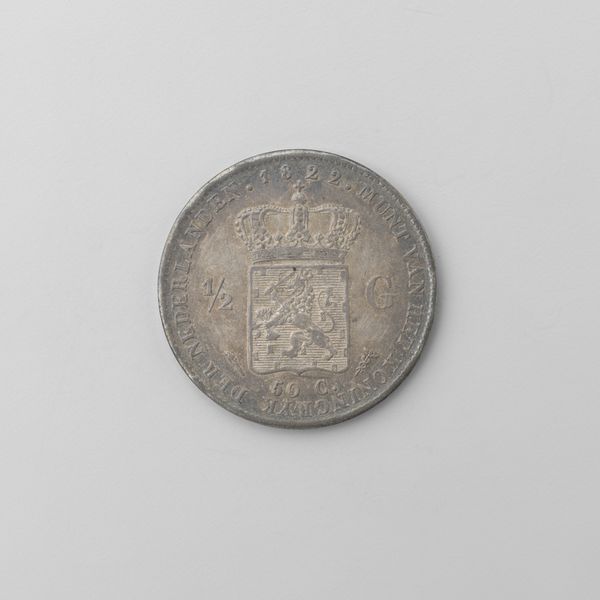
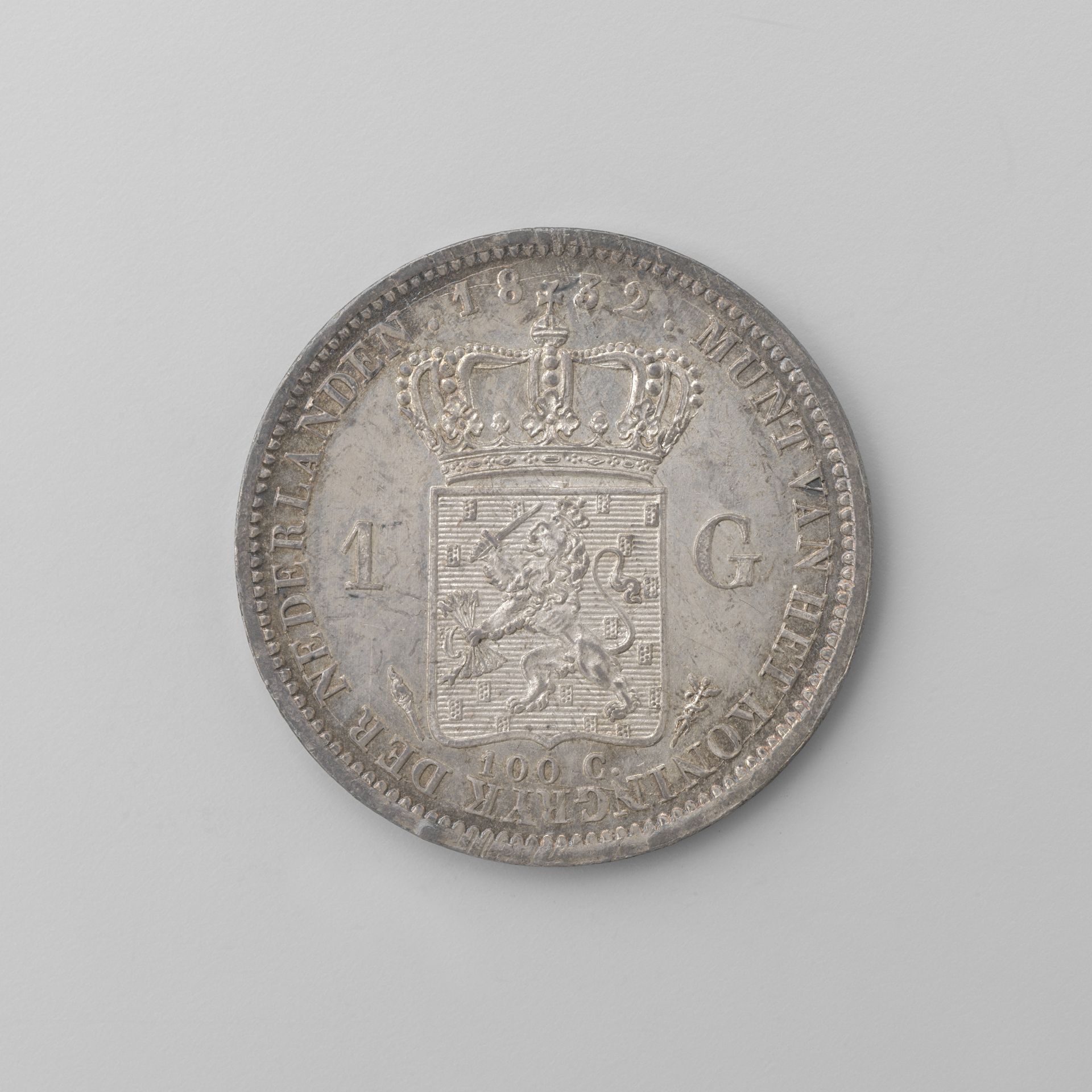
Nederlandse gulden, 1832

Willem I (koning der Nederlanden)
1772 - 1843Location
RijksmuseumListen to curator's interpretation
Curatorial notes
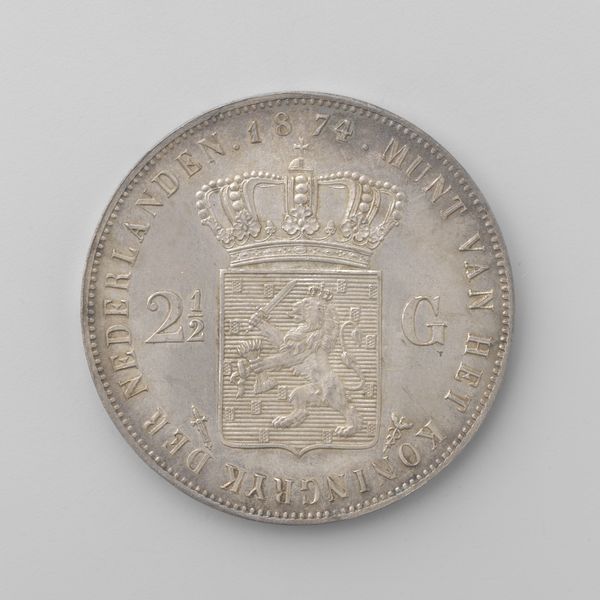
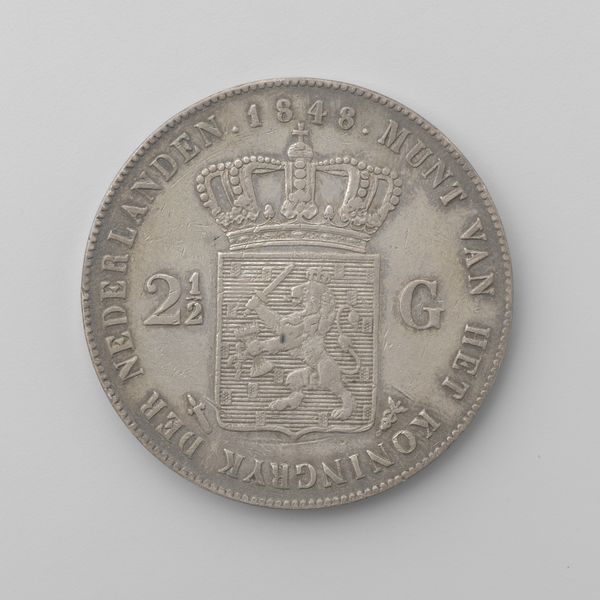
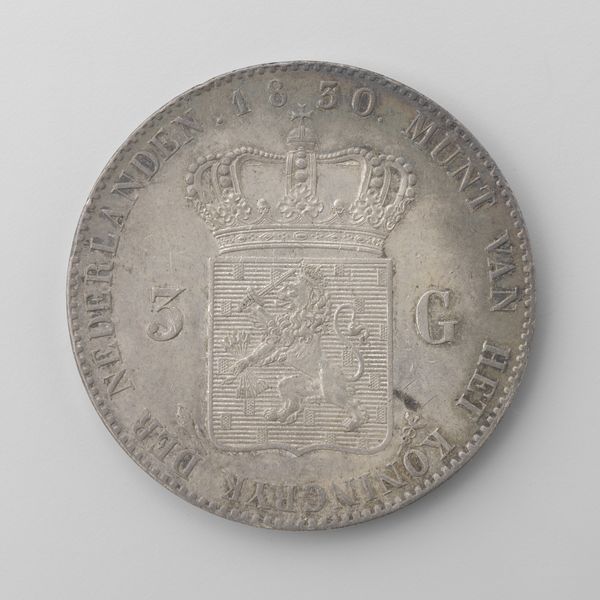
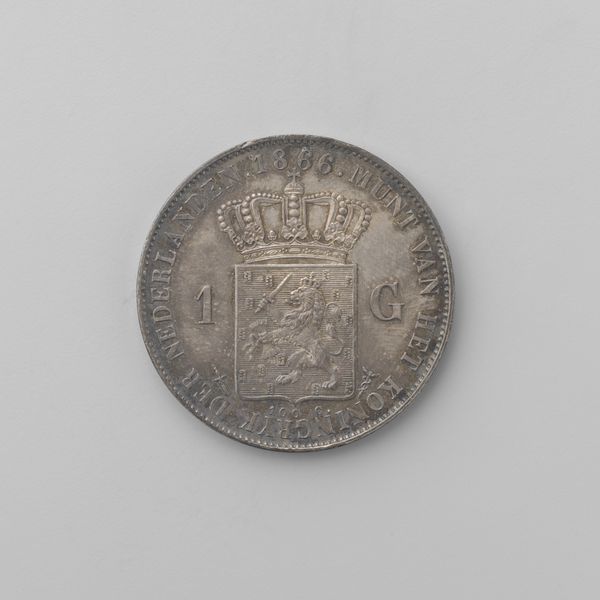
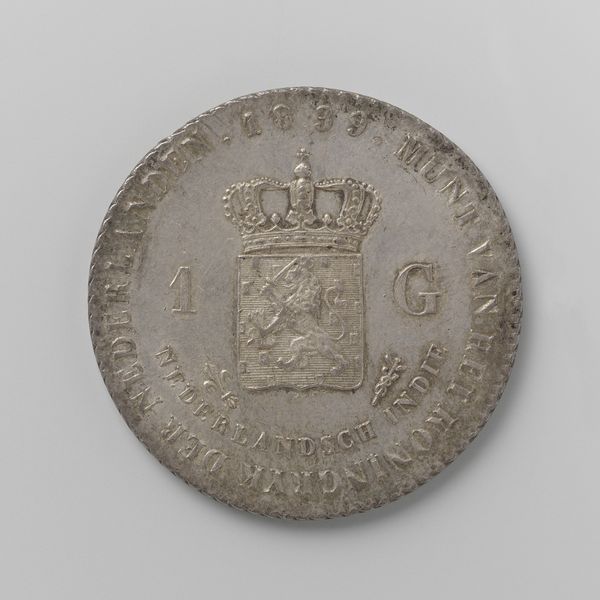
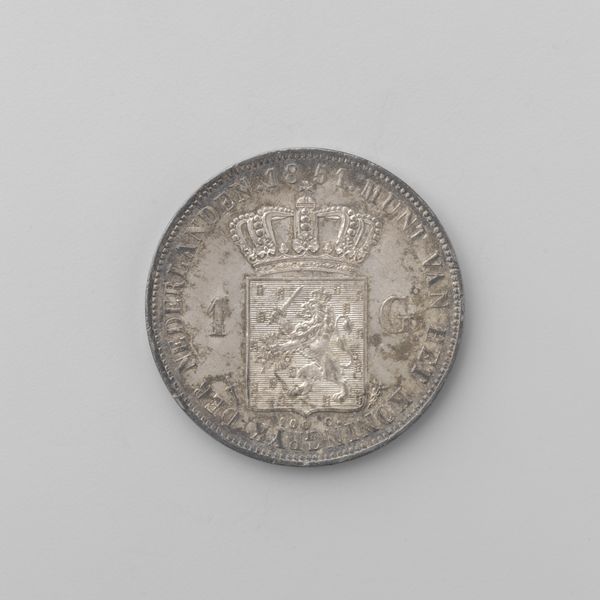
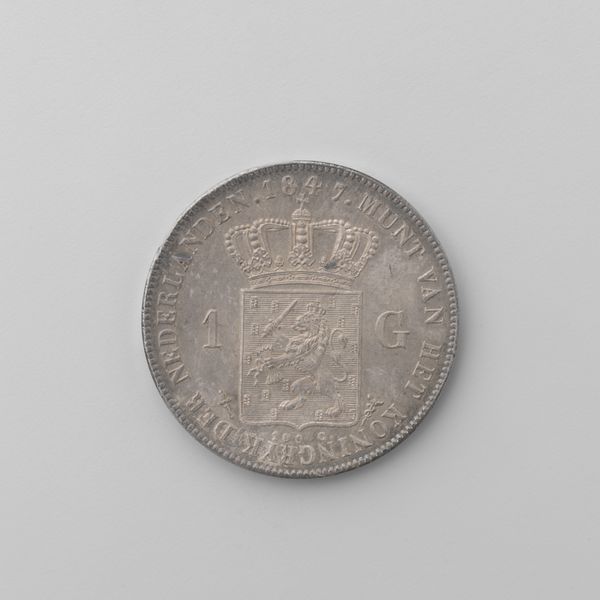
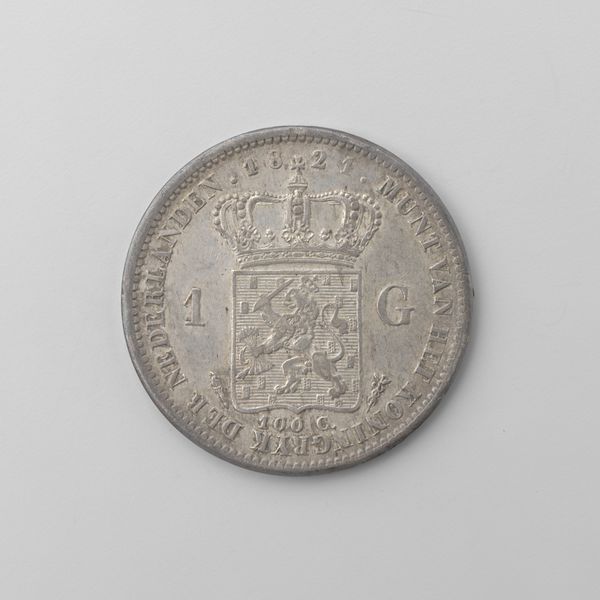
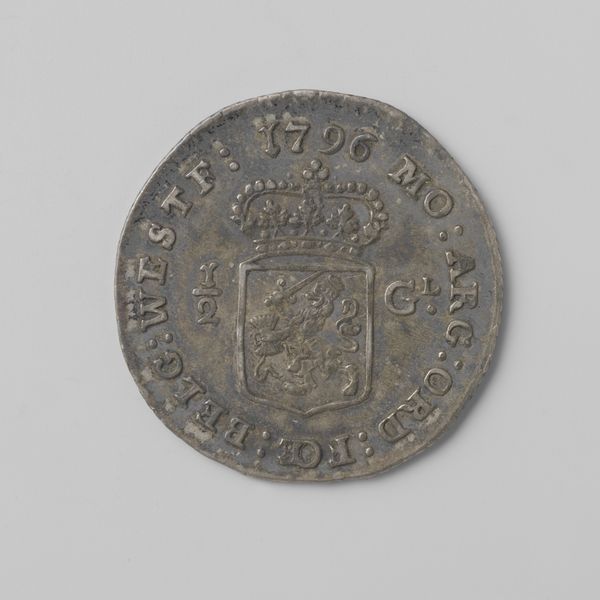
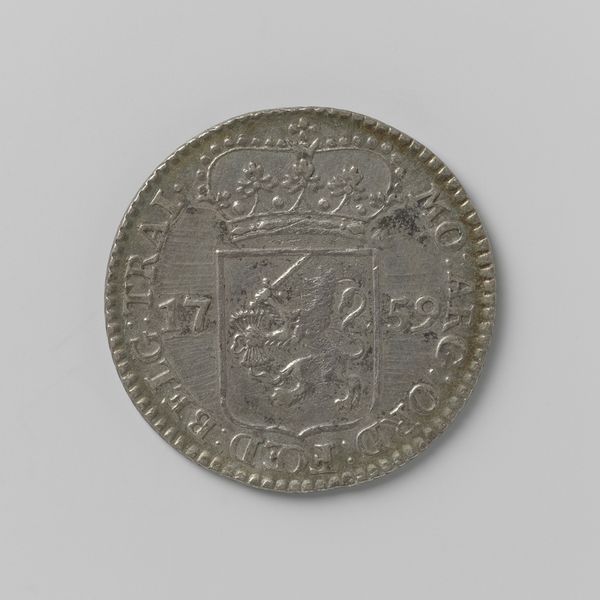
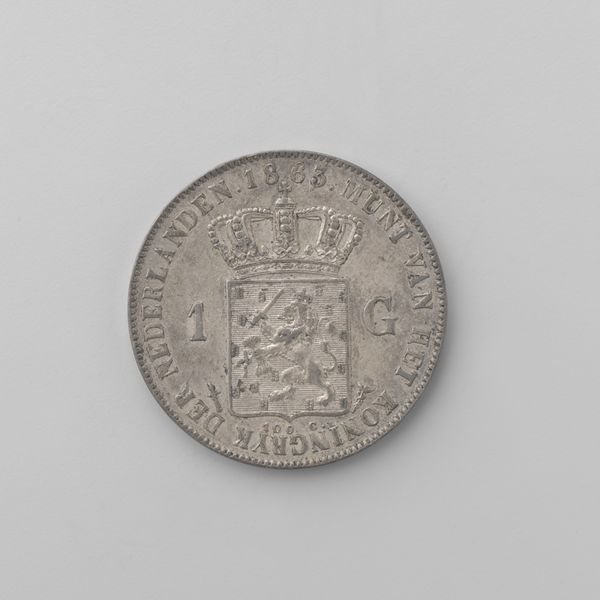
Editor: This is a Dutch Gulden from 1832. Looking at it, the artistry packed into such a small object is remarkable. I see Willem I's portrait implied in the heraldic shield on this coin, but what else can we read from this coin’s imagery? Curator: Think of the gulden not just as currency, but as a carefully crafted symbol of national identity and monarchical power in the newly formed Kingdom of the Netherlands. Consider what this imagery communicated to its users. Editor: So, beyond its monetary value, it's also a statement? The crown and the lion... it all seems very deliberate. Curator: Precisely. In 1832, the Netherlands was solidifying its identity after French rule. Currency became a tool for nation-building. Willem I's image, even if stylized, was circulated amongst the population. Ask yourself, what other visual elements reinforce the narrative of a strong, stable, and divinely ordained monarchy? Editor: The inscription encircling the design, for one, emphasizing the King’s authority. It’s interesting how a small, everyday object became a vehicle for political messaging. It reminds me of propaganda. Curator: Indeed! And remember who likely interacted with these coins daily: merchants, farmers, laborers. So the Gulden’s symbols become normalized through constant exposure, subtly shaping public perceptions of power and legitimacy. Editor: I hadn’t thought about it that way. It's like a miniature billboard for the monarchy! Thanks, seeing it in the context of nation-building helps it make much more sense. Curator: Glad to offer a different perspective! Understanding the historical context reveals layers of meaning often overlooked when simply looking at the object itself.