About this artwork
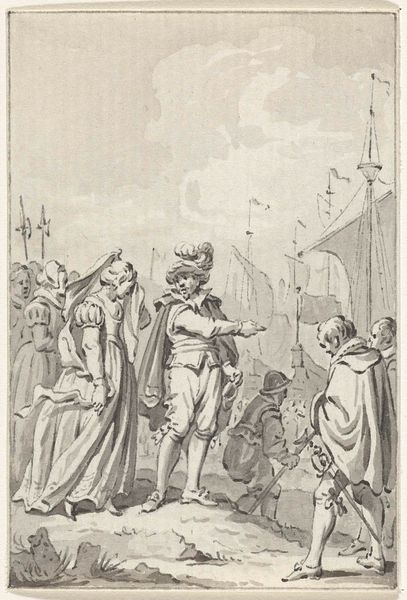
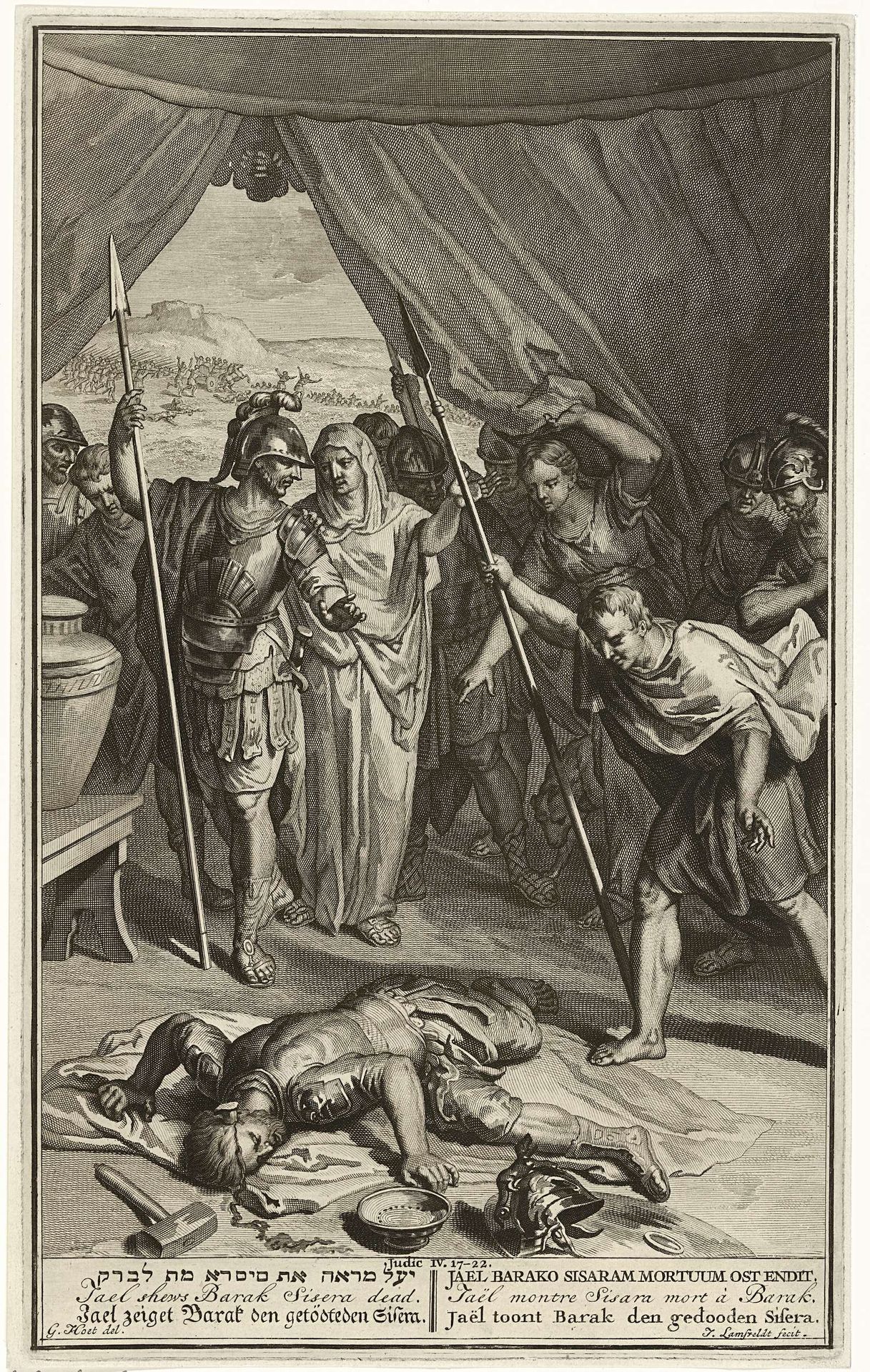
Jan Lamsvelt created this print, “Jaël toont Barak het dode lichaam van Sisera,” which translates to “Jael shows Barak the dead body of Sisera.” It is a depiction of a biblical story that, when seen through a contemporary lens, can reveal how gender, power, and identity are constructed and challenged in both historical narratives and artistic representations. Here, we witness Jael, a woman, presenting the slain body of Sisera, a military commander, to Barak. Sisera sought refuge in Jael’s tent. Instead, she assassinated him. This act positions Jael as both a subversive figure, who violates the expected norms of hospitality, and a powerful agent of change. She takes decisive action to alter the course of events. The image, though historical, resonates with contemporary discussions about female agency, moral ambiguity, and the disruption of traditional power structures. It compels us to consider whose stories are told and how they are framed. It also reflects how individuals navigate complex ethical and political landscapes, especially when traditional roles are upended.
Jaël toont Barak het dode lichaam van Sisera 1684 - 1743

Jan Lamsvelt
1674 - 1743Location
RijksmuseumArtwork details
- Medium
- print, engraving
- Dimensions
- height 350 mm, width 215 mm
- Location
- Rijksmuseum
- Copyright
- Rijks Museum: Open Domain
Tags
narrative-art
baroque
figuration
history-painting
engraving
Comments
No comments
About this artwork
Jan Lamsvelt created this print, “Jaël toont Barak het dode lichaam van Sisera,” which translates to “Jael shows Barak the dead body of Sisera.” It is a depiction of a biblical story that, when seen through a contemporary lens, can reveal how gender, power, and identity are constructed and challenged in both historical narratives and artistic representations. Here, we witness Jael, a woman, presenting the slain body of Sisera, a military commander, to Barak. Sisera sought refuge in Jael’s tent. Instead, she assassinated him. This act positions Jael as both a subversive figure, who violates the expected norms of hospitality, and a powerful agent of change. She takes decisive action to alter the course of events. The image, though historical, resonates with contemporary discussions about female agency, moral ambiguity, and the disruption of traditional power structures. It compels us to consider whose stories are told and how they are framed. It also reflects how individuals navigate complex ethical and political landscapes, especially when traditional roles are upended.
Comments
No comments