About this artwork
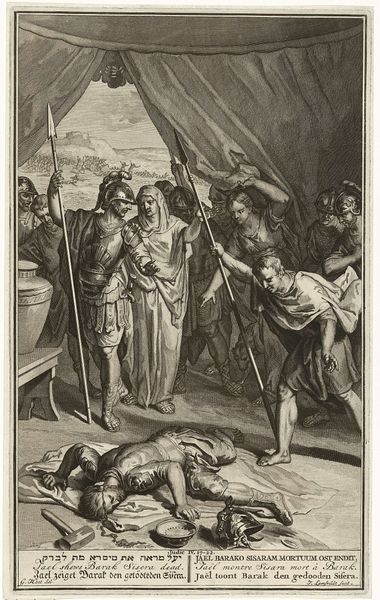
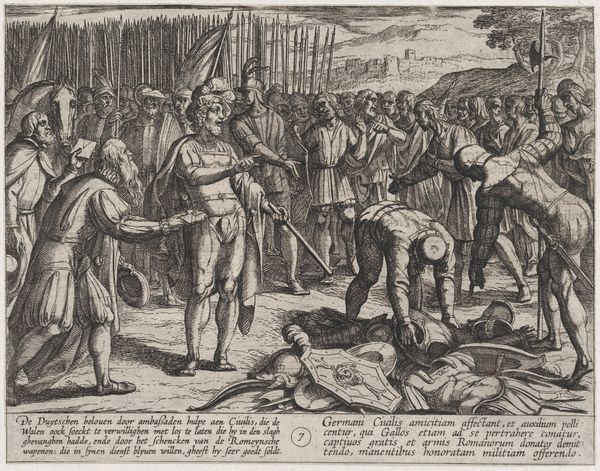
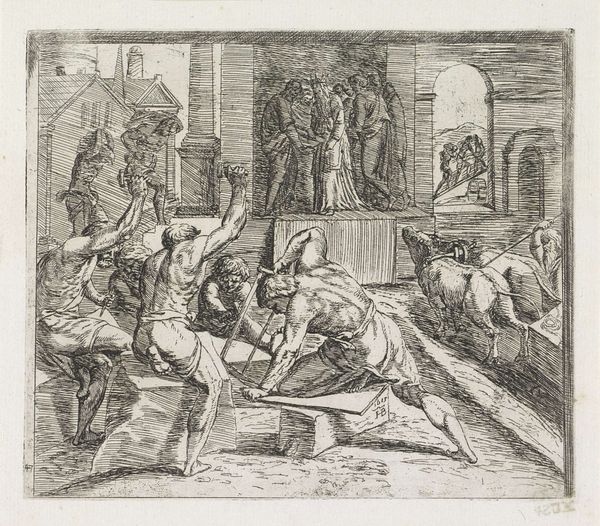
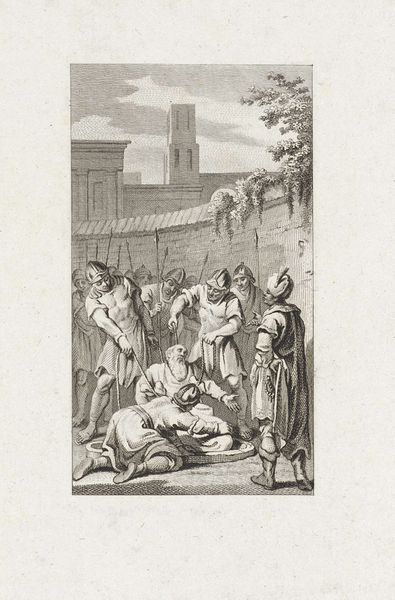
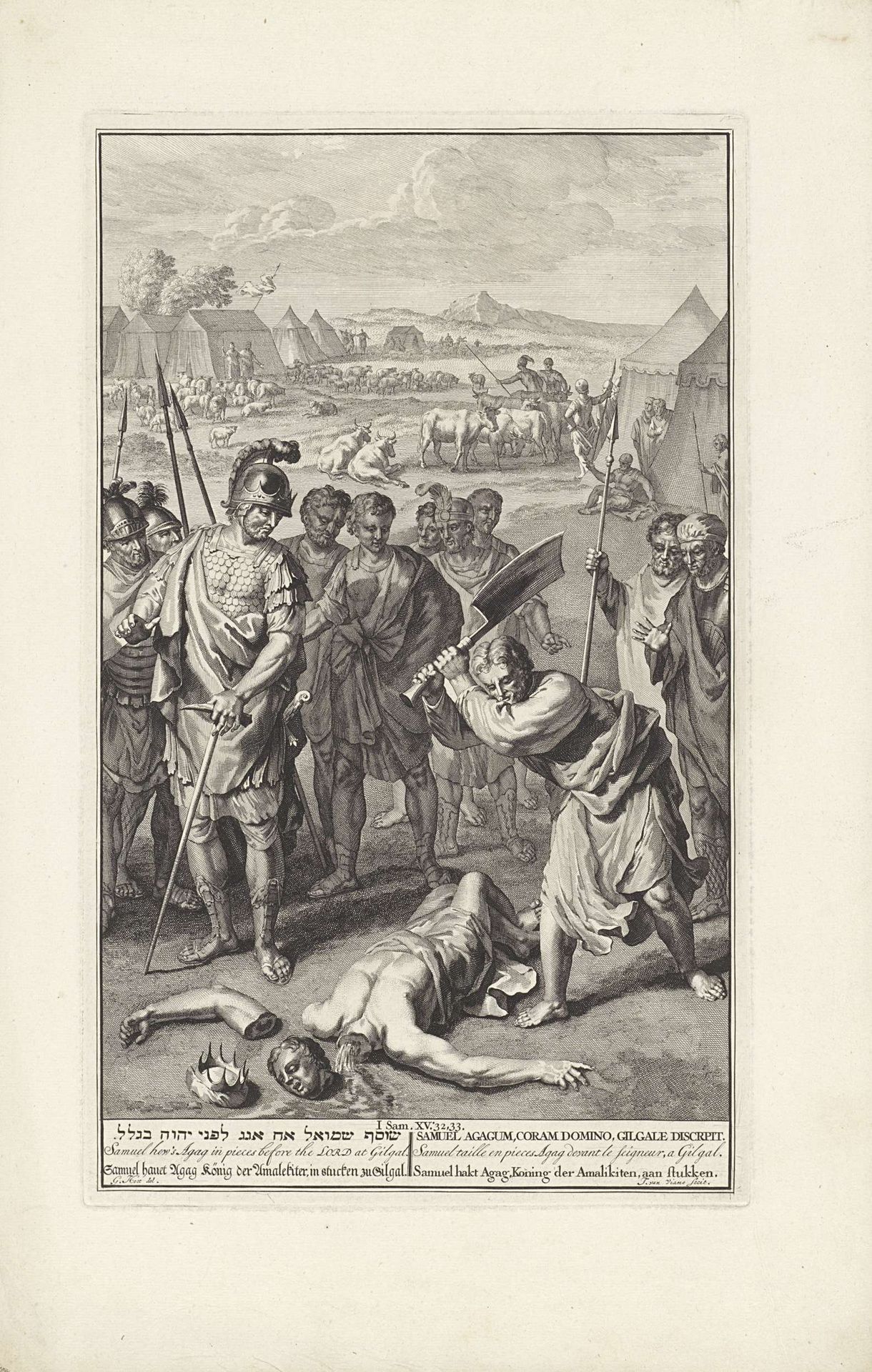
Jan van Vianen made this print of 'Samuel hakt Agag aan stukken', or 'Samuel Hacking Agag to Pieces', sometime between 1660 and 1726. Van Vianen depicts a scene from the Old Testament, but he does so through a distinctly Dutch lens, referencing the visual codes of contemporary Dutch society. The image presents Samuel, a prophet and judge, executing Agag, the captured king of the Amalekites. This print resonates with the religious and political climate of the Dutch Golden Age. The Dutch Republic, newly independent, often drew parallels between their struggle for freedom and the biblical narratives of the Israelites. This print underscores the cultural significance of religious narratives in shaping Dutch identity and political ideology. The Rijksmuseum, where this print is housed, plays a role in preserving and interpreting such cultural artifacts. Understanding this print requires a broader knowledge of Dutch history, religious beliefs, and artistic conventions. Historians consult a range of sources to understand the complex interplay between art, religion, and politics in shaping cultural identity.
Samuel hakt Agag aan stukken
Possibly 1705 - 1728

Jan van Vianen
1660 - 1726Location
RijksmuseumArtwork details
- Medium
- print, engraving
- Dimensions
- height 362 mm, width 221 mm
- Location
- Rijksmuseum
- Copyright
- Rijks Museum: Open Domain
Tags
Comments
Share your thoughts
About this artwork
Jan van Vianen made this print of 'Samuel hakt Agag aan stukken', or 'Samuel Hacking Agag to Pieces', sometime between 1660 and 1726. Van Vianen depicts a scene from the Old Testament, but he does so through a distinctly Dutch lens, referencing the visual codes of contemporary Dutch society. The image presents Samuel, a prophet and judge, executing Agag, the captured king of the Amalekites. This print resonates with the religious and political climate of the Dutch Golden Age. The Dutch Republic, newly independent, often drew parallels between their struggle for freedom and the biblical narratives of the Israelites. This print underscores the cultural significance of religious narratives in shaping Dutch identity and political ideology. The Rijksmuseum, where this print is housed, plays a role in preserving and interpreting such cultural artifacts. Understanding this print requires a broader knowledge of Dutch history, religious beliefs, and artistic conventions. Historians consult a range of sources to understand the complex interplay between art, religion, and politics in shaping cultural identity.
Comments
Share your thoughts