About this artwork
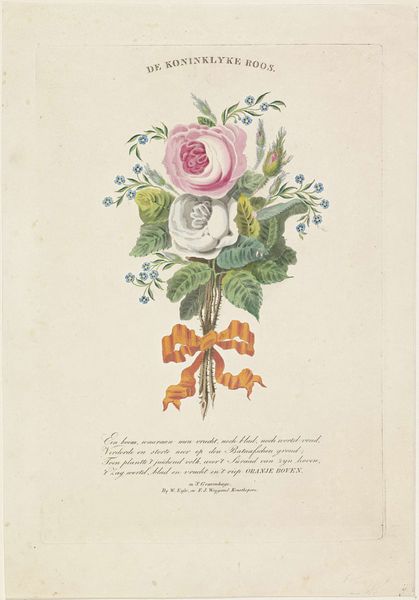
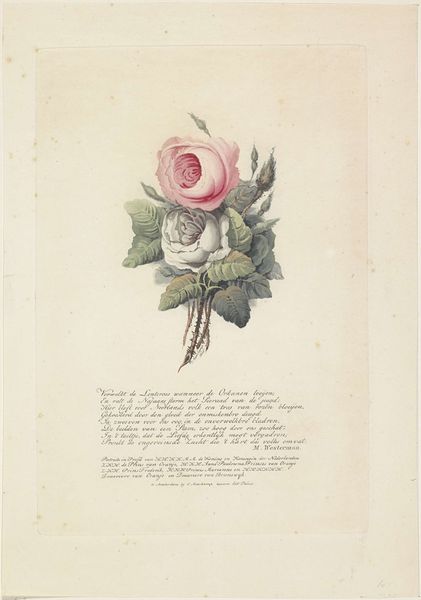
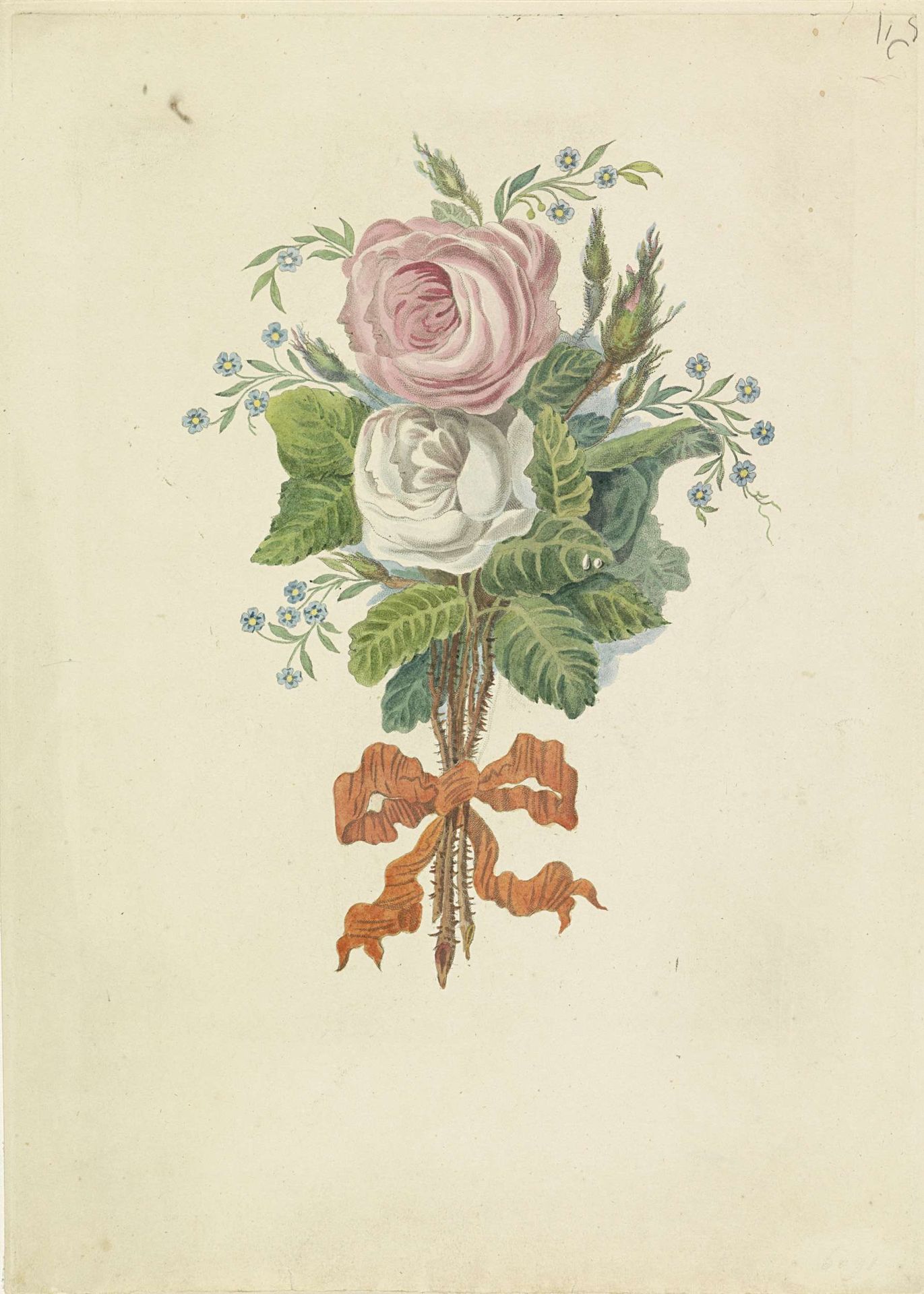
Leonardus Schweickhardt made this watercolor titled "Roses with the silhouettes of the Royal Family" in 1816. Working with watercolor on paper, Schweickhardt would have exploited the transparency of the medium, layering washes to build up the forms of the roses, leaves, and ribbon. Watercolor, while embraced by amateurs, demands absolute precision and control, and the artist has skillfully rendered the botanical elements with scientific accuracy. Roses are notoriously difficult to capture because of the complexity of their petals, which are here built up from delicate washes. The thorns have also been skillfully depicted; their presence introduces a subtle sense of unease. But the work's real content lies in the silhouettes of the Royal family, concealed within the petals. This clandestine symbolism elevates the work beyond mere botanical illustration, embedding it within the social and political context of the time. It reminds us that materials, techniques, and the act of making are always intertwined with broader cultural meanings.
Rozen met de silhouetten van de Koninklijke familie, 1816 1816

Artwork details
- Medium
- drawing, watercolor
- Dimensions
- height 325 mm, width 229 mm
- Copyright
- Rijks Museum: Open Domain
Tags
drawing
watercolor
coloured pencil
botanical drawing
botanical art
watercolor
realism
Comments
No comments
About this artwork
Leonardus Schweickhardt made this watercolor titled "Roses with the silhouettes of the Royal Family" in 1816. Working with watercolor on paper, Schweickhardt would have exploited the transparency of the medium, layering washes to build up the forms of the roses, leaves, and ribbon. Watercolor, while embraced by amateurs, demands absolute precision and control, and the artist has skillfully rendered the botanical elements with scientific accuracy. Roses are notoriously difficult to capture because of the complexity of their petals, which are here built up from delicate washes. The thorns have also been skillfully depicted; their presence introduces a subtle sense of unease. But the work's real content lies in the silhouettes of the Royal family, concealed within the petals. This clandestine symbolism elevates the work beyond mere botanical illustration, embedding it within the social and political context of the time. It reminds us that materials, techniques, and the act of making are always intertwined with broader cultural meanings.
Comments
No comments