1550 - 1599
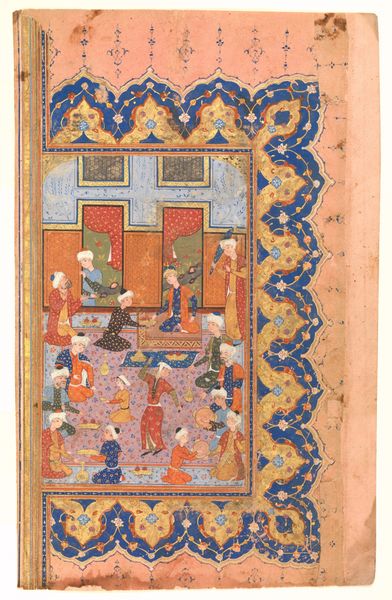
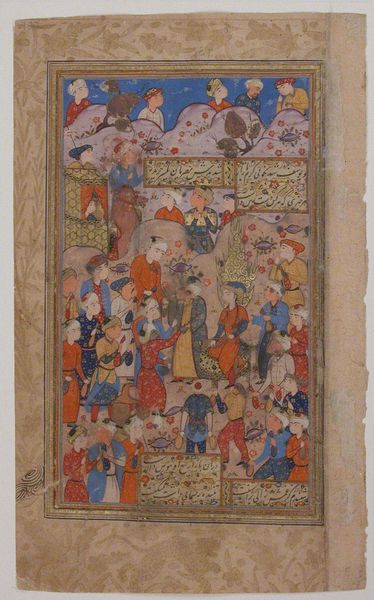
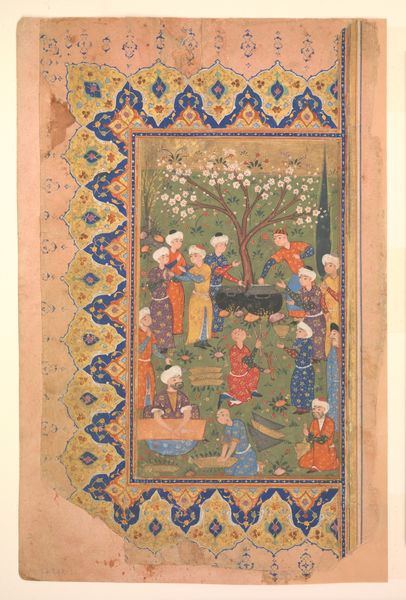
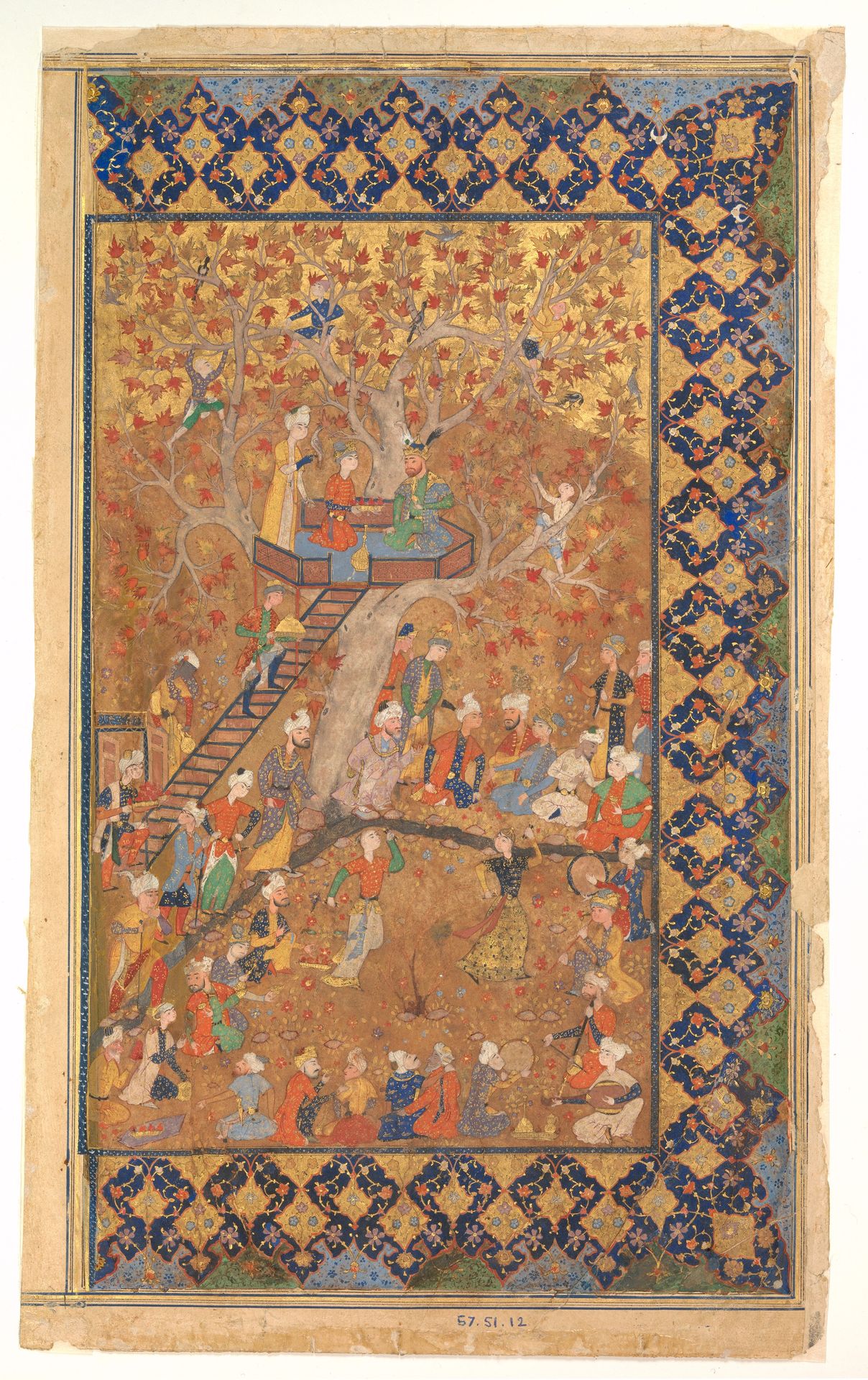
"Entertainment in a Garden", Folio from a Khamsa of Amir Khusrau Dihlavi, Matla' al-Anvar

Amir Khusrau Dihlavi
1228 - 1350
The Metropolitan Museum of Art
Metropolitan Museum of Art, New York, NYListen to curator's interpretation
Curatorial notes
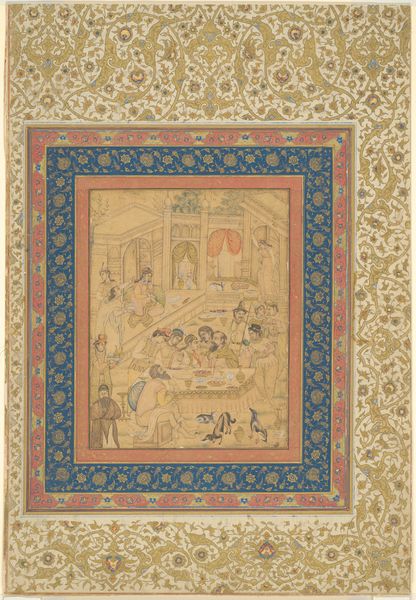
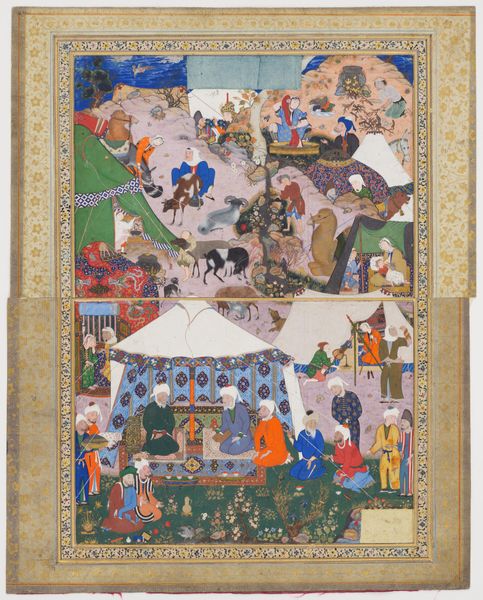
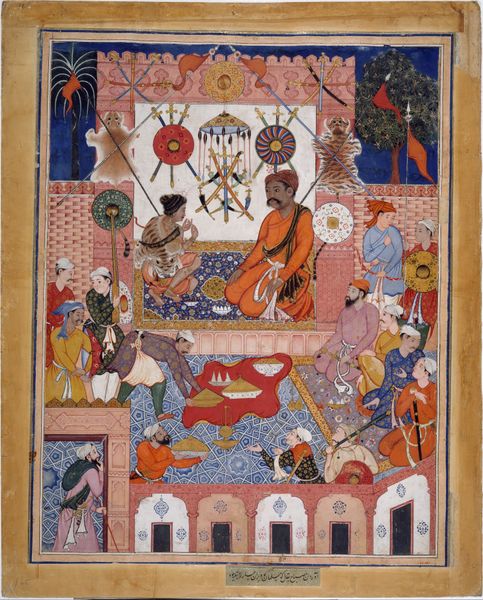
Curator: I find this scene utterly enchanting, teeming with life and exquisite detail. Editor: Enchanting, yes, in that it evokes a specific kind of hierarchical power structure with the ruler quite literally elevated above the throng. Curator: Indeed. We are looking at a folio titled "Entertainment in a Garden" from a Khamsa of Amir Khusrau Dihlavi, Matla' al-Anvar, created sometime between 1550 and 1599. The scene is brought to life with tempera, ink, and watercolors on paper. Note how every figure, every leaf, is rendered with precision. Editor: The meticulousness certainly underscores its value, doesn’t it? Consider the political context in which such a manuscript would be circulated—ostensibly a courtly scene of leisure. I can see its symbolic potency in solidifying dynastic authority and asserting dominance through patronage of the arts. Curator: I would point to the way the artist manipulates space. Look at how the composition pulls the eye upward towards the elevated figures. And how, despite the density of figures, a sense of depth is artfully suggested. Note the varying colours and meticulous layering that give the scene vitality. Editor: It's a carefully curated representation. The abundance of figures suggests an investment in conveying wealth, influence and a very specific visual culture. The very placement of individuals reinforces this. Who is allowed proximity? Who is below? Who is ascending via ladder, a staged event with social consequence? Curator: Even in the stylized depiction of nature, there's a kind of formalism at play, wouldn't you agree? Each leaf is distinct, each branch carefully placed... contributing to a visual harmony. It’s a masterclass in controlled, aesthetic representation, designed to delight the senses, rather than mirroring reality directly. Editor: A designed reality serving a purpose: this artwork tells us volumes, through visual cues and established roles, about social life, values, and how political image-making functioned. I wonder who this patron was, and how they hoped their image would last. Curator: Thinking about the artist’s intent – whether purely aesthetic or politically charged – elevates our understanding of its intricate details, such as line work, colour selection and their interaction. Editor: And viewing this artwork provides invaluable context on a specific time and social status while considering both the political goals and cultural values of the day.