About this artwork
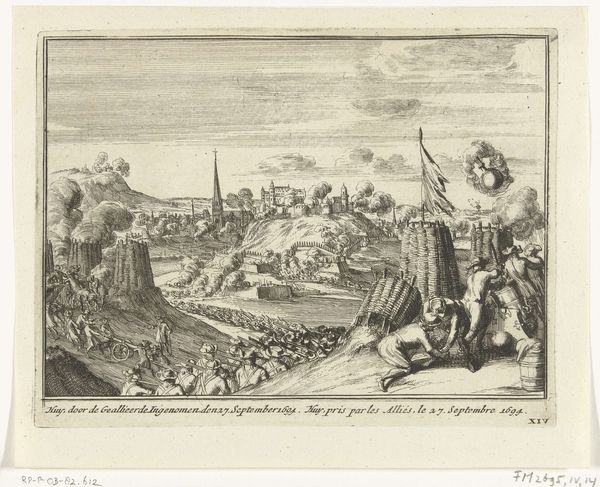
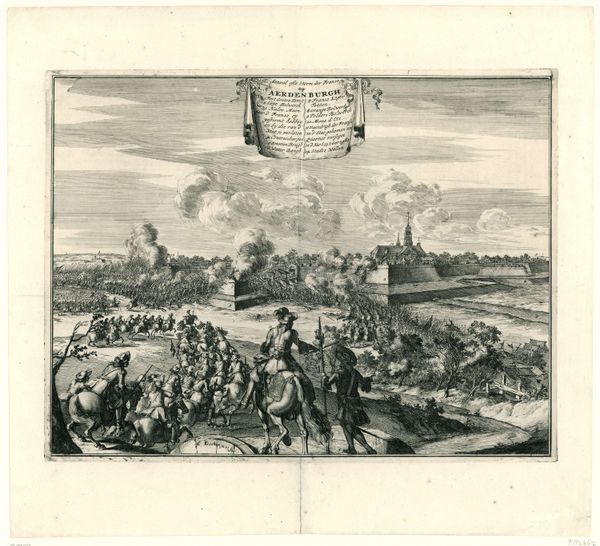
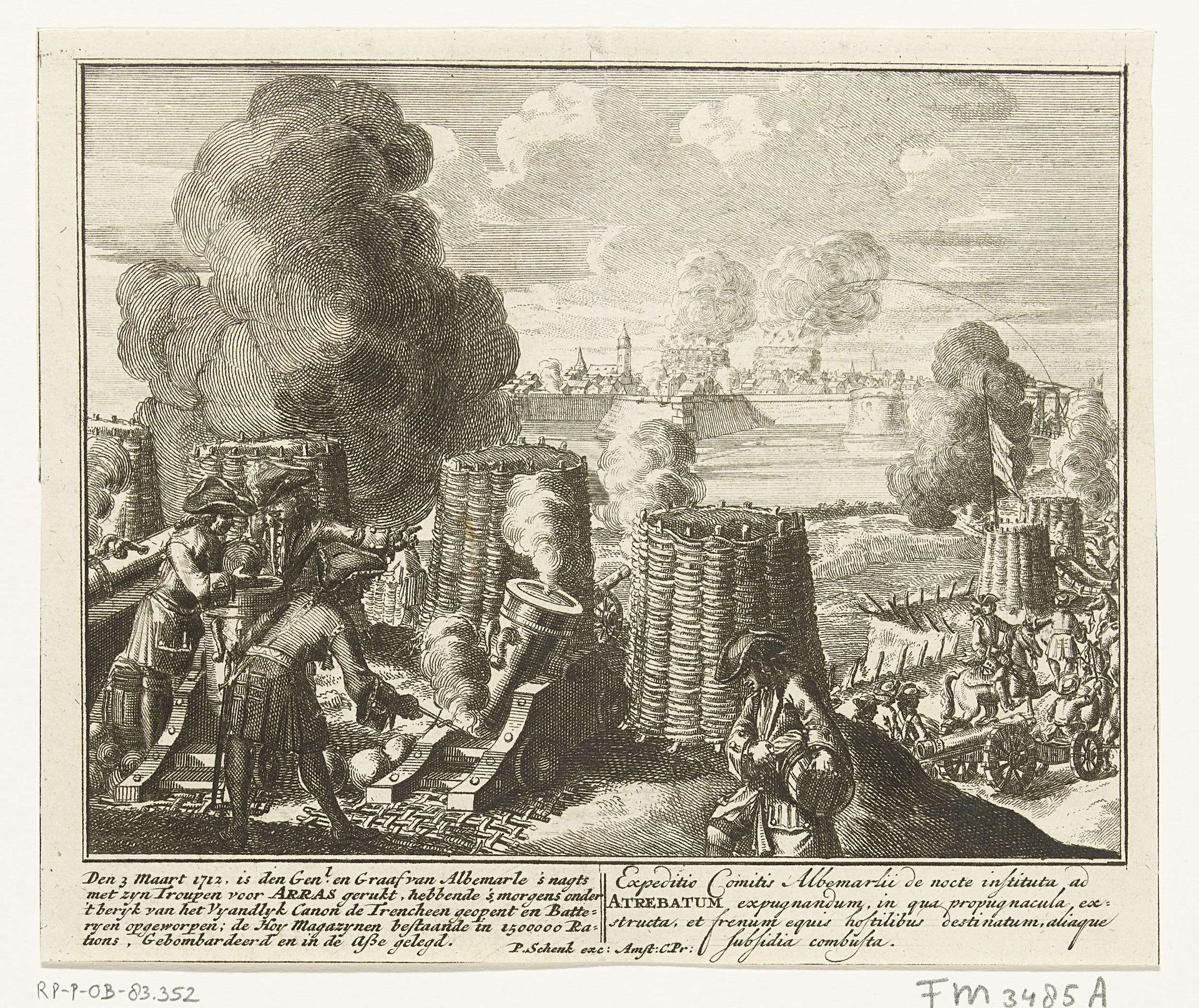
Pieter Schenk made this print, Bombardment of Arras, in 1712, using etching, a printmaking process that relies on the controlled corrosion of metal. The image shows a military conflict, but also provides insight into early 18th-century modes of production. The systematic destruction on display was enabled by industry – the cannons and munitions require specialist knowledge and significant resources, pointing to a society organized for mass production. Look closely, and you’ll notice the woven gabions – the basket-like structures protecting the artillery. These temporary fortifications are made from readily available, low-value materials. The print itself would have been produced as part of a print industry, where specialized skills would have been used to produce multiple impressions quickly. The image then is not simply a record of war, but a product of social and economic forces, revealing a world of labor, resources, and political power, all brought together in the service of military objectives. The artist's labor is only a small part of the story.

Artwork details
- Medium
- print, etching, engraving
- Dimensions
- height 162 mm, width 193 mm
- Location
- Rijksmuseum
- Copyright
- Rijks Museum: Open Domain
Tags
Comments
Share your thoughts
About this artwork
Pieter Schenk made this print, Bombardment of Arras, in 1712, using etching, a printmaking process that relies on the controlled corrosion of metal. The image shows a military conflict, but also provides insight into early 18th-century modes of production. The systematic destruction on display was enabled by industry – the cannons and munitions require specialist knowledge and significant resources, pointing to a society organized for mass production. Look closely, and you’ll notice the woven gabions – the basket-like structures protecting the artillery. These temporary fortifications are made from readily available, low-value materials. The print itself would have been produced as part of a print industry, where specialized skills would have been used to produce multiple impressions quickly. The image then is not simply a record of war, but a product of social and economic forces, revealing a world of labor, resources, and political power, all brought together in the service of military objectives. The artist's labor is only a small part of the story.
Comments
Share your thoughts