About this artwork
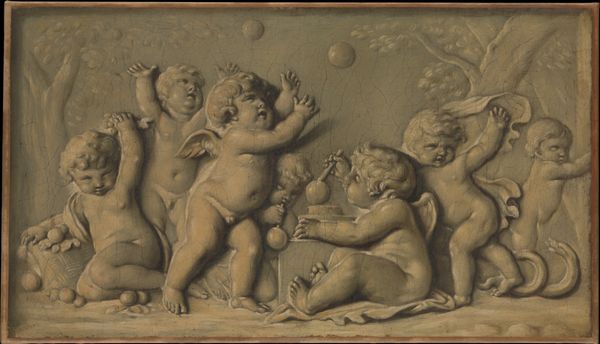
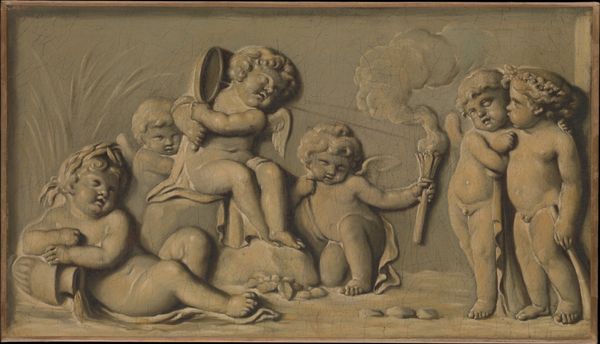
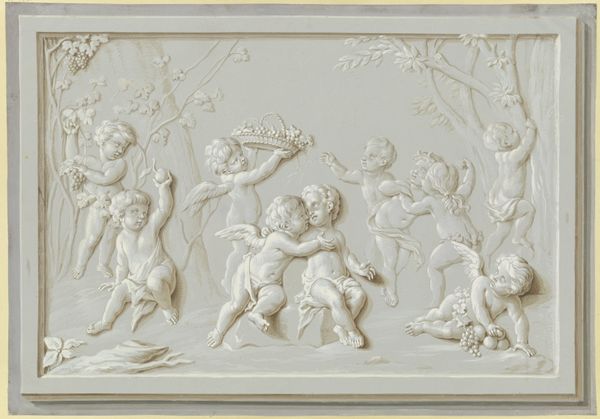
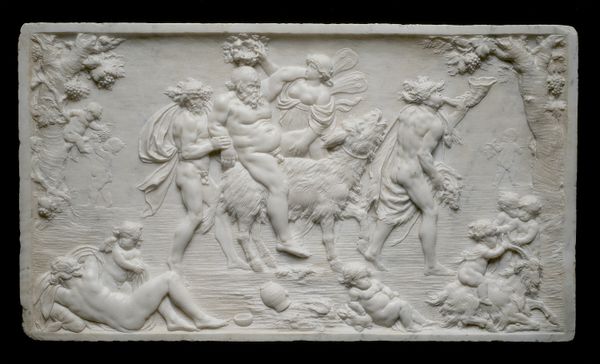
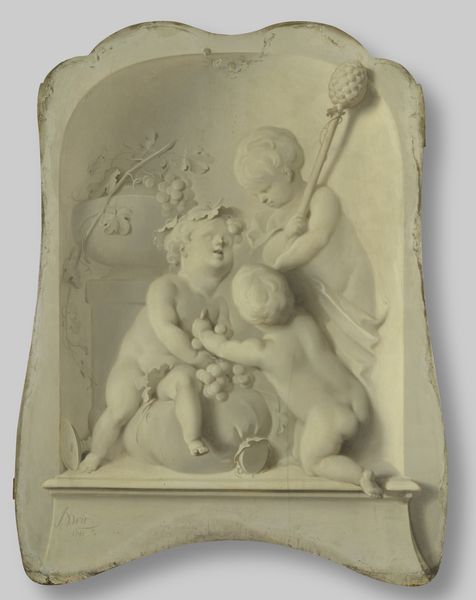
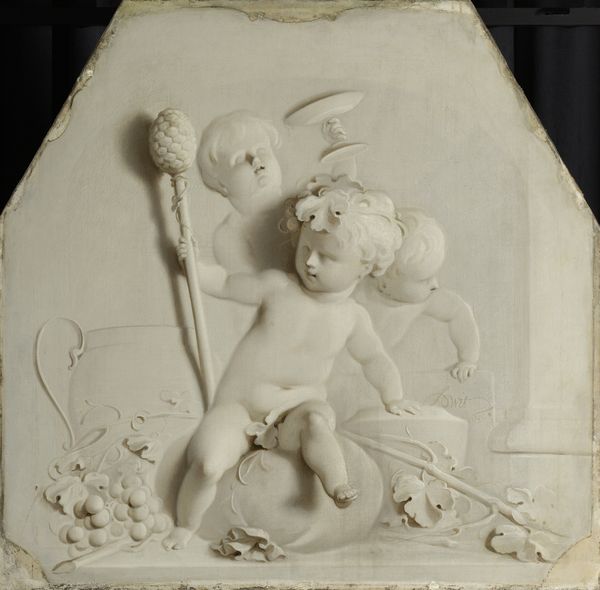
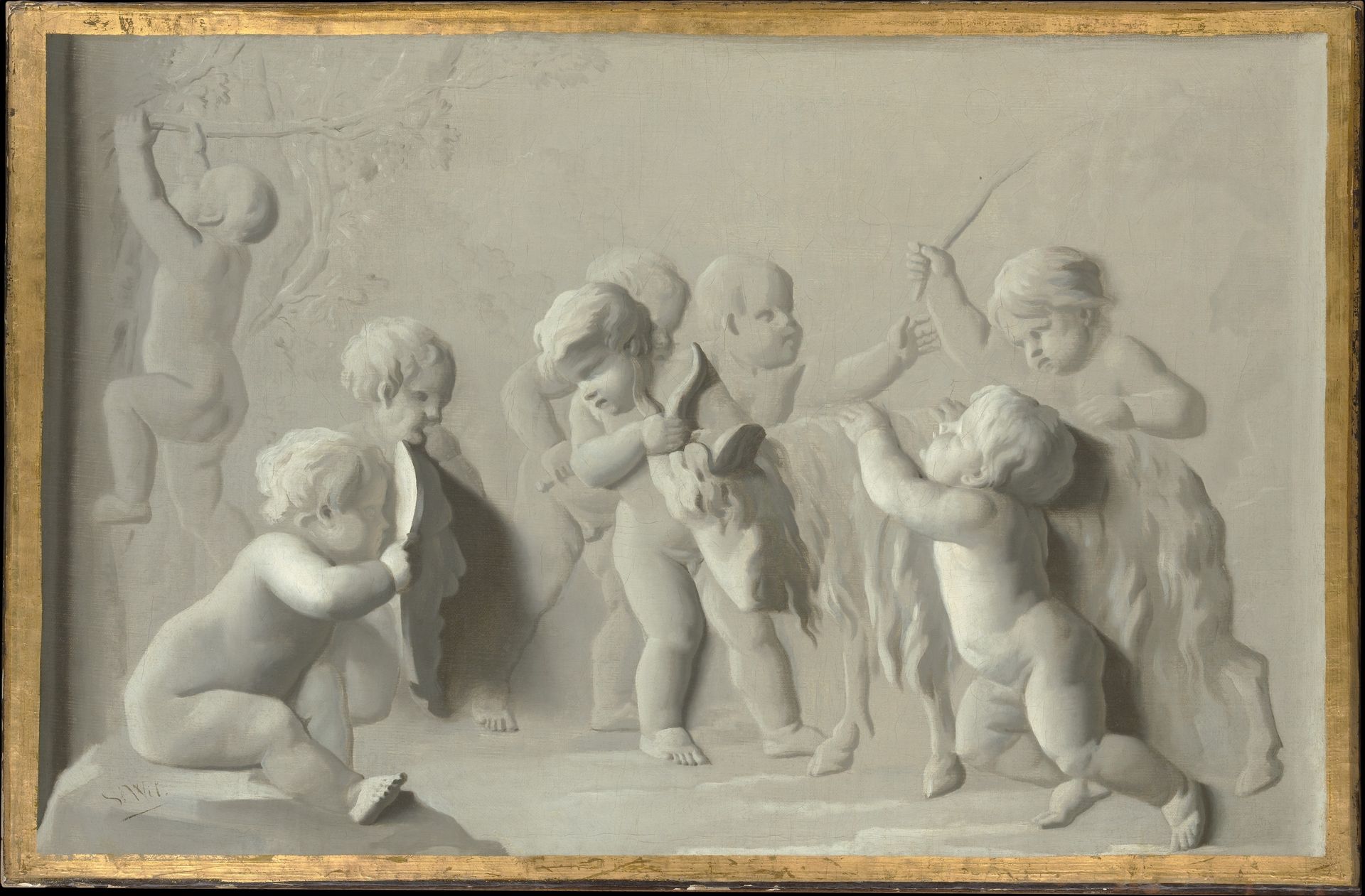
Jacob de Wit created this grisaille painting, "Children Playing with a Goat," during the 18th century, a time when the Dutch Republic was shifting from a major European power to a society focused on commerce and the arts. De Wit, known for his decorative paintings, often depicted mythological and biblical scenes, but here he offers us a vision of childhood. Rendered almost entirely in shades of gray, the painting mimics the appearance of a stone relief, a popular decorative style during the period. The figures of the children, or putti, evoke a sense of innocence and playfulness. Yet, consider that these images were frequently commissioned by the wealthy for their homes, suggesting a certain idealization of childhood, one often reserved for those of privilege. The presence of the goat is also symbolic, traditionally representing fertility and abundance. This work reflects a societal emphasis on domesticity and family values within the emerging bourgeois culture. It presents a curated vision of harmony and leisure, inviting viewers to reflect on the roles of children and the meanings we assign to them.
Children Playing with a Goat
1715 - 1754


Artwork details
- Medium
- carving, relief, sculpture
- Dimensions
- 26 3/4 x 41 in. (67.9 x 104.1 cm)
- Location
- Metropolitan Museum of Art, New York, NY
- Copyright
- Public Domain
Tags
Comments
Share your thoughts
About this artwork
Jacob de Wit created this grisaille painting, "Children Playing with a Goat," during the 18th century, a time when the Dutch Republic was shifting from a major European power to a society focused on commerce and the arts. De Wit, known for his decorative paintings, often depicted mythological and biblical scenes, but here he offers us a vision of childhood. Rendered almost entirely in shades of gray, the painting mimics the appearance of a stone relief, a popular decorative style during the period. The figures of the children, or putti, evoke a sense of innocence and playfulness. Yet, consider that these images were frequently commissioned by the wealthy for their homes, suggesting a certain idealization of childhood, one often reserved for those of privilege. The presence of the goat is also symbolic, traditionally representing fertility and abundance. This work reflects a societal emphasis on domesticity and family values within the emerging bourgeois culture. It presents a curated vision of harmony and leisure, inviting viewers to reflect on the roles of children and the meanings we assign to them.
Comments
Share your thoughts