1890
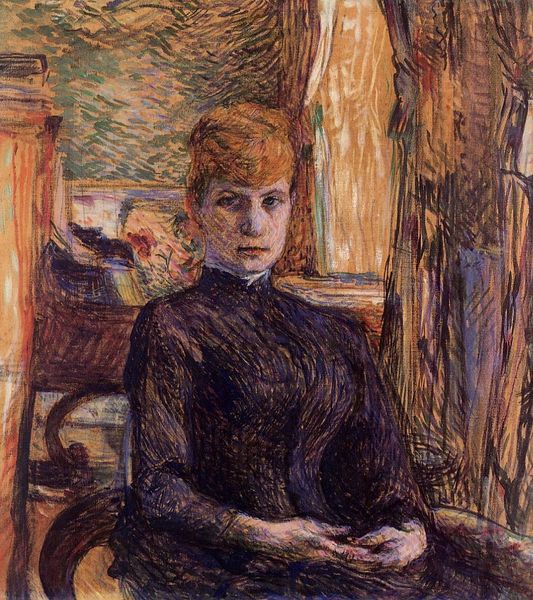
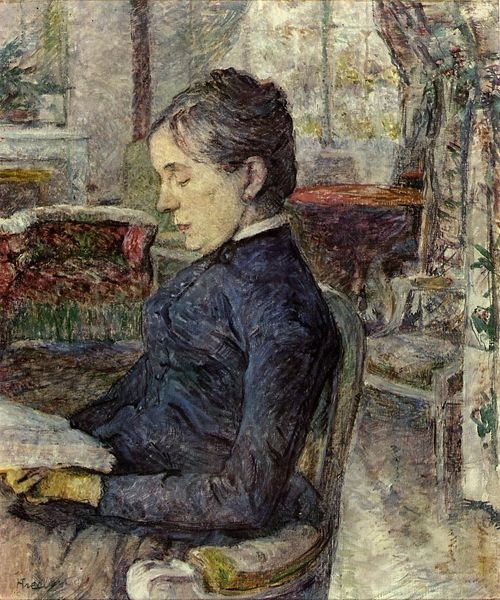
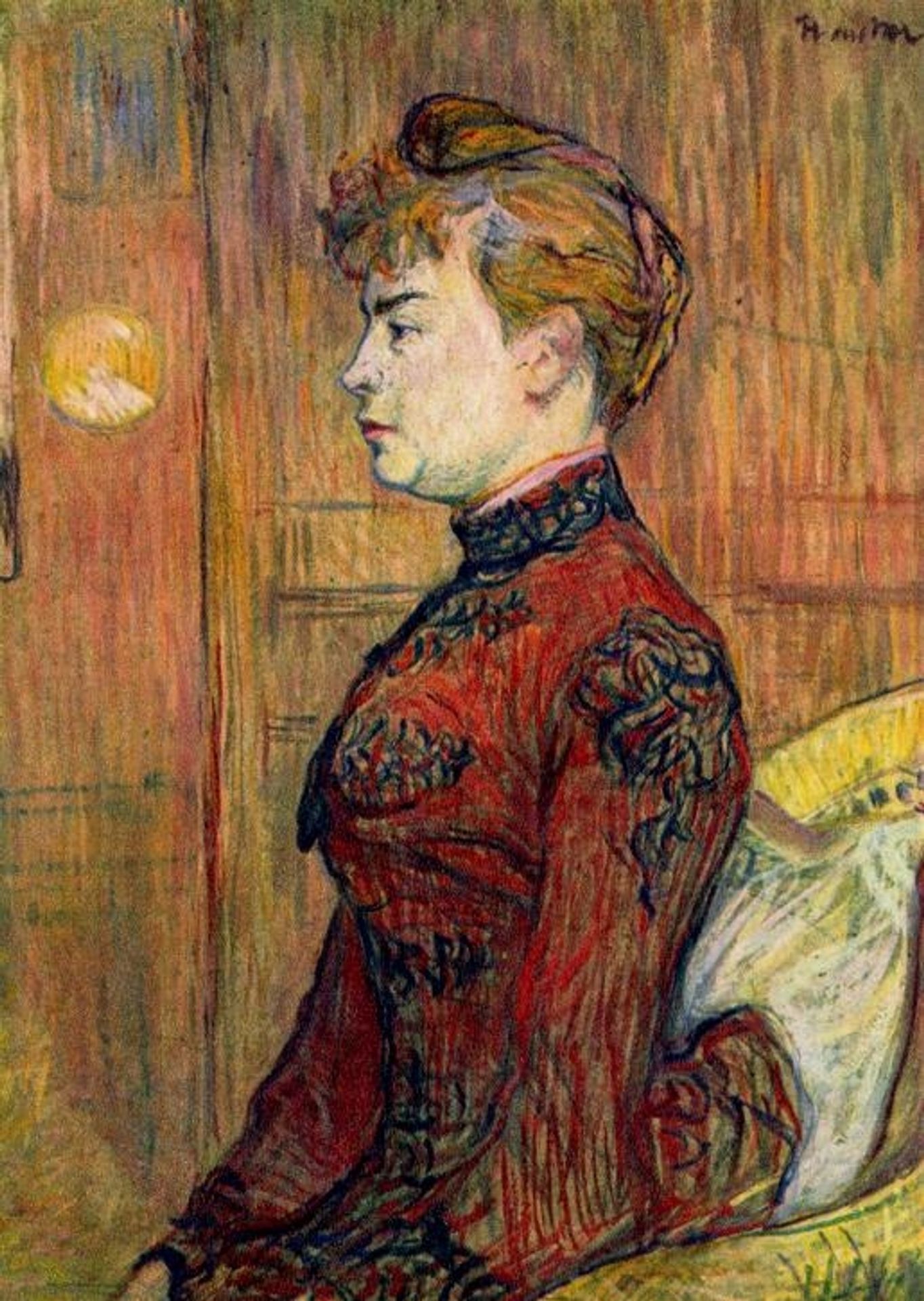
The Policeman s Daughter

Henri de Toulouse-Lautrec
1864 - 1901Location
Kunsthalle Hamburg, Hamburg, GermanyListen to curator's interpretation
Curatorial notes
Henri de Toulouse-Lautrec created "The Policeman's Daughter," a portrait of a woman in profile, using oil on cardboard. The dominant hues of red and brown contrast with the pale backdrop to create a somber, intimate mood. Lautrec's use of line and color reveals a structural approach to form. The vertical brushstrokes in the background juxtapose against the curved lines of the woman’s figure, creating tension. This structural interplay serves not only an aesthetic purpose but also suggests the psychological complexity inherent in portraiture. Lautrec destabilizes traditional portraiture by foregoing idealized representation in favor of a stark, somewhat detached portrayal. Consider the semiotic implications of the work. The woman's attire, rendered in detailed patterns, hints at societal roles, and the contrast between her public presentation and internal thoughts questions fixed identities. In Lautrec's distinctive style, the artwork challenges conventional meanings, prompting us to engage with the deeper, often obscured narratives within individuals and society.