About this artwork
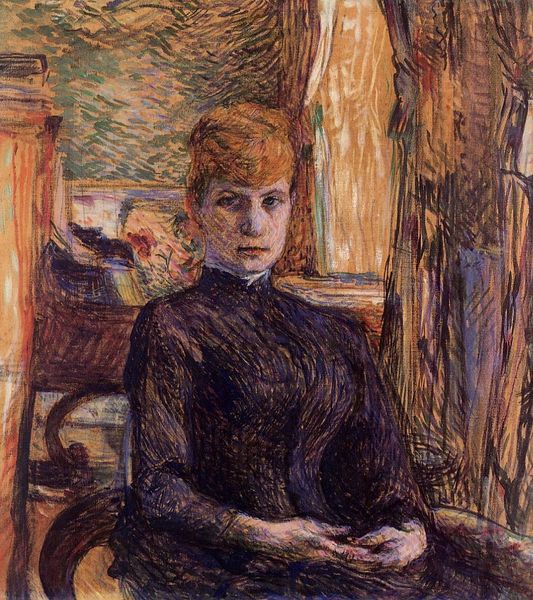
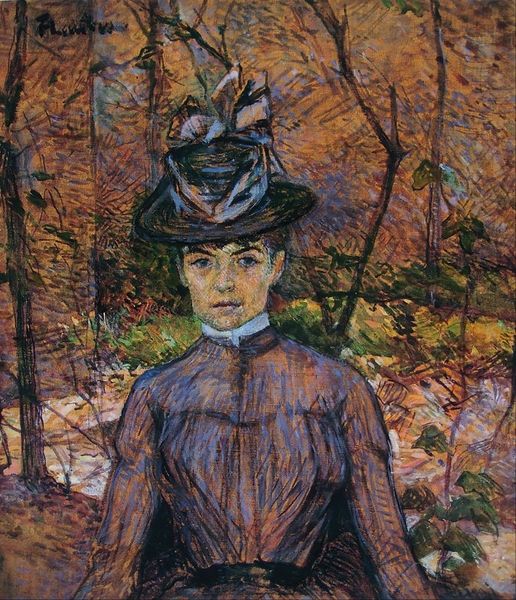
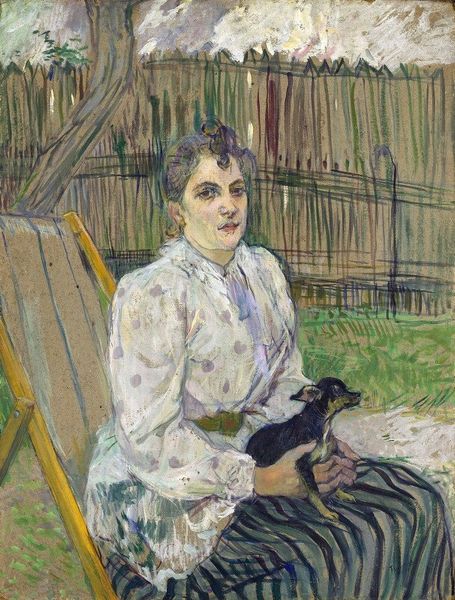
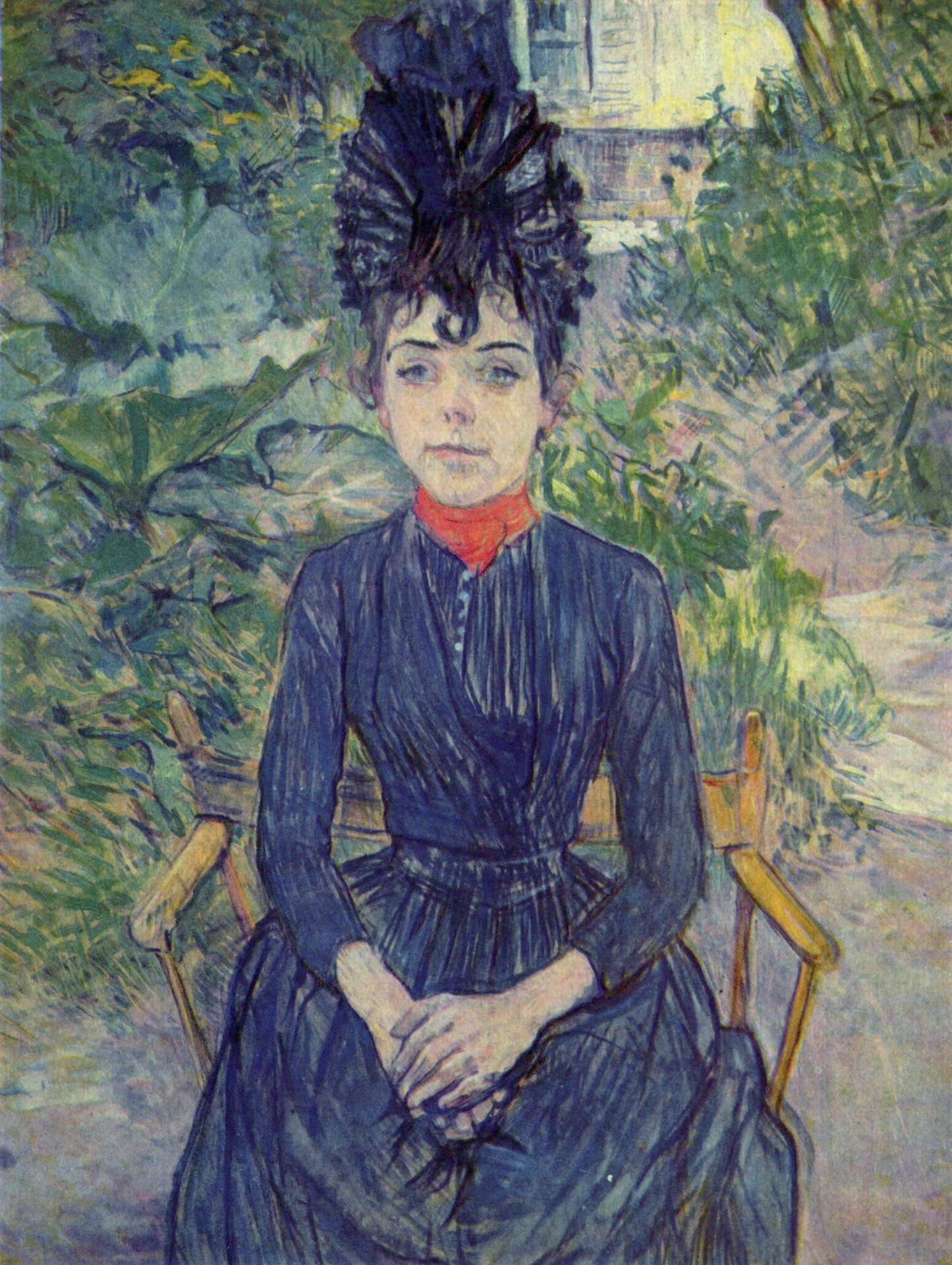
Henri de Toulouse-Lautrec created "Seated Woman in the Garden of Mr. Forest Justine Dieuhl," using oil on cardboard. The composition centers on a woman, seated, with a striking hat, set against the backdrop of a lush garden. Lautrec's brushstrokes are loose and expressive, almost dissolving the forms into dabs of color. The woman’s dark dress is punctuated by a bright red collar, drawing the eye upward. The overall effect is one of a fleeting moment captured, an impression rather than a detailed portrait. The painting challenges traditional portraiture through its informality and its focus on capturing a sense of atmosphere. Lautrec was interested in modern life, depicting his subjects in their everyday environments. This approach aligns with the broader artistic movements of the late 19th century, such as Impressionism, which sought to break away from academic conventions and engage with the immediacy of modern experience. The use of color and brushwork creates a sense of movement, reflecting the dynamism and instability of modern life.
Seated Woman in the Garden of Mr. Forest Justine Dieuhl
1890


Artwork details
- Medium
- painting, oil-paint
- Dimensions
- 74 x 58 cm
- Location
- Musée d'Orsay, Paris, France
- Copyright
- Public domain
Tags
Comments
Share your thoughts
About this artwork
Henri de Toulouse-Lautrec created "Seated Woman in the Garden of Mr. Forest Justine Dieuhl," using oil on cardboard. The composition centers on a woman, seated, with a striking hat, set against the backdrop of a lush garden. Lautrec's brushstrokes are loose and expressive, almost dissolving the forms into dabs of color. The woman’s dark dress is punctuated by a bright red collar, drawing the eye upward. The overall effect is one of a fleeting moment captured, an impression rather than a detailed portrait. The painting challenges traditional portraiture through its informality and its focus on capturing a sense of atmosphere. Lautrec was interested in modern life, depicting his subjects in their everyday environments. This approach aligns with the broader artistic movements of the late 19th century, such as Impressionism, which sought to break away from academic conventions and engage with the immediacy of modern experience. The use of color and brushwork creates a sense of movement, reflecting the dynamism and instability of modern life.
Comments
Share your thoughts