About this artwork
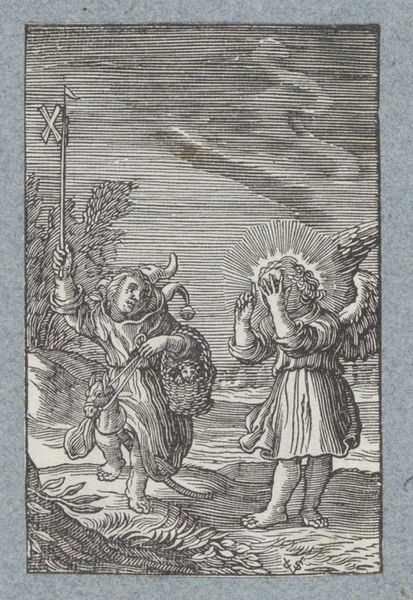
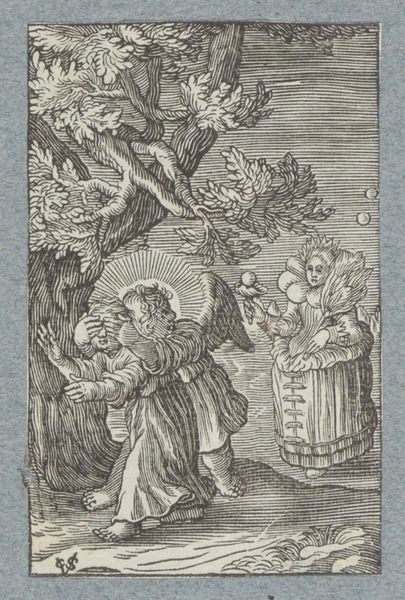
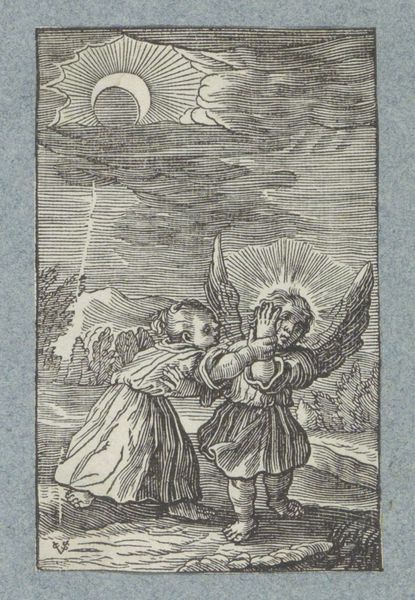
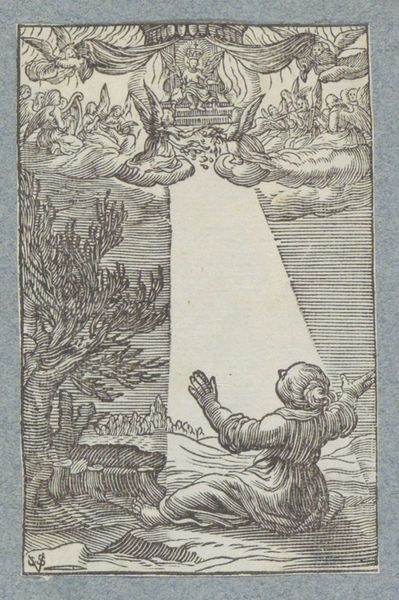
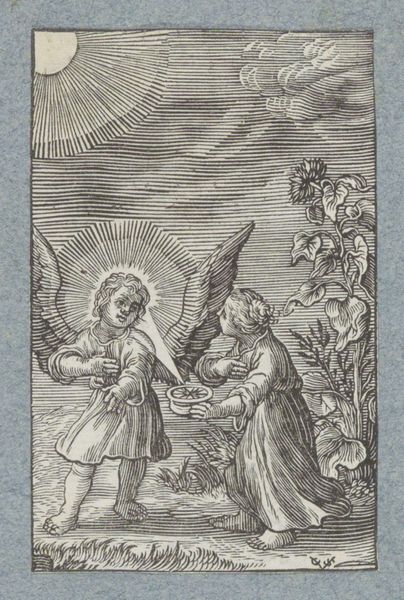
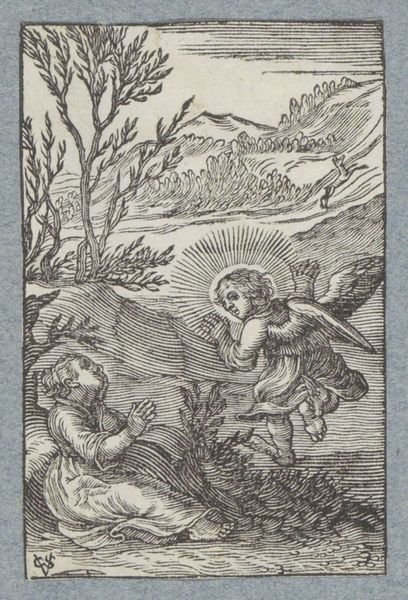
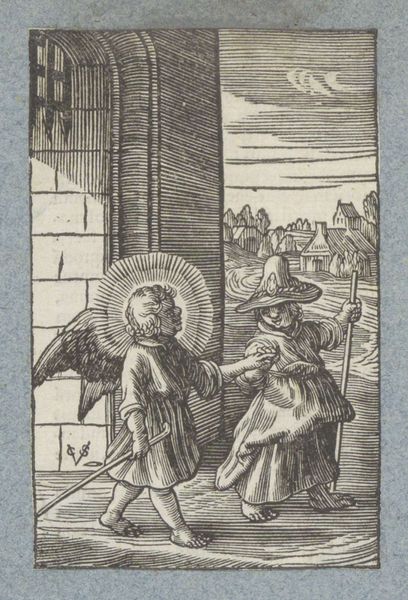
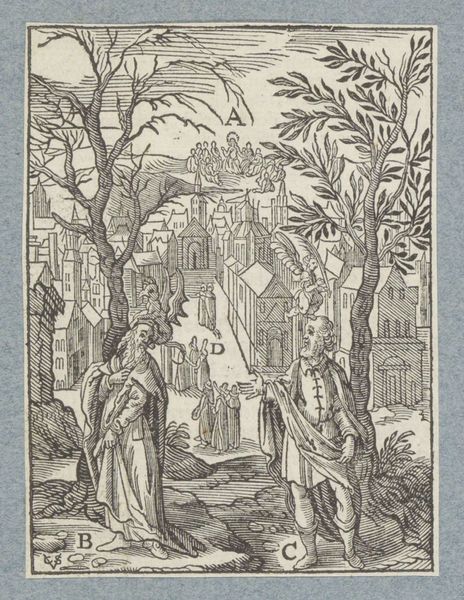
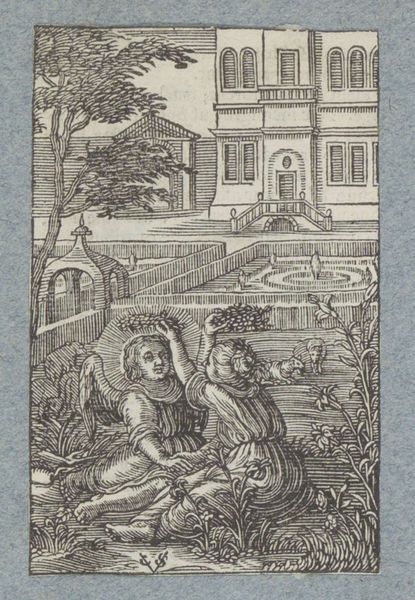
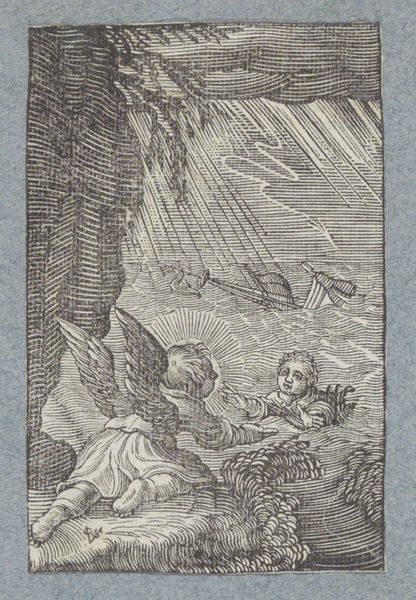
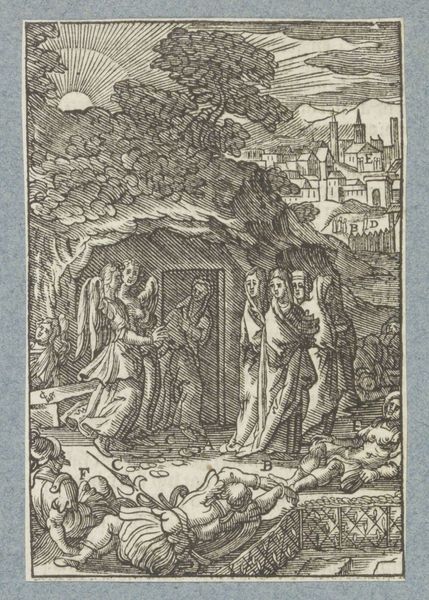
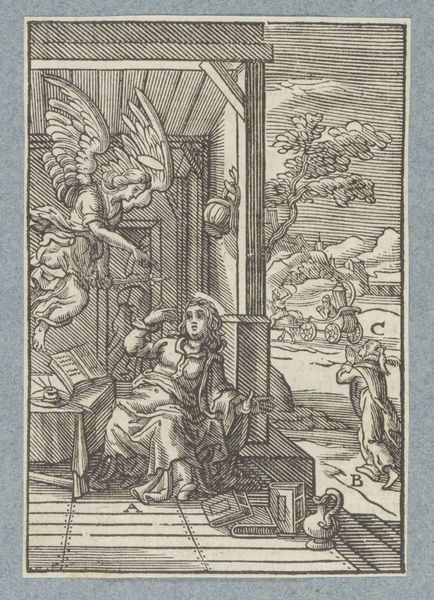
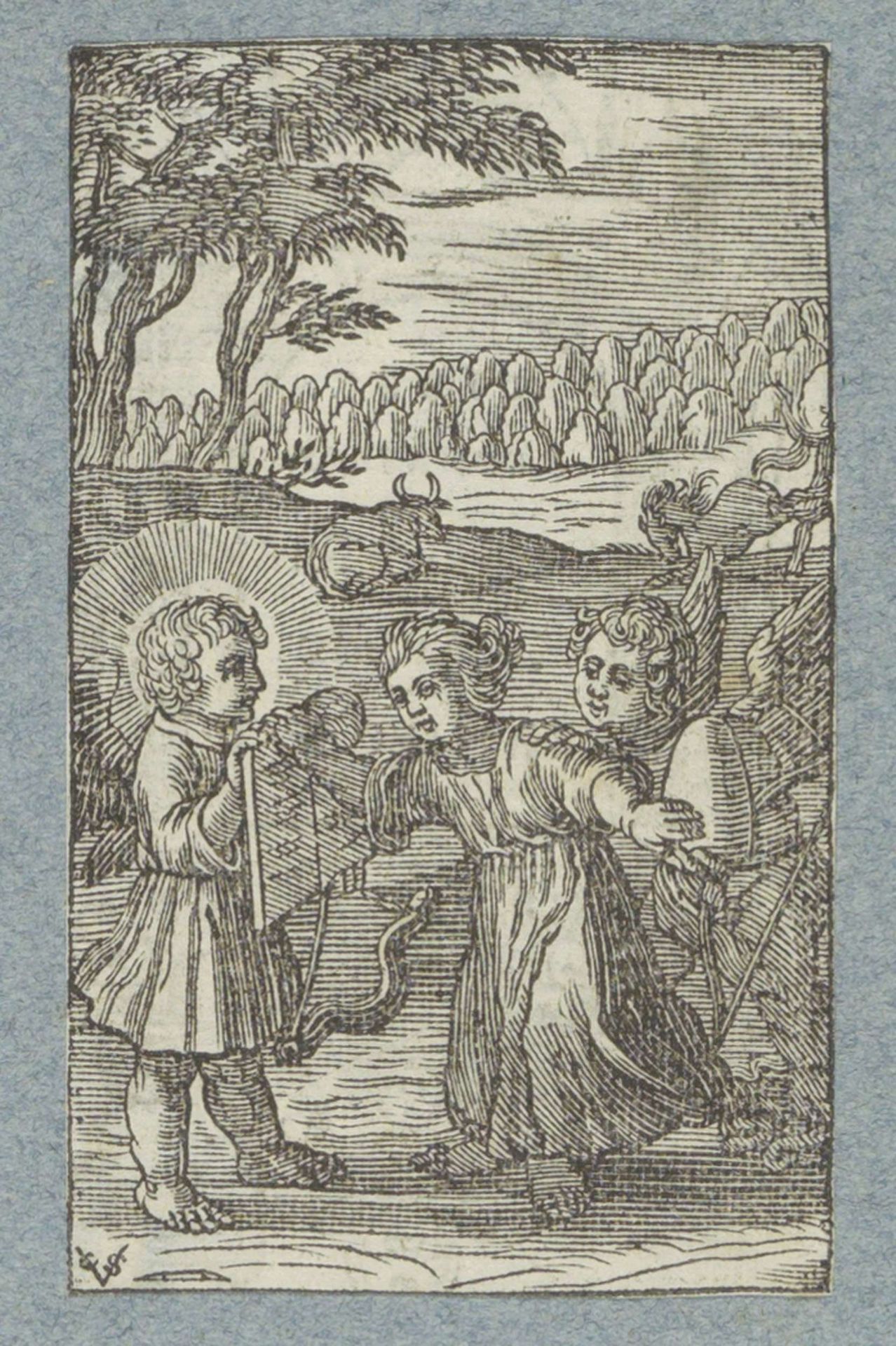
This engraving, *Child between two angels with the Tablets of the Law,* was made by Christoffel van Sichem II, who was active in the early 17th century. During this period, Dutch art was deeply influenced by the Protestant Reformation, and this piece reflects the era’s emphasis on religious and moral themes. The engraving depicts a child, likely Jesus, holding the Tablets of the Law, flanked by two angels in a pastoral setting. Consider the symbolism here: the child's central position suggests innocence and divine authority, challenging traditional hierarchies. The angels, commonly represented as guardians, frame the figure of the child as they guide and protect, while the Tablets of the Law represent a system of order and justice. Notice the broader historical implications in this seemingly simple scene. Sichem’s work invites us to reflect on the intersection of childhood, religion, and authority and how cultural values shape our understanding of morality and identity.
Kind tussen twee engelen met wetstafelen
1628

Christoffel van (II) Sichem
1581 - 1658Location
RijksmuseumArtwork details
- Medium
- drawing, print, engraving
- Dimensions
- height 83 mm, width 51 mm
- Location
- Rijksmuseum
- Copyright
- Rijks Museum: Open Domain
Tags
Comments
Share your thoughts
About this artwork
This engraving, *Child between two angels with the Tablets of the Law,* was made by Christoffel van Sichem II, who was active in the early 17th century. During this period, Dutch art was deeply influenced by the Protestant Reformation, and this piece reflects the era’s emphasis on religious and moral themes. The engraving depicts a child, likely Jesus, holding the Tablets of the Law, flanked by two angels in a pastoral setting. Consider the symbolism here: the child's central position suggests innocence and divine authority, challenging traditional hierarchies. The angels, commonly represented as guardians, frame the figure of the child as they guide and protect, while the Tablets of the Law represent a system of order and justice. Notice the broader historical implications in this seemingly simple scene. Sichem’s work invites us to reflect on the intersection of childhood, religion, and authority and how cultural values shape our understanding of morality and identity.
Comments
Share your thoughts