About this artwork
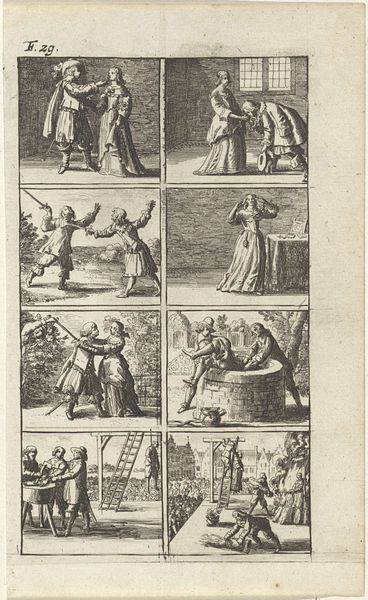
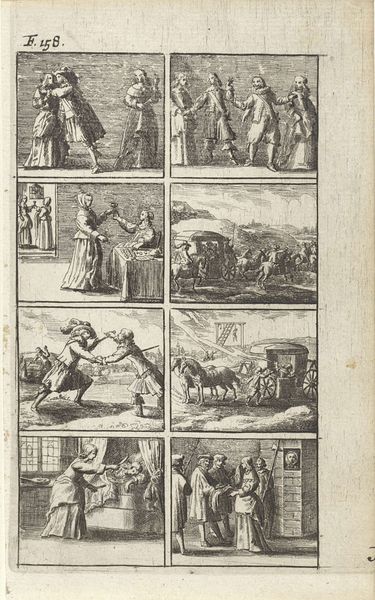
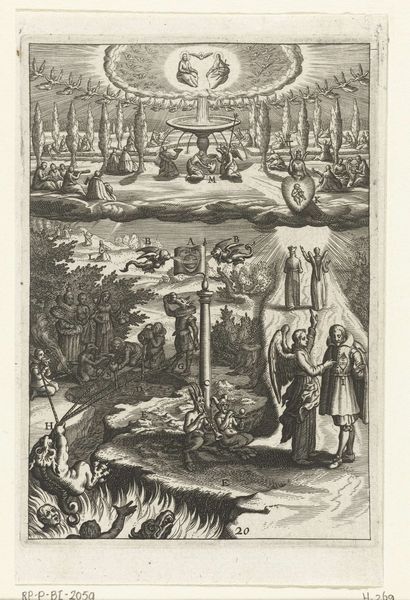
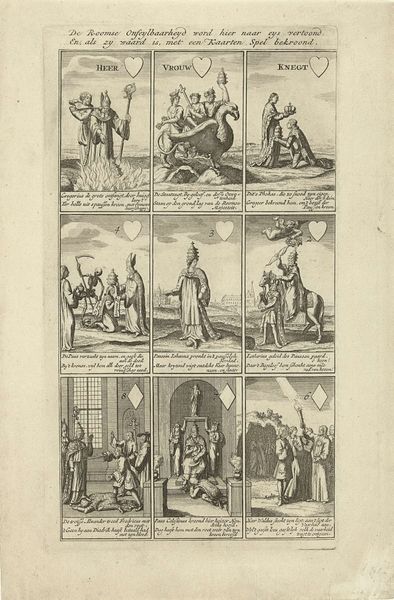
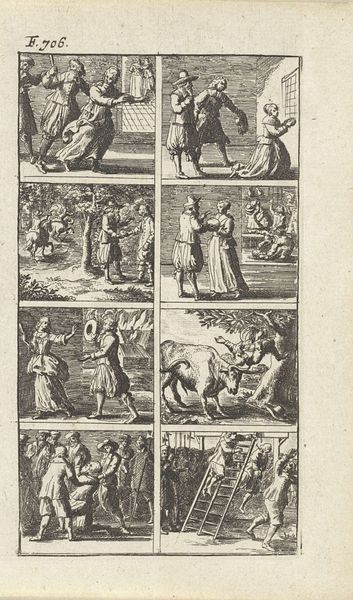
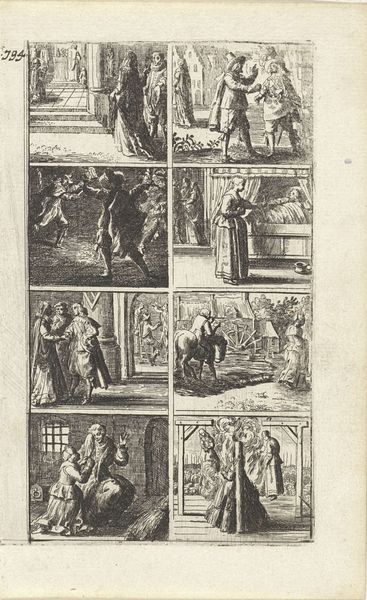
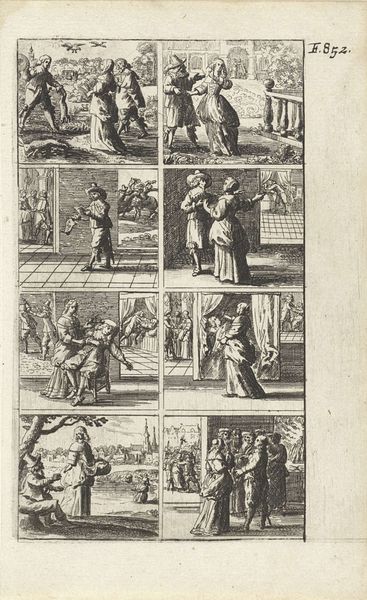
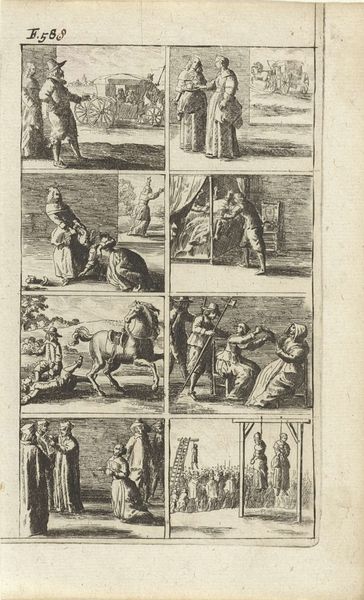
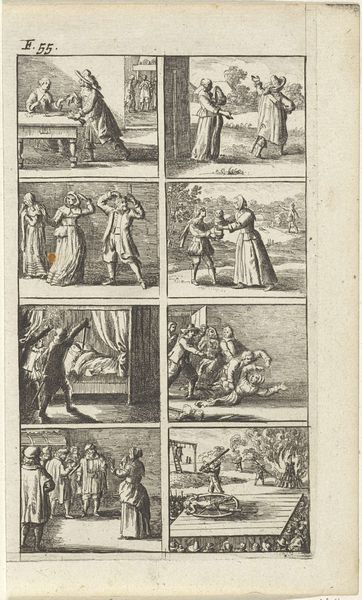
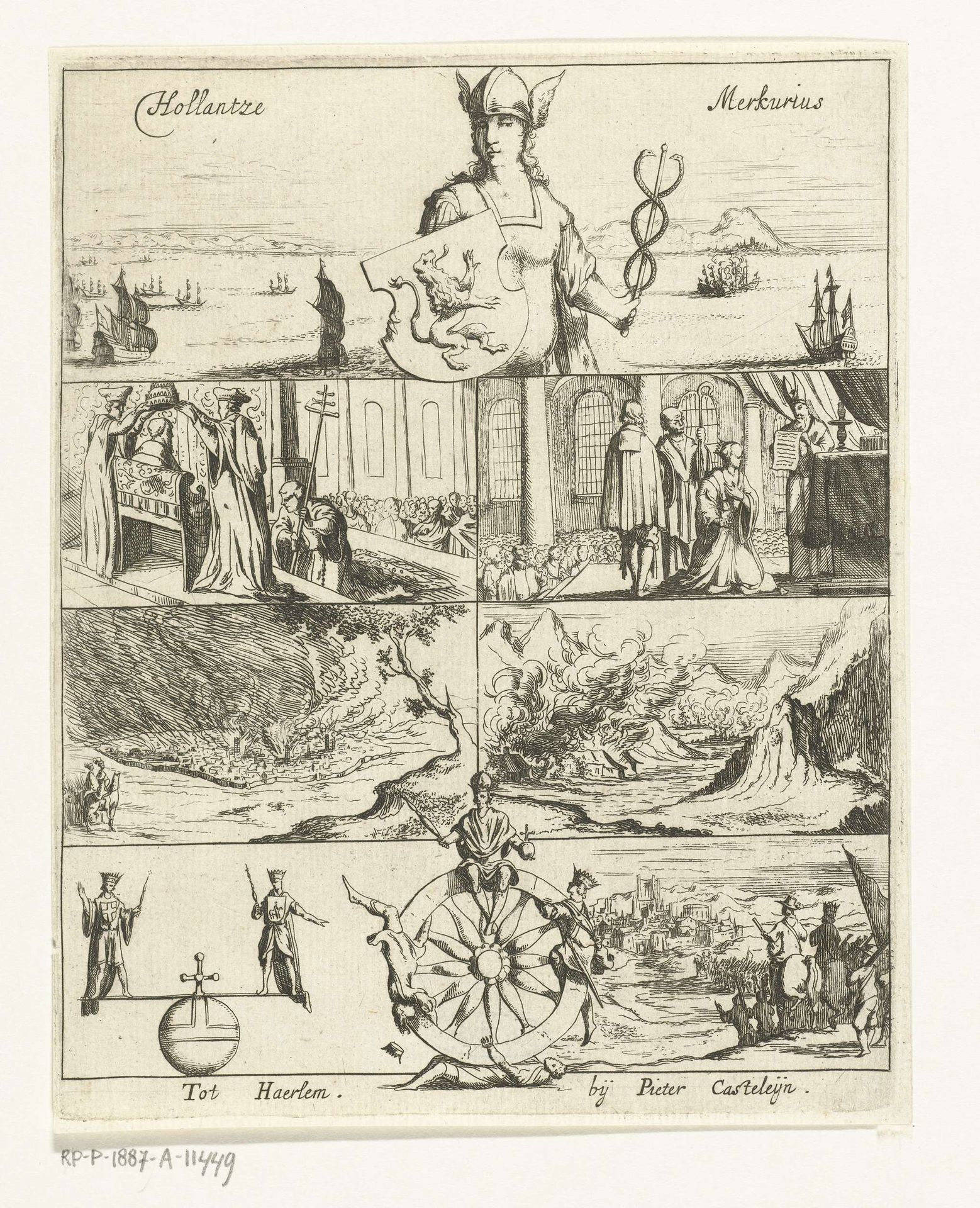
This etching, "Various Events in Europe in the Year 1655 Crowned by Mercury," was created by Dirck de Bray. Here, we see the god Mercury, a figure laden with symbolic weight. Note his caduceus, a staff entwined with serpents, signifying commerce and negotiation—but also, anciently, healing and balance. Mercury doesn't merely oversee events; he embodies the very principles that drive them. See how the wheel of Fortune appears at the bottom. Seated on the wheel, the figure is thrown around as if destiny has no mercy. The wheel, an ancient symbol of fate's capricious nature, reminds us of the instability of human affairs, a motif found in classical antiquity and medieval morality plays alike. It speaks to a deep-seated human anxiety. Consider how these symbols persist, adapted and reinterpreted across time. They reflect our collective attempts to understand the forces, both internal and external, that shape our existence.
Verschillende gebeurtenissen in Europa in het jaar 1655 bekroond door Mercurius 1656

Artwork details
- Medium
- print, engraving
- Dimensions
- height 162 mm, width 129 mm
- Copyright
- Rijks Museum: Open Domain
Tags
allegory
narrative-art
baroque
line
cityscape
history-painting
engraving
Comments
No comments
About this artwork
This etching, "Various Events in Europe in the Year 1655 Crowned by Mercury," was created by Dirck de Bray. Here, we see the god Mercury, a figure laden with symbolic weight. Note his caduceus, a staff entwined with serpents, signifying commerce and negotiation—but also, anciently, healing and balance. Mercury doesn't merely oversee events; he embodies the very principles that drive them. See how the wheel of Fortune appears at the bottom. Seated on the wheel, the figure is thrown around as if destiny has no mercy. The wheel, an ancient symbol of fate's capricious nature, reminds us of the instability of human affairs, a motif found in classical antiquity and medieval morality plays alike. It speaks to a deep-seated human anxiety. Consider how these symbols persist, adapted and reinterpreted across time. They reflect our collective attempts to understand the forces, both internal and external, that shape our existence.
Comments
No comments