About this artwork
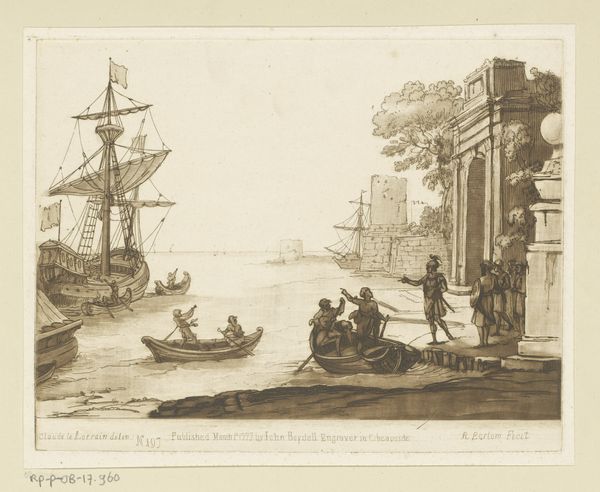
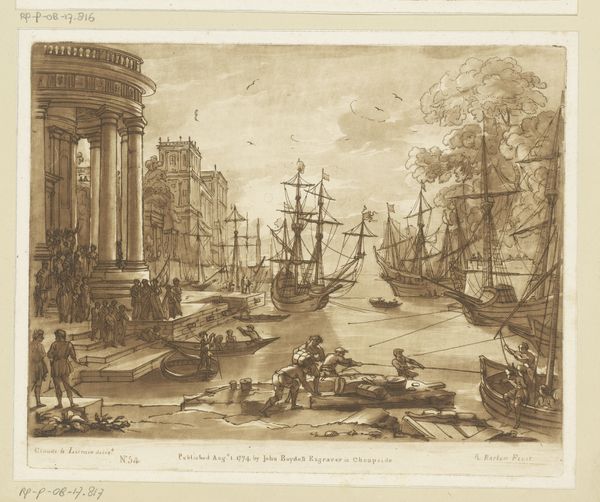
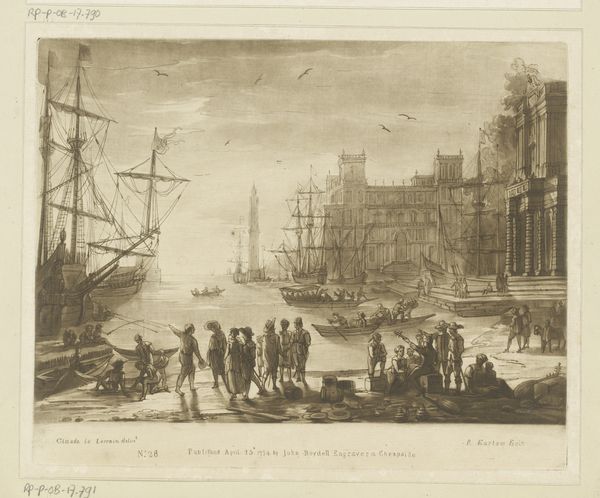
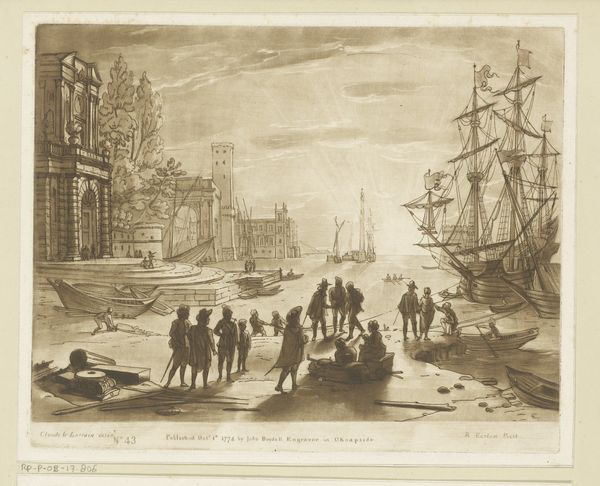
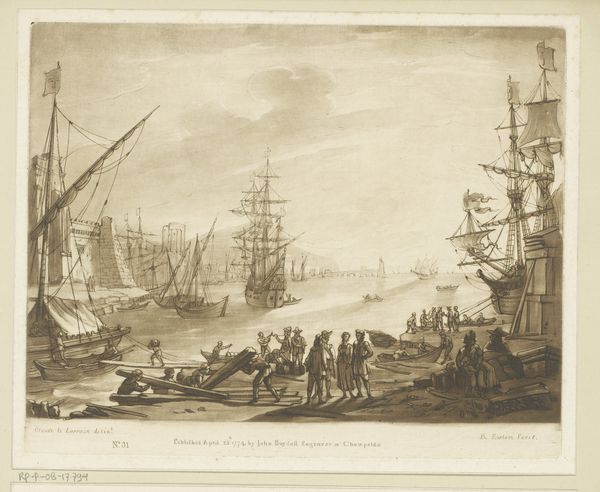
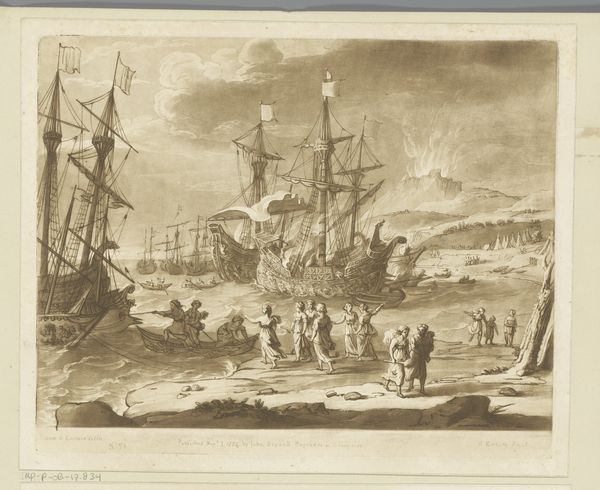
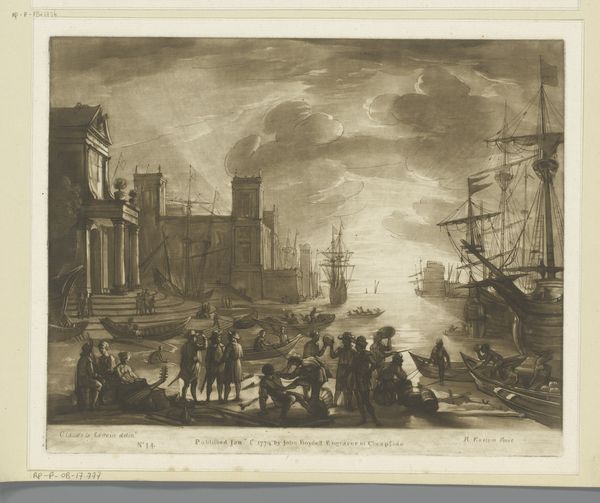
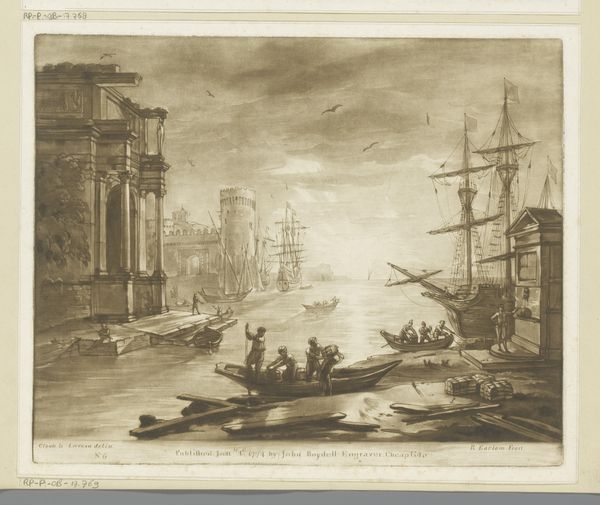
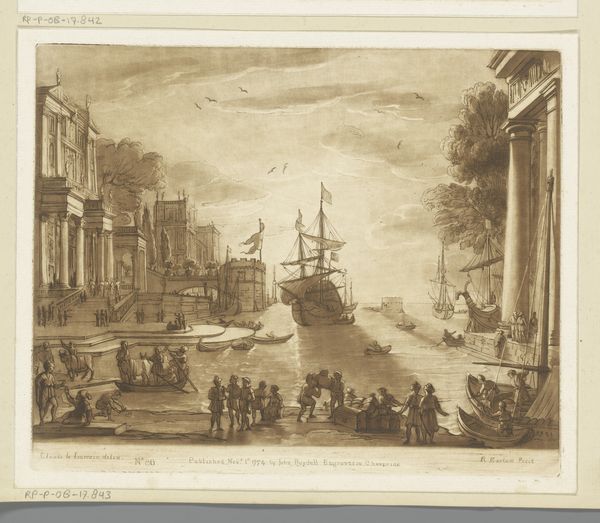
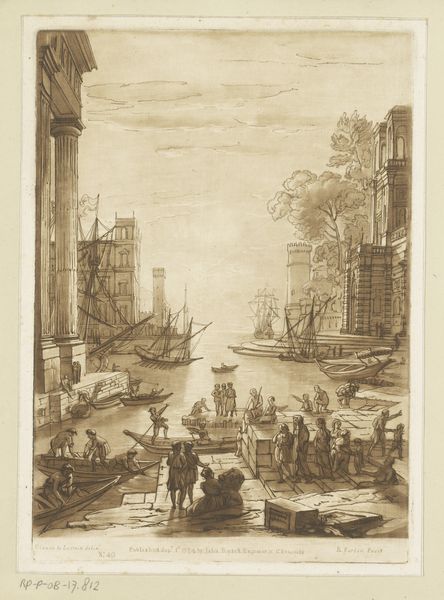
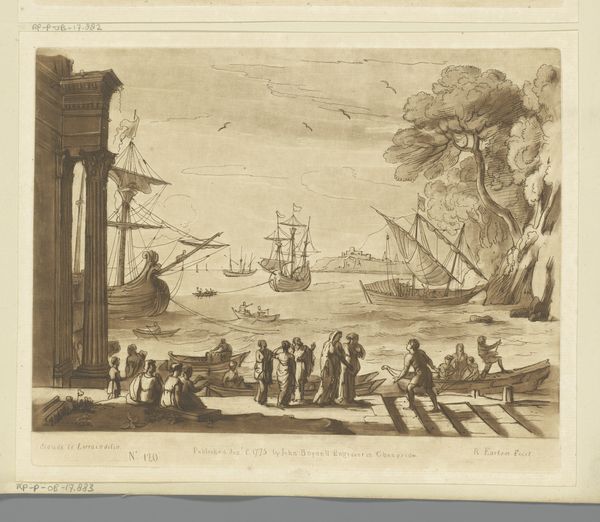
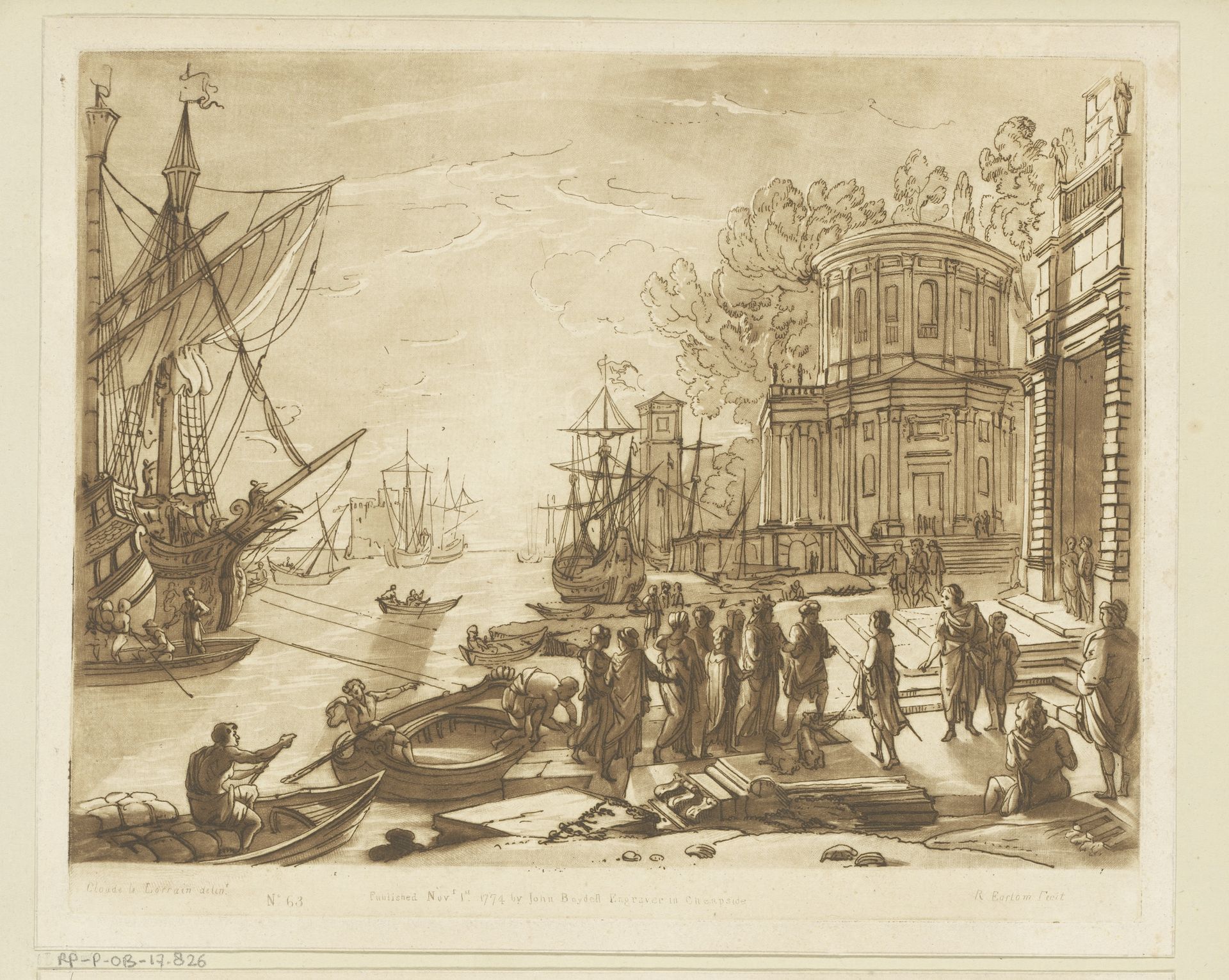
This aquatint etching, depicting the arrival of Cleopatra in Tarsus, was made by Richard Earlom in the late 18th or early 19th century. Note the grand European ships and classical architecture, presenting an exotic vision through a Western lens. Earlom lived during a period where the Grand Tour, a traditional trip of Europe undertaken by upper-class young men, was becoming popular. This interest in classical antiquity fueled the production of such images, often catering to a market eager for romanticized visions of distant lands. The etching employs visual codes that would have resonated with its contemporary audience, reinforcing notions of European sophistication juxtaposed against the 'Orient'. Was this artwork, with its emphasis on grandeur and spectacle, commenting on the social structures of its own time? It certainly appealed to a wealthy elite with a taste for classical themes and exotic locales. Delving into the history of the Grand Tour, the etching’s original context, and the artist’s biography are just a few ways we can enrich our understanding of this artwork.
Zeehaven met aankomst van Cleopatra in Tarsus
Possibly 1774

Richard Earlom
1743 - 1822Location
RijksmuseumArtwork details
- Medium
- print, engraving
- Dimensions
- height 208 mm, width 258 mm
- Location
- Rijksmuseum
- Copyright
- Rijks Museum: Open Domain
Tags
Comments
Share your thoughts
About this artwork
This aquatint etching, depicting the arrival of Cleopatra in Tarsus, was made by Richard Earlom in the late 18th or early 19th century. Note the grand European ships and classical architecture, presenting an exotic vision through a Western lens. Earlom lived during a period where the Grand Tour, a traditional trip of Europe undertaken by upper-class young men, was becoming popular. This interest in classical antiquity fueled the production of such images, often catering to a market eager for romanticized visions of distant lands. The etching employs visual codes that would have resonated with its contemporary audience, reinforcing notions of European sophistication juxtaposed against the 'Orient'. Was this artwork, with its emphasis on grandeur and spectacle, commenting on the social structures of its own time? It certainly appealed to a wealthy elite with a taste for classical themes and exotic locales. Delving into the history of the Grand Tour, the etching’s original context, and the artist’s biography are just a few ways we can enrich our understanding of this artwork.
Comments
Share your thoughts