About this artwork
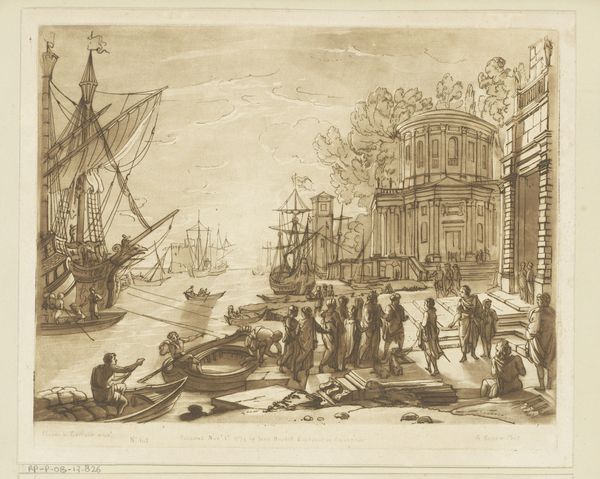
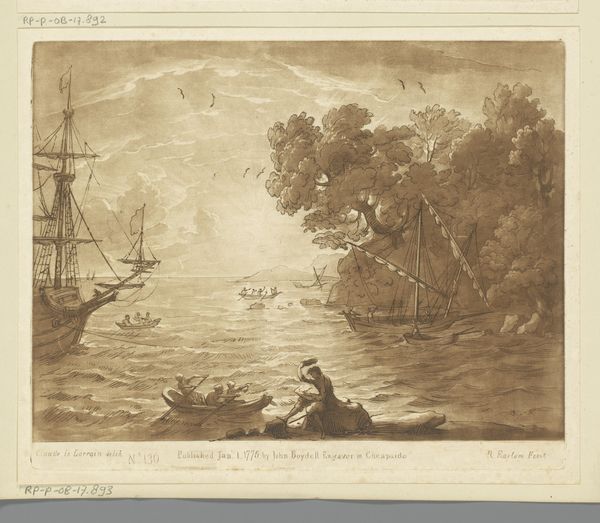
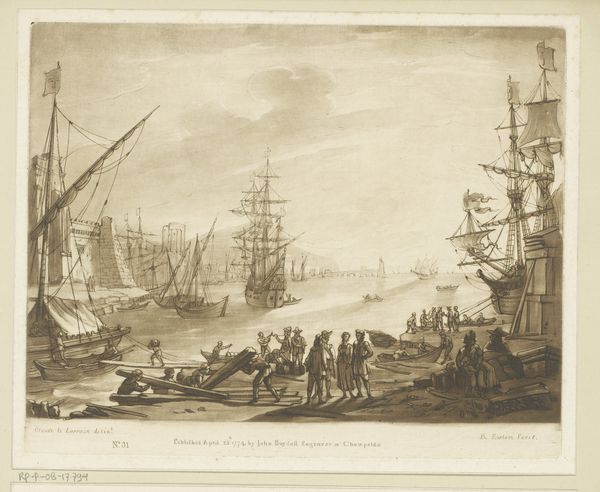
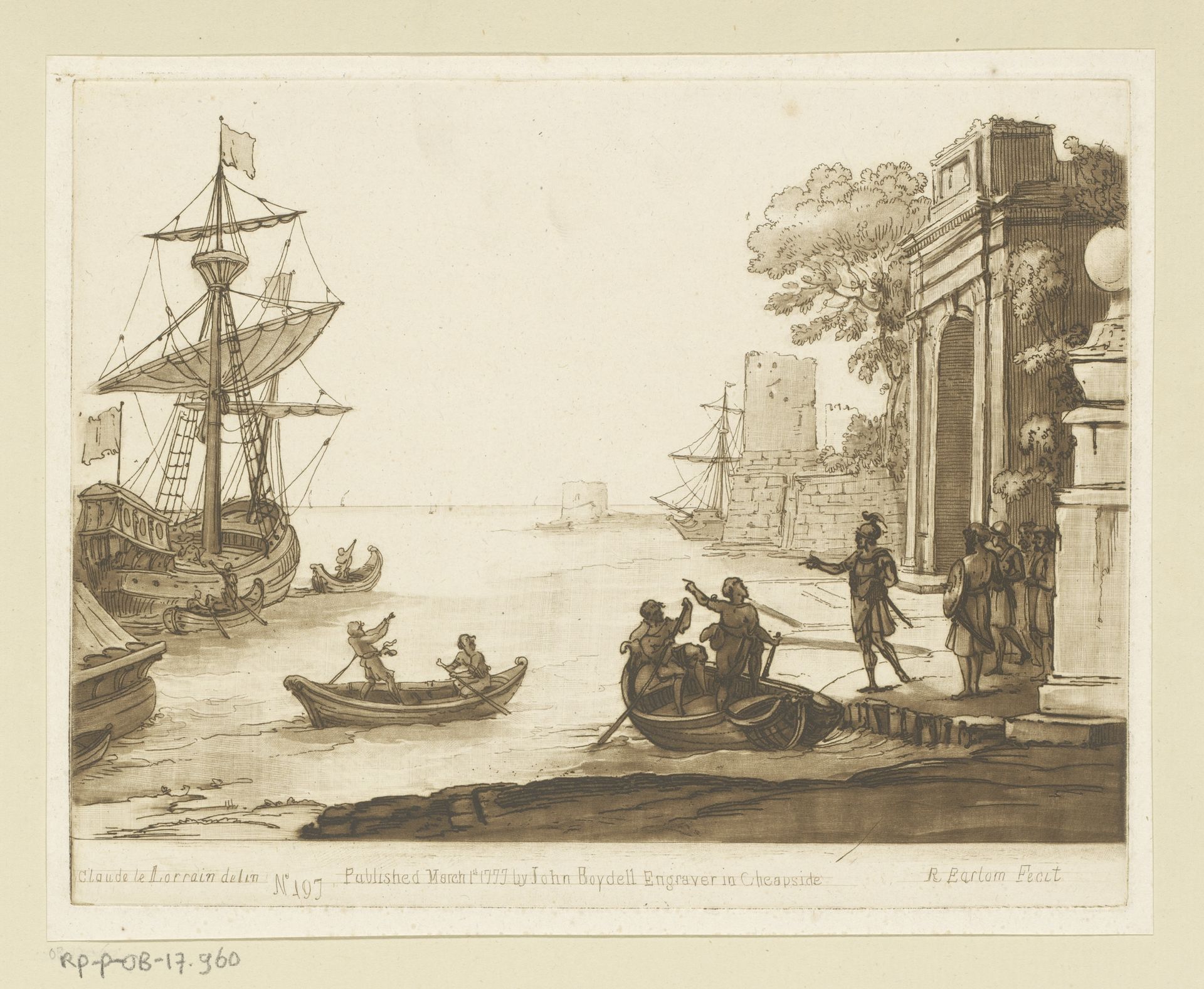
Richard Earlom created this print, "Seaport with triumphal arch and embarkation of a soldier," using etching, drypoint, and roulette. The scene echoes the classical maritime paintings of Claude Lorrain, who lived in seventeenth-century France. Earlom's image reflects the resurgence of interest in classical themes during the eighteenth century. It captures the era's fascination with military might, trade and empire. Notice how the triumphal arch is juxtaposed with the port, highlighting the convergence of power, commerce and the aesthetics of empire. This print circulated in England, during a period marked by expansionist policies and naval dominance. The institutional support for such images served to reinforce national pride and legitimize imperial ambitions. To fully understand this print, one must explore the printmaking industry of 18th century London, its patronage networks, and its role in disseminating ideas about nationhood and empire.
Zeehaven met triomfboog en inscheping van een soldaat
Possibly 1777

Richard Earlom
1743 - 1822Location
RijksmuseumArtwork details
- Dimensions
- height 177 mm, width 227 mm
- Location
- Rijksmuseum
- Copyright
- Rijks Museum: Open Domain
Comments
Share your thoughts
About this artwork
Richard Earlom created this print, "Seaport with triumphal arch and embarkation of a soldier," using etching, drypoint, and roulette. The scene echoes the classical maritime paintings of Claude Lorrain, who lived in seventeenth-century France. Earlom's image reflects the resurgence of interest in classical themes during the eighteenth century. It captures the era's fascination with military might, trade and empire. Notice how the triumphal arch is juxtaposed with the port, highlighting the convergence of power, commerce and the aesthetics of empire. This print circulated in England, during a period marked by expansionist policies and naval dominance. The institutional support for such images served to reinforce national pride and legitimize imperial ambitions. To fully understand this print, one must explore the printmaking industry of 18th century London, its patronage networks, and its role in disseminating ideas about nationhood and empire.
Comments
Share your thoughts