About this artwork
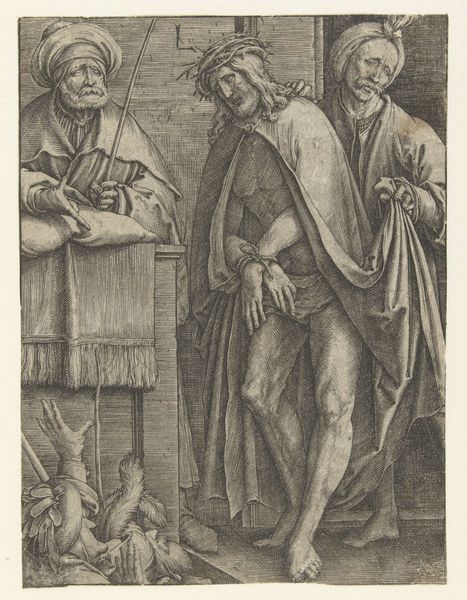
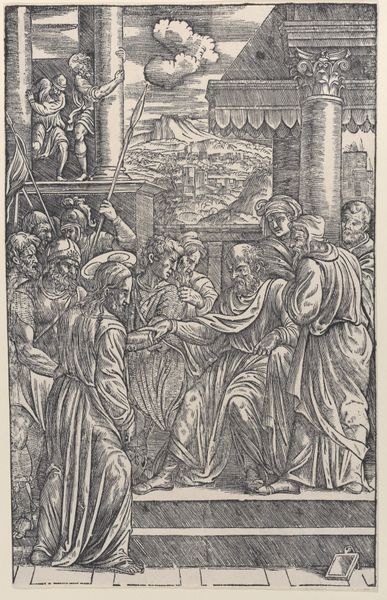
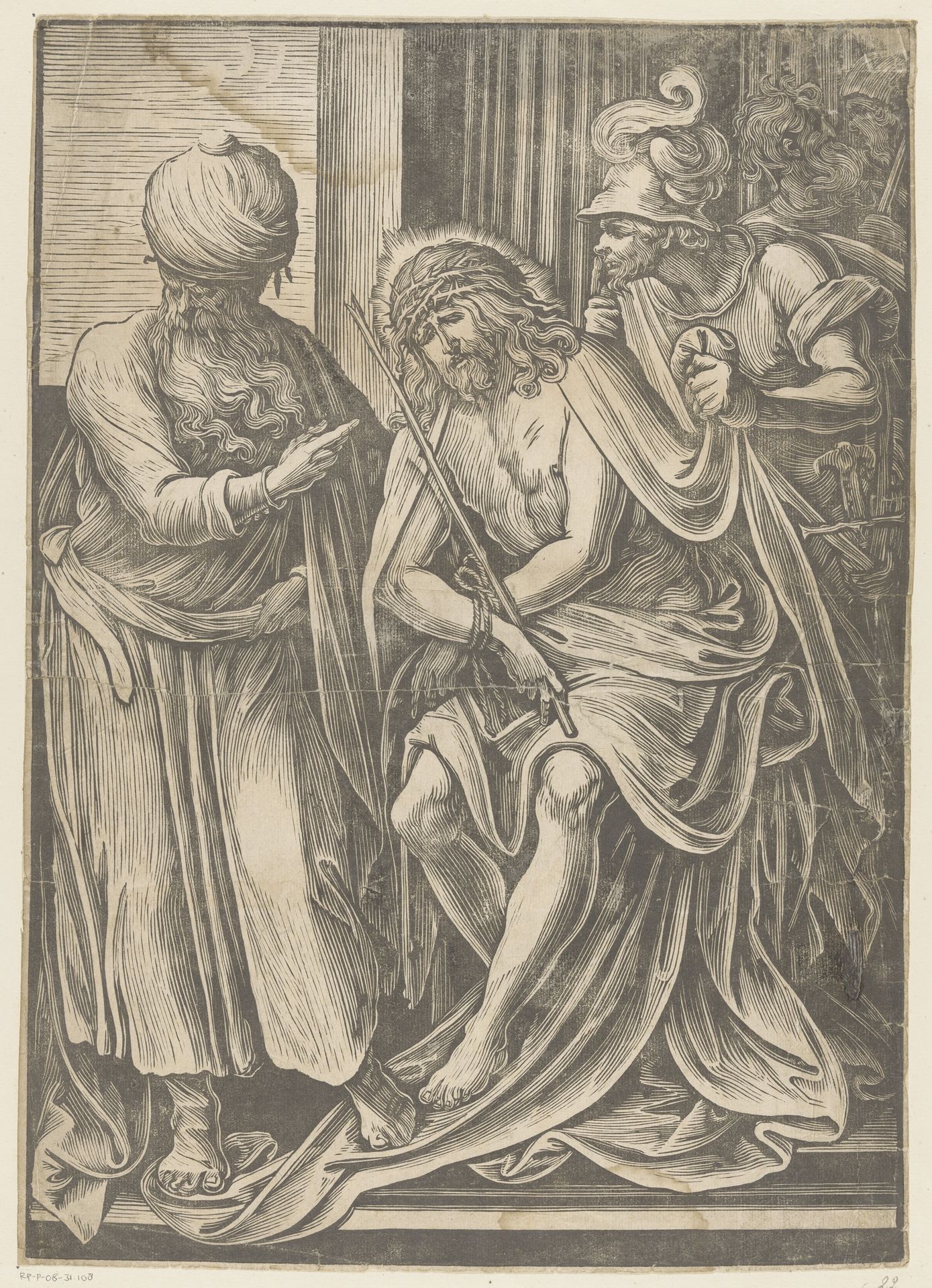
Giuseppe Scolari created this print, “Christus aan het volk getoond,” where Christ, crowned with thorns, is presented to the people. This scene, laden with symbols of power and suffering, speaks to the complex interplay between divine and earthly authority. Consider the crown of thorns: initially a symbol of mockery, it becomes a potent emblem of sacrifice and spiritual kingship. The gesture of presentation—pointing toward Christ—echoes in countless depictions of authority figures throughout art history. We see this in ancient Roman imagery and even in contemporary political art. What is fascinating is that, whether it's a Caesar or a religious figure, the underlying psychological effect is the same: a deliberate attempt to sway public opinion through carefully constructed visual cues. These symbols create a powerful, almost visceral, connection to the viewer, tapping into deep-seated emotions of pity, awe, and judgment. The cyclical nature of these symbols—their resurfacing and reinvention across time—reveals the enduring human quest to understand power, suffering, and the divine.

Artwork details
- Medium
- print, engraving
- Dimensions
- height 492 mm, width 348 mm
- Copyright
- Rijks Museum: Open Domain
Tags
mannerism
figuration
history-painting
engraving
Comments
No comments
About this artwork
Giuseppe Scolari created this print, “Christus aan het volk getoond,” where Christ, crowned with thorns, is presented to the people. This scene, laden with symbols of power and suffering, speaks to the complex interplay between divine and earthly authority. Consider the crown of thorns: initially a symbol of mockery, it becomes a potent emblem of sacrifice and spiritual kingship. The gesture of presentation—pointing toward Christ—echoes in countless depictions of authority figures throughout art history. We see this in ancient Roman imagery and even in contemporary political art. What is fascinating is that, whether it's a Caesar or a religious figure, the underlying psychological effect is the same: a deliberate attempt to sway public opinion through carefully constructed visual cues. These symbols create a powerful, almost visceral, connection to the viewer, tapping into deep-seated emotions of pity, awe, and judgment. The cyclical nature of these symbols—their resurfacing and reinvention across time—reveals the enduring human quest to understand power, suffering, and the divine.
Comments
No comments