About this artwork
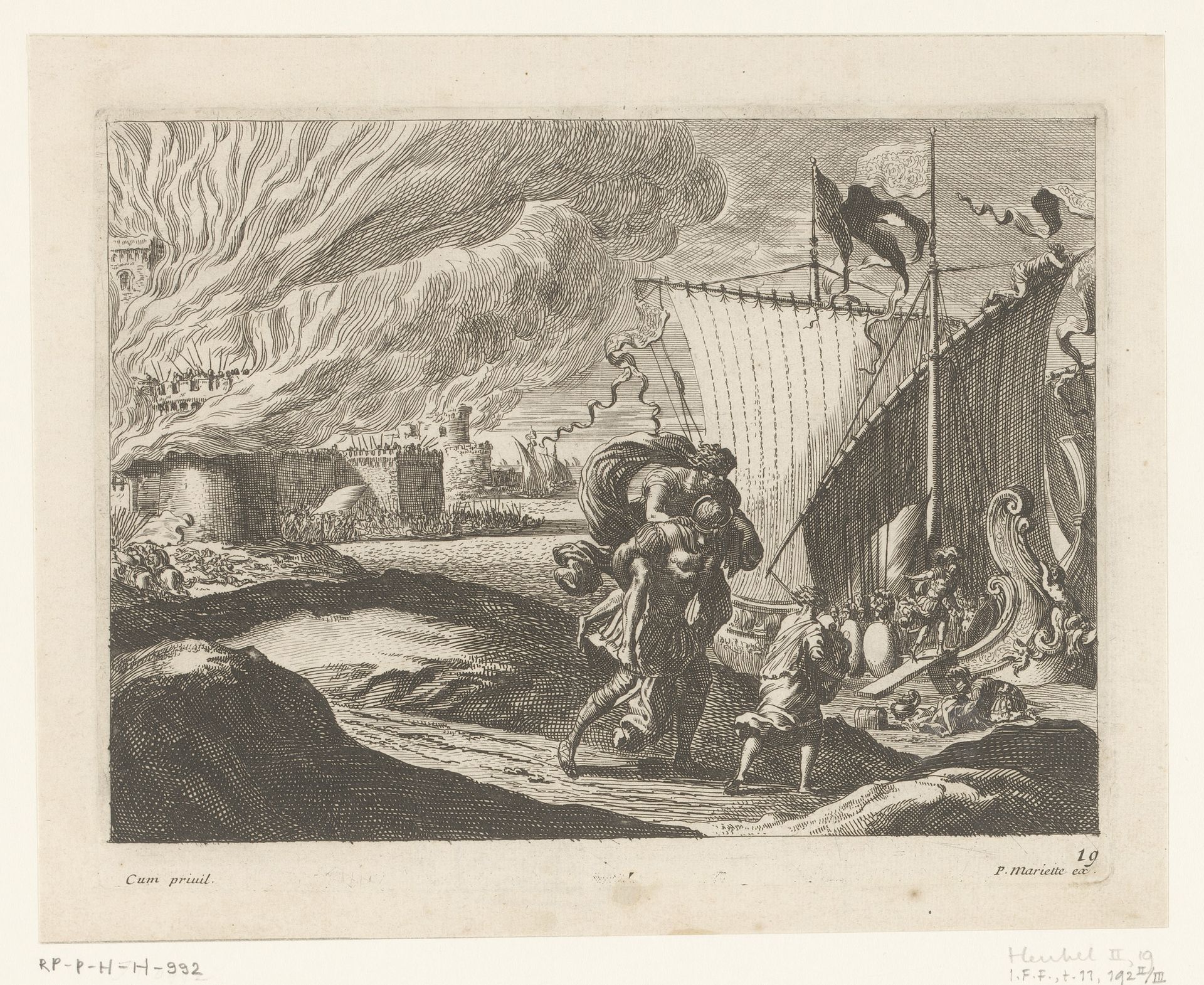
Jean Le Pautre created this print, "Aeneas fleeing Troy with Anchises on his back," in the 17th century. It depicts a scene of heroism, steeped in the visual language of its time. The image captures Aeneas, a Trojan hero, carrying his father, Anchises, away from the burning city of Troy. This act of filial piety is central to the story, yet it’s impossible to ignore the social structures at play. Aeneas embodies youthful strength, while Anchises represents the wisdom of age and ancestry, a poignant reminder of generational responsibility amidst conflict. The burning city and the waiting ship evoke a sense of urgency, highlighting themes of displacement and survival. In the 17th century, a period marked by wars and social upheaval, this image would have resonated deeply, touching on anxieties about heritage, duty, and the search for a safe harbor. The scene is a reminder that even in moments of destruction, the bonds of family and cultural legacy endure.
Aenaes ontvlucht Troje met Anchises op zijn rug
1628 - 1682

Jean Lepautre
1618 - 1682Location
RijksmuseumArtwork details
- Medium
- print, engraving
- Dimensions
- height 162 mm, width 212 mm
- Location
- Rijksmuseum
- Copyright
- Rijks Museum: Open Domain
Tags
Comments
Share your thoughts
About this artwork
Jean Le Pautre created this print, "Aeneas fleeing Troy with Anchises on his back," in the 17th century. It depicts a scene of heroism, steeped in the visual language of its time. The image captures Aeneas, a Trojan hero, carrying his father, Anchises, away from the burning city of Troy. This act of filial piety is central to the story, yet it’s impossible to ignore the social structures at play. Aeneas embodies youthful strength, while Anchises represents the wisdom of age and ancestry, a poignant reminder of generational responsibility amidst conflict. The burning city and the waiting ship evoke a sense of urgency, highlighting themes of displacement and survival. In the 17th century, a period marked by wars and social upheaval, this image would have resonated deeply, touching on anxieties about heritage, duty, and the search for a safe harbor. The scene is a reminder that even in moments of destruction, the bonds of family and cultural legacy endure.
Comments
Share your thoughts