About this artwork
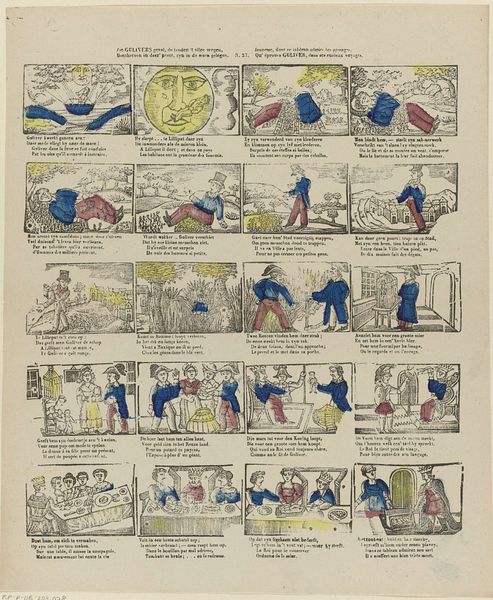
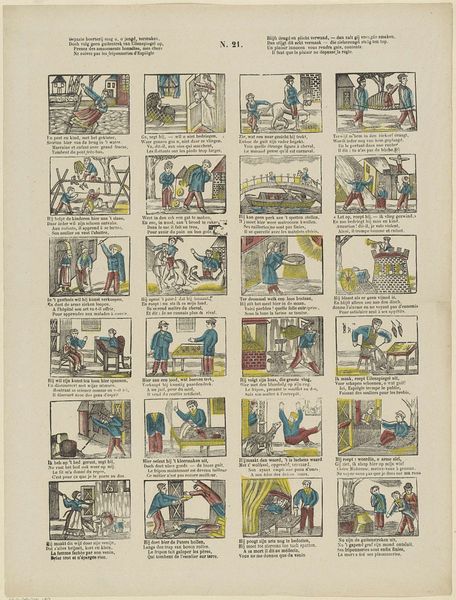
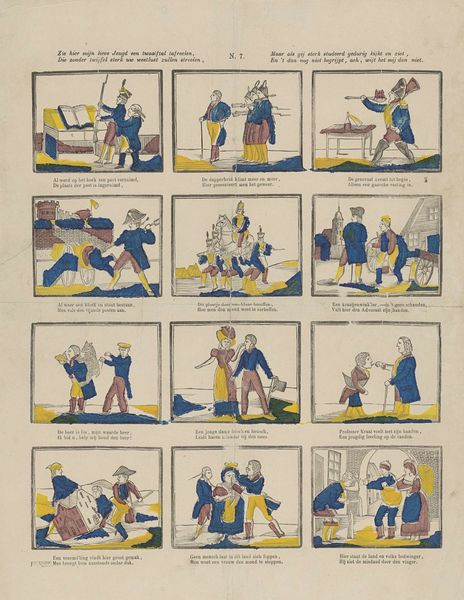
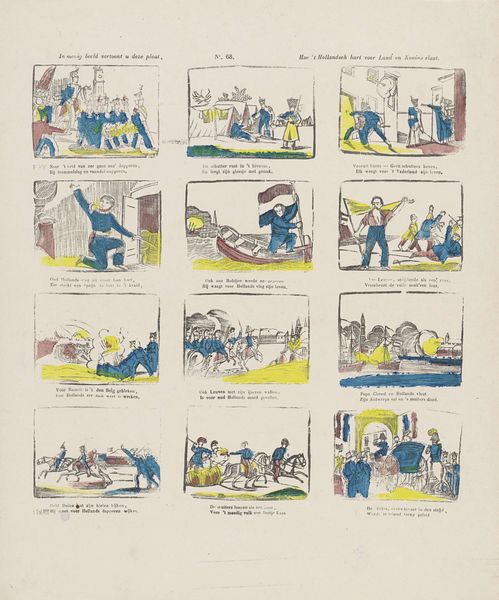
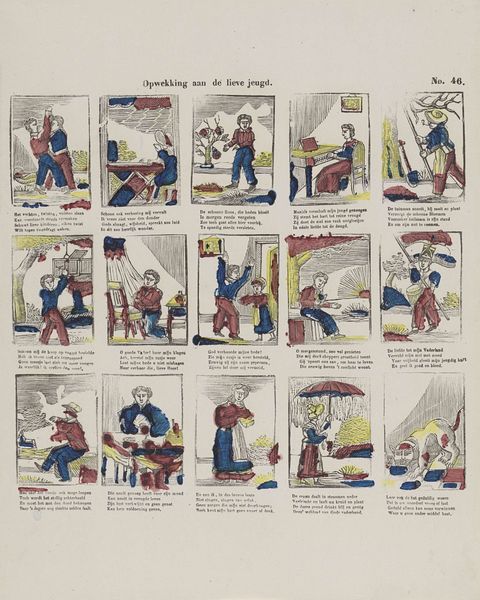
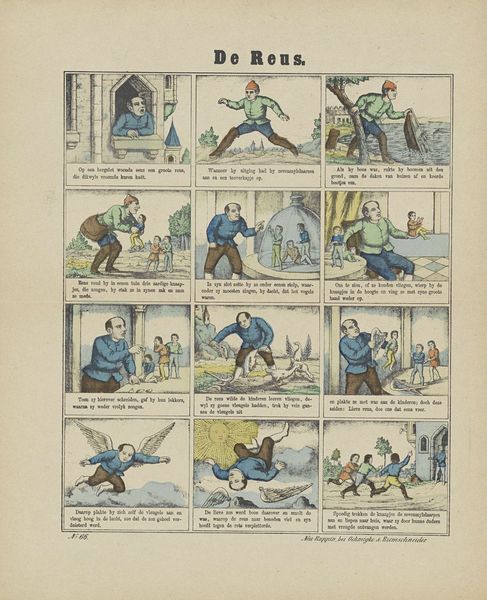
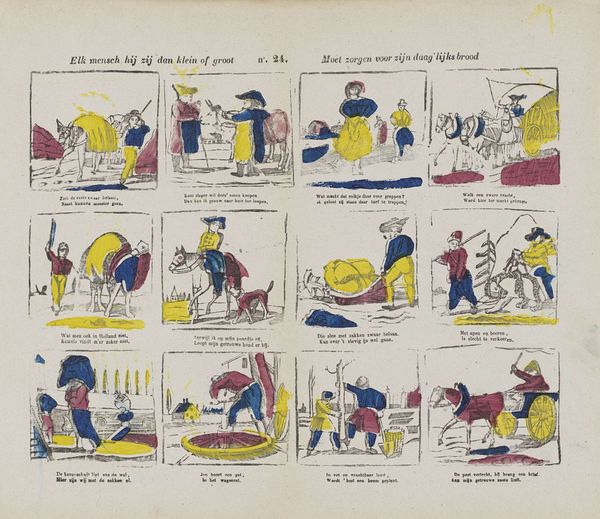
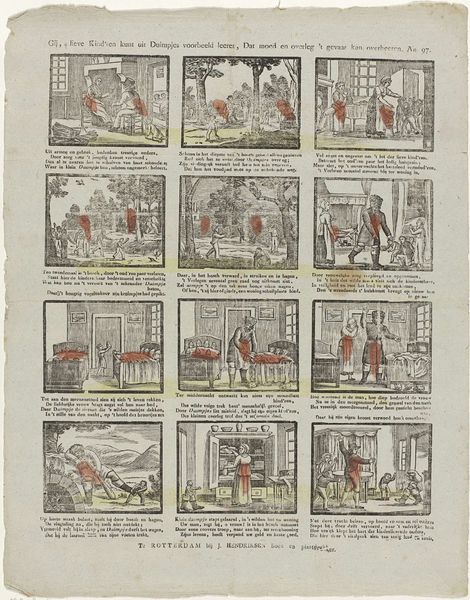
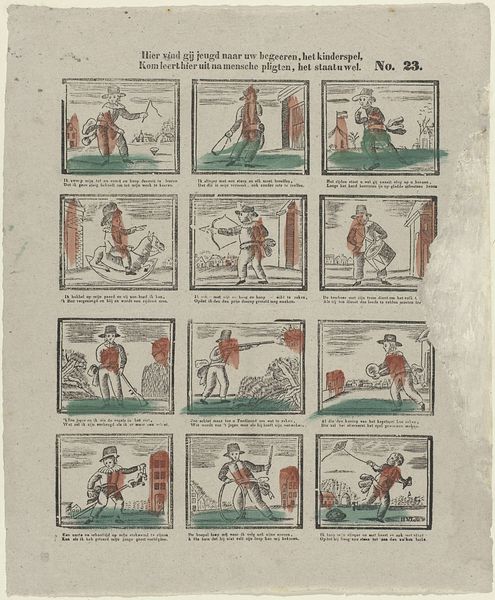
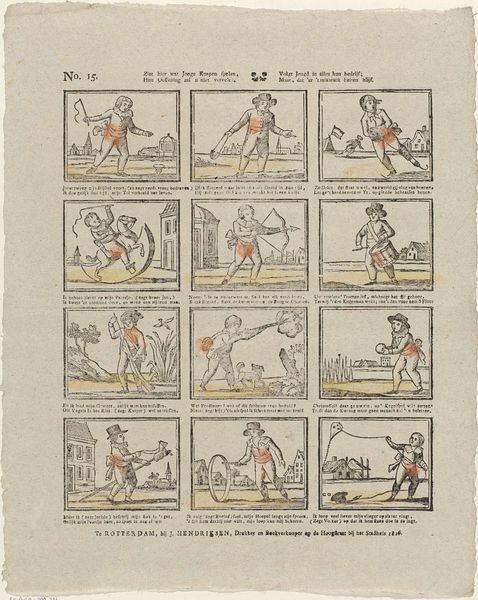
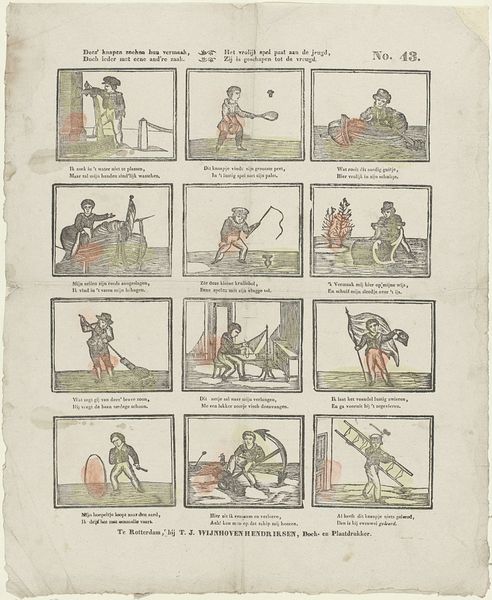
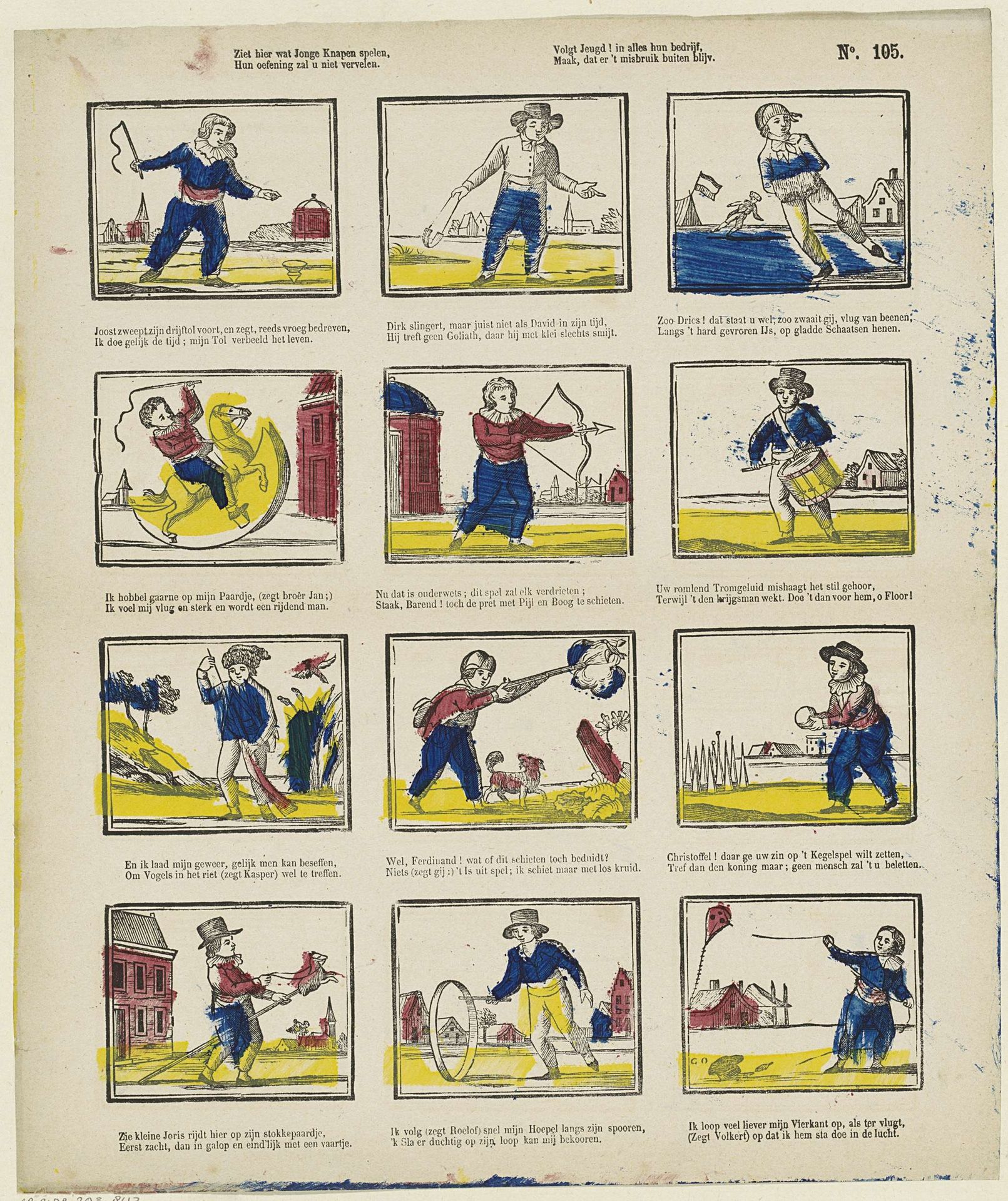
This hand-colored etching, made by Gerrit Oortman around the turn of the 19th century, depicts young boys at play. Its charm lies in the directness of its execution, and what it tells us about the time. The print was made using etching, a form of intaglio printing where acid is used to cut into a metal plate. The etcher would have painstakingly drawn through a wax ground, exposing the metal, then dunked it in acid to bite the lines. This would have been a fairly efficient method of image production, somewhere between hand-drawing and full industrialization. The application of color is equally direct, with flat planes of pigment applied within the etched lines. The material qualities of the print – its paper support, ink, and hand-applied color – all speak to a world where mass media was ascendant, but artisanal techniques still held sway. This blending of handcraft and industry offers a glimpse into the social and economic landscape of the time, reflecting the era's evolving relationship between labor, leisure, and childhood.
Ziet hier wat jonge knapen spelen, / Hun oefening zal u niet vervelen / Volgt jeugd! in alles hun bedrijf, / Maak, dat er 't misbruik buiten blijv
1827 - 1894

Gerrit Oortman
1781 - 1822Location
RijksmuseumArtwork details
- Medium
- drawing, lithograph, print
- Dimensions
- height 374 mm, width 317 mm
- Location
- Rijksmuseum
- Copyright
- Rijks Museum: Open Domain
Tags
Comments
Share your thoughts
About this artwork
This hand-colored etching, made by Gerrit Oortman around the turn of the 19th century, depicts young boys at play. Its charm lies in the directness of its execution, and what it tells us about the time. The print was made using etching, a form of intaglio printing where acid is used to cut into a metal plate. The etcher would have painstakingly drawn through a wax ground, exposing the metal, then dunked it in acid to bite the lines. This would have been a fairly efficient method of image production, somewhere between hand-drawing and full industrialization. The application of color is equally direct, with flat planes of pigment applied within the etched lines. The material qualities of the print – its paper support, ink, and hand-applied color – all speak to a world where mass media was ascendant, but artisanal techniques still held sway. This blending of handcraft and industry offers a glimpse into the social and economic landscape of the time, reflecting the era's evolving relationship between labor, leisure, and childhood.
Comments
Share your thoughts