1729 - 1795
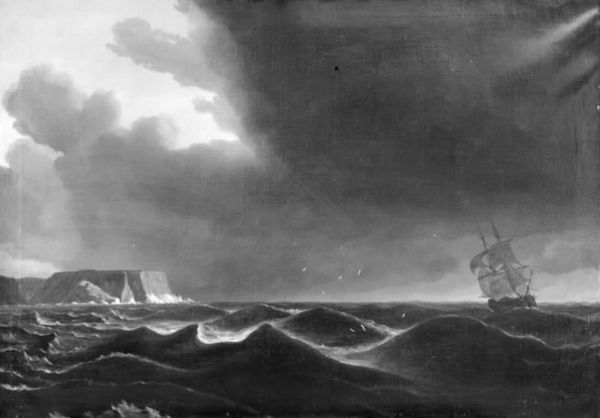
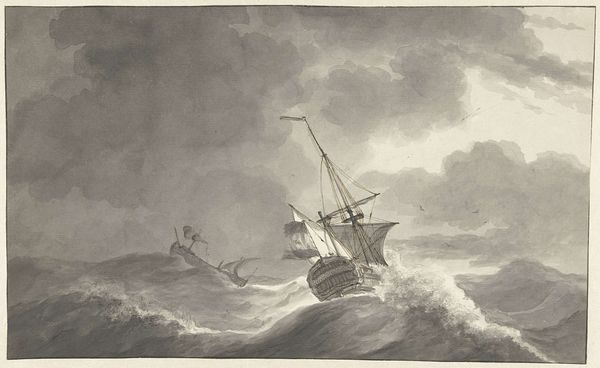
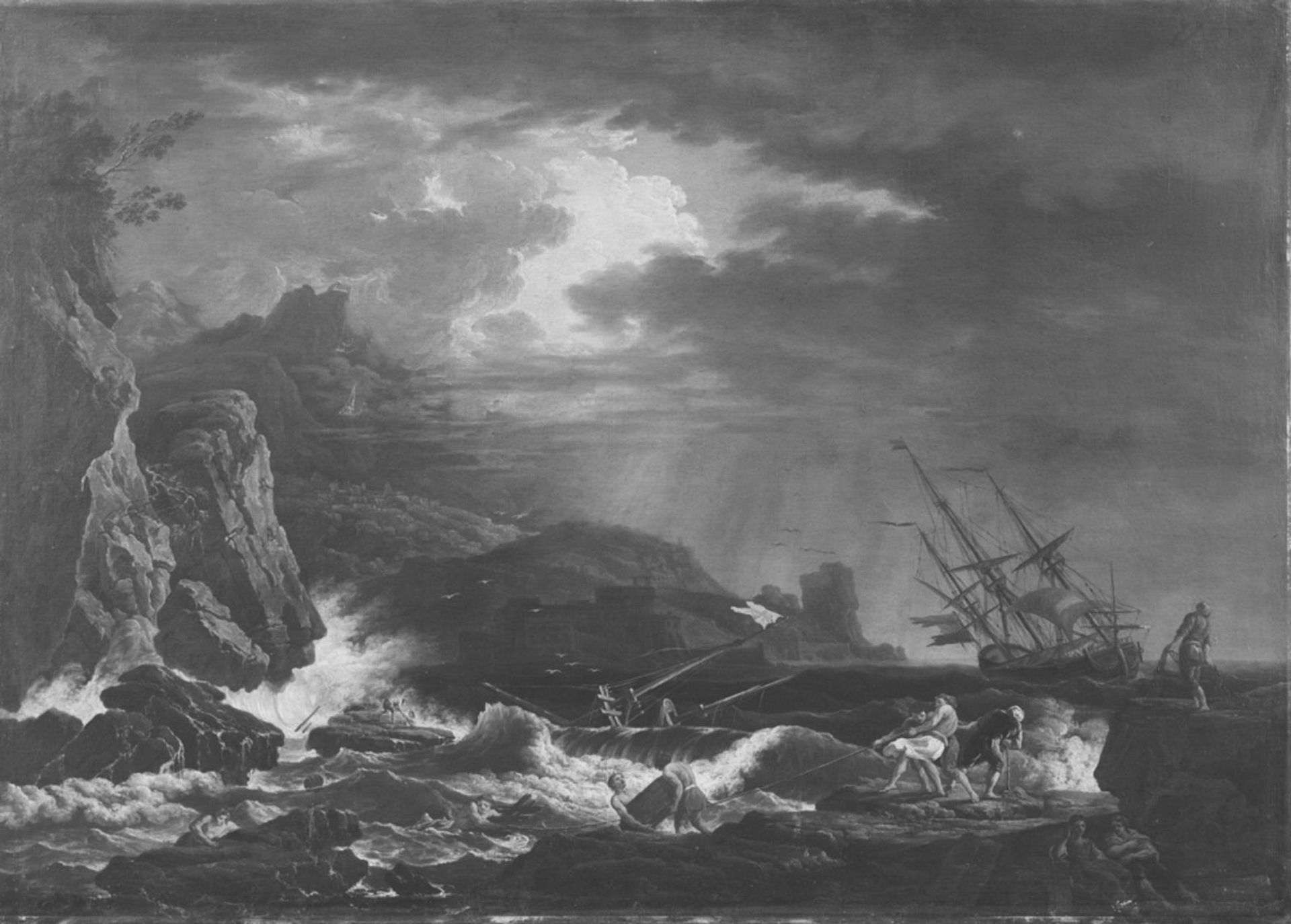
Seascape, Gale


Listen to curator's interpretation
Curatorial notes
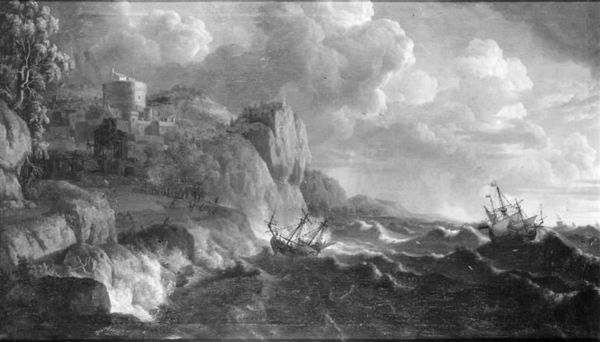
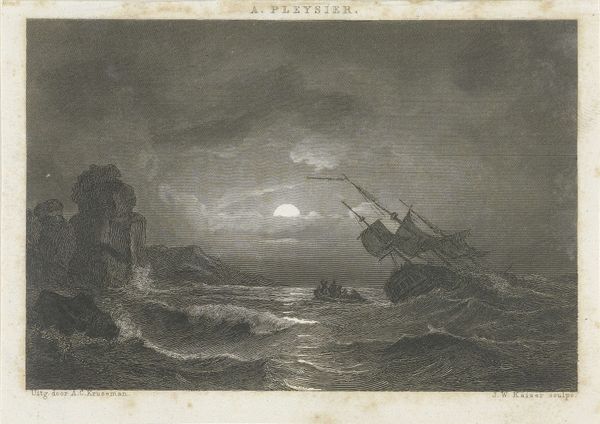
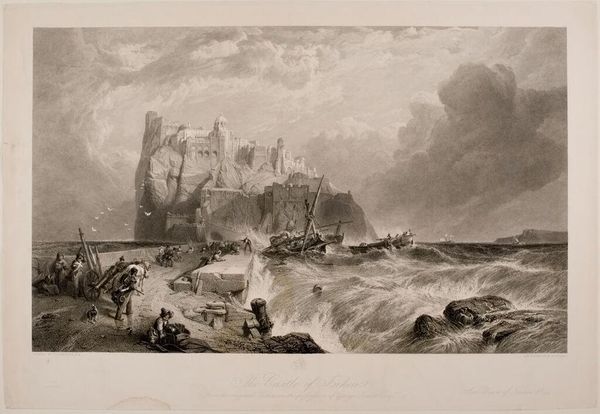
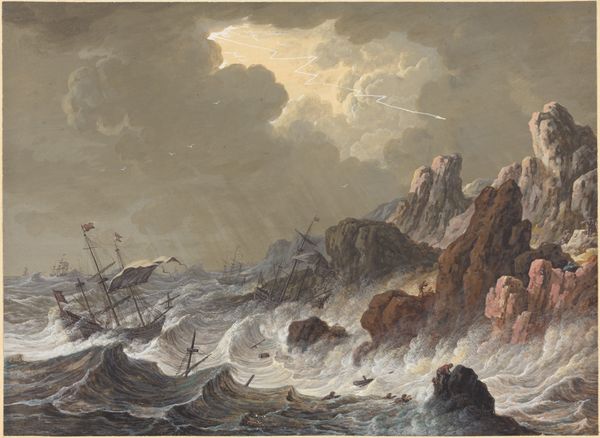
Editor: This is an evocative canvas titled "Seascape, Gale," believed to be from sometime between 1729 and 1795. What immediately strikes me is the overwhelming monochrome palette – it gives the scene a dramatic, almost apocalyptic feel. What formal elements stand out to you in this work? Curator: The success of this piece lies in its masterful manipulation of tonal values and dramatic composition. Observe how the artist has carefully constructed the scene to guide the viewer's eye: the eye travels from the tumultuous waves in the foreground to the distressed ship positioned slightly off-center and on to the diffused light of the background. How would you describe the artist’s use of line and texture? Editor: The brushwork seems very expressive. Look at the frenzied energy in the water, for example, contrasting with the smoother gradations of light in the sky. It seems to create a dynamic rhythm, drawing your eye back and forth. Does this dynamism play a role in the artist’s intended message? Curator: Precisely. The artist’s intent is revealed through form. Note the calculated asymmetry in the arrangement of figures and the implied lines of force, as these generate a sense of unease, of instability that is quite fitting for the scene. What does that uneven balance tell you? Editor: It reflects how chaotic and unpredictable nature can be. I guess I was so drawn in by the drama that I had missed how deliberately the scene was constructed. Curator: Indeed. The apparent chaos is, in fact, rigorously controlled. This underscores the potency of purely formal analysis in decoding such seemingly chaotic compositions. Editor: Seeing it broken down this way helps me appreciate the intent of the artist so much more.