About this artwork
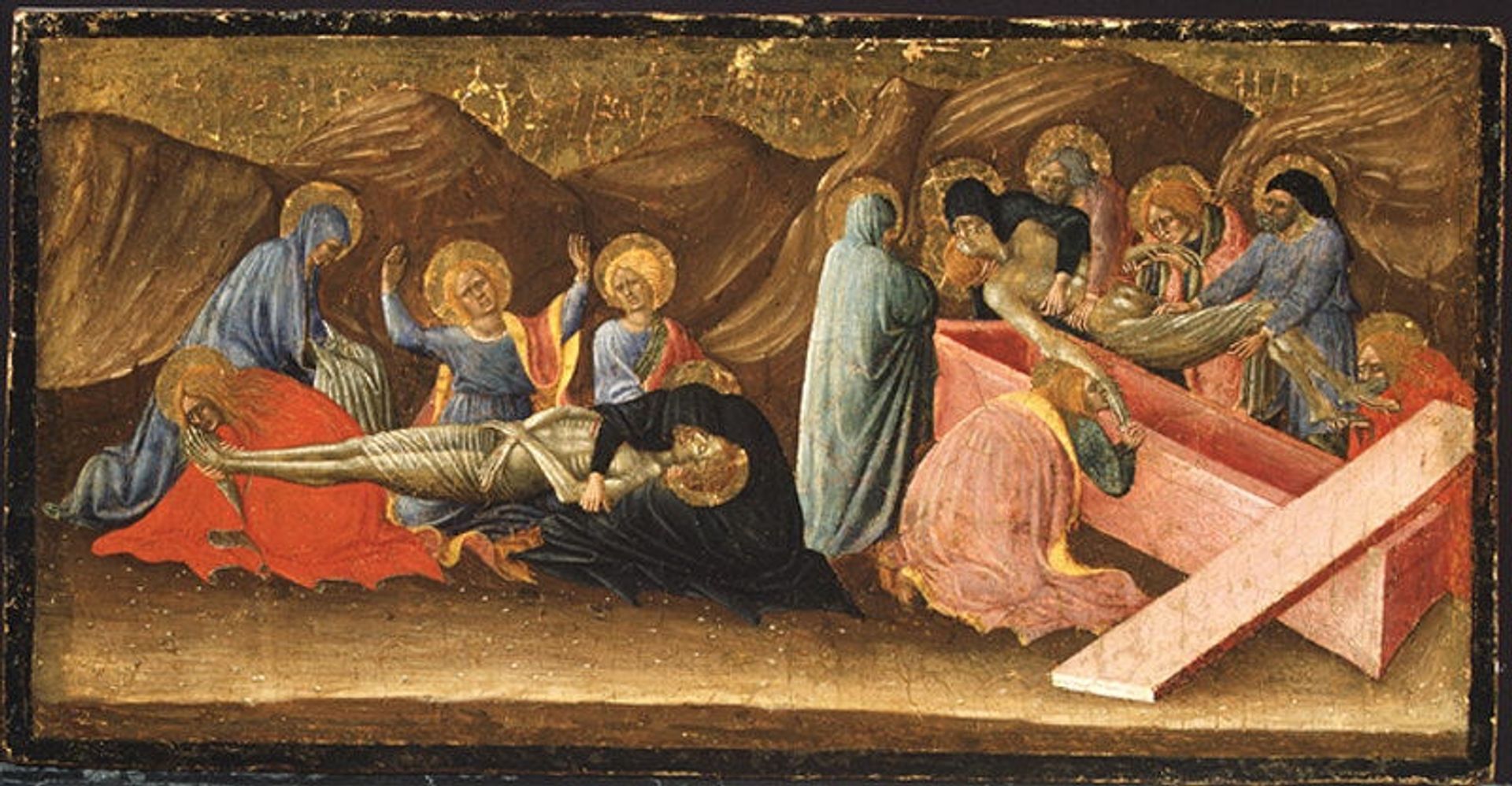
Bartolomeo di Tommaso created this tempera on wood painting entitled, *The Lamentation and the Entombment* in fifteenth-century Italy. Commissioned during a time of religious fervor, the painting depicts the emotional scene following the crucifixion of Christ, combining the lamentation and entombment into one narrative moment. Consider the figures surrounding Christ: their faces are contorted with grief, their bodies twisted in anguish. These are not just figures from a religious story; they represent the universal experience of loss, grief, and mourning. The women, particularly, are central to this expression of sorrow, highlighting the feminine role in both religious narrative and emotional display. The work invites us to contemplate the emotional weight of the scene. It serves as a mirror, reflecting our own experiences of grief and loss and the communal rituals that help us cope.
The Lamentation and the Entombment
1445 - 1450

Bartolomeo di Tommaso
1425 - 1454
The Metropolitan Museum of Art
Metropolitan Museum of Art, New York, NYArtwork details
- Medium
- panel, painting, oil-paint
- Dimensions
- Overall 8 3/4 x 17 1/8 in. (22.2 x 43.5 cm); irregular painted surface 8 x 16 1/8 in. (20.3 x 41 cm)
- Location
- Metropolitan Museum of Art, New York, NY
- Copyright
- Public Domain
Tags
Comments
Share your thoughts
About this artwork
Bartolomeo di Tommaso created this tempera on wood painting entitled, *The Lamentation and the Entombment* in fifteenth-century Italy. Commissioned during a time of religious fervor, the painting depicts the emotional scene following the crucifixion of Christ, combining the lamentation and entombment into one narrative moment. Consider the figures surrounding Christ: their faces are contorted with grief, their bodies twisted in anguish. These are not just figures from a religious story; they represent the universal experience of loss, grief, and mourning. The women, particularly, are central to this expression of sorrow, highlighting the feminine role in both religious narrative and emotional display. The work invites us to contemplate the emotional weight of the scene. It serves as a mirror, reflecting our own experiences of grief and loss and the communal rituals that help us cope.
Comments
Share your thoughts