About this artwork
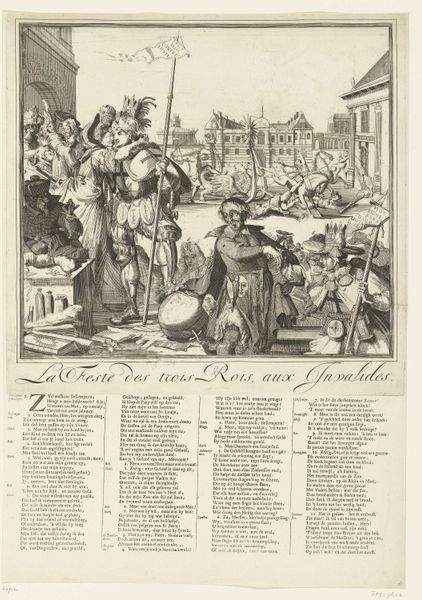
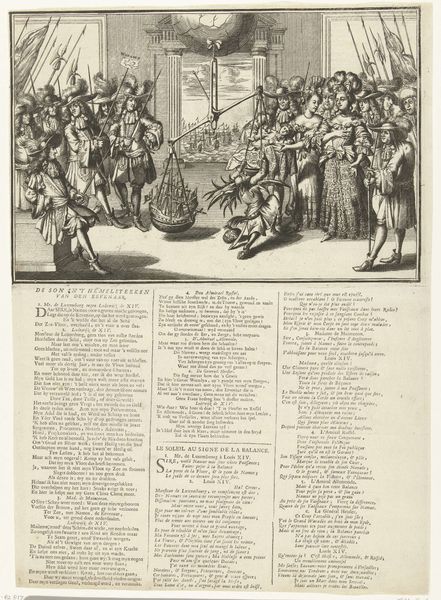
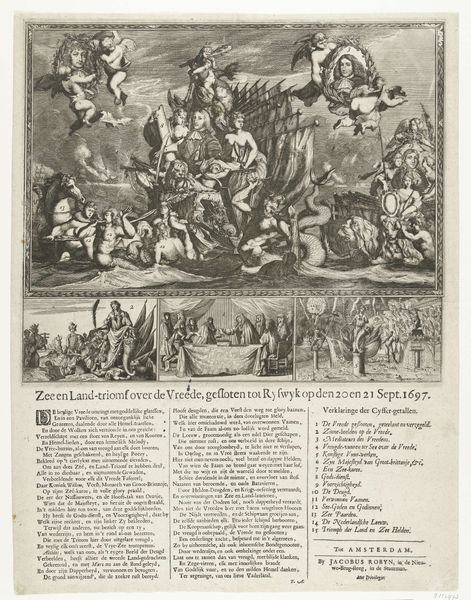
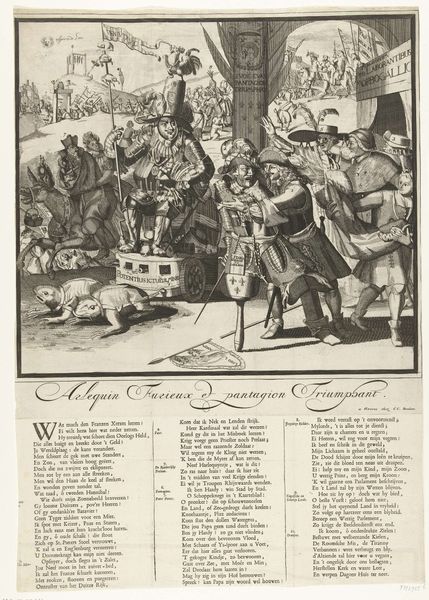
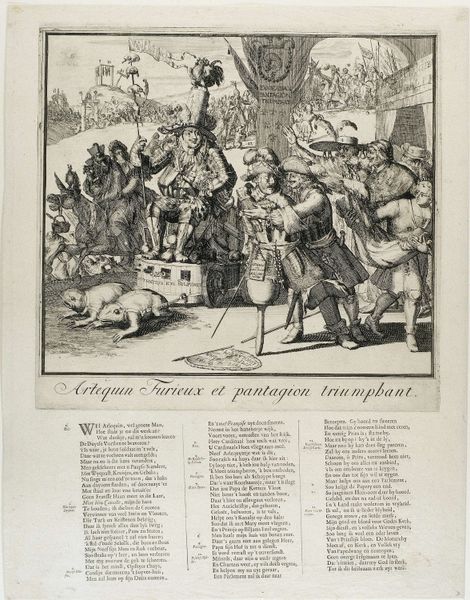
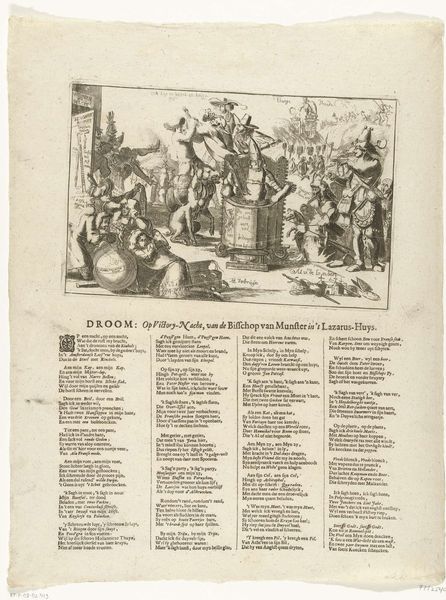
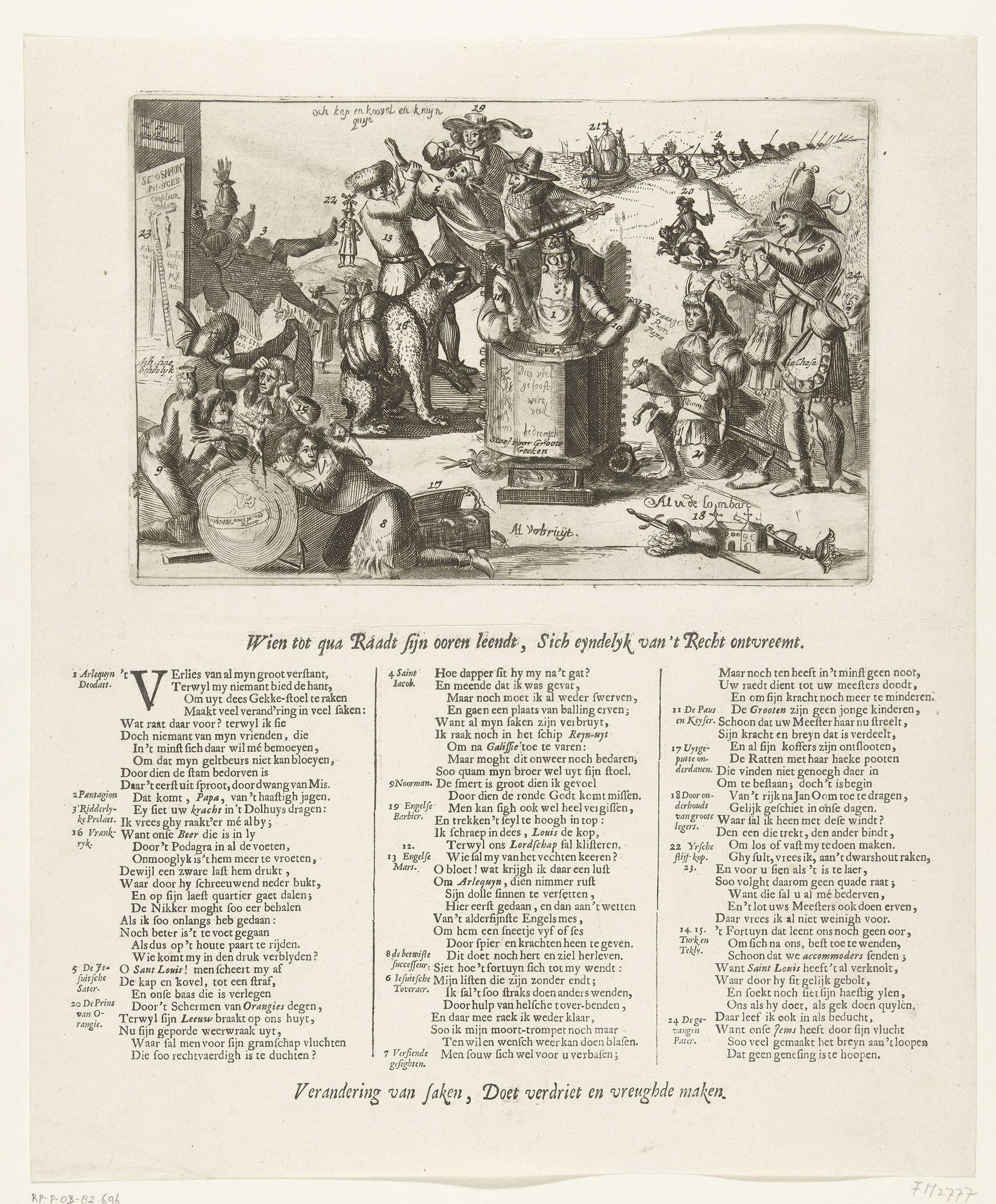
This anonymous print from 1689, housed at the Rijksmuseum, immediately strikes you with its bustling composition and satirical intent. The monochromatic etching uses dense lines to depict a scene teeming with figures surrounding a central, enclosed figure. The overall effect is chaotic, a visual representation of political turmoil. The print's structure is organized around the stark contrast between the enclosed figure in the 'kinderstoel' and the active figures around him. This juxtaposition creates a tension, hinting at themes of confinement versus freedom and power versus vulnerability. The lines are sharp and precise, underscoring the detailed depiction of each character and element, contributing to the print's critical narrative. Viewing this artwork through a structuralist lens, we might consider how the print uses visual symbols and cultural codes to convey its message. The composition and scale of the figures challenge fixed meanings, creating a space for interpretation. The artist prompts us to question established meanings and values through the satirical portrayal of political figures and events.
Spotprent op Lodewijk XIV in een kinderstoel, 1689
1674 - 1689

Anonymous
@anonymousLocation
RijksmuseumArtwork details
- Medium
- print, engraving
- Dimensions
- height 375 mm, width 311 mm
- Location
- Rijksmuseum
- Copyright
- Rijks Museum: Open Domain
Tags
Comments
Share your thoughts
About this artwork
This anonymous print from 1689, housed at the Rijksmuseum, immediately strikes you with its bustling composition and satirical intent. The monochromatic etching uses dense lines to depict a scene teeming with figures surrounding a central, enclosed figure. The overall effect is chaotic, a visual representation of political turmoil. The print's structure is organized around the stark contrast between the enclosed figure in the 'kinderstoel' and the active figures around him. This juxtaposition creates a tension, hinting at themes of confinement versus freedom and power versus vulnerability. The lines are sharp and precise, underscoring the detailed depiction of each character and element, contributing to the print's critical narrative. Viewing this artwork through a structuralist lens, we might consider how the print uses visual symbols and cultural codes to convey its message. The composition and scale of the figures challenge fixed meanings, creating a space for interpretation. The artist prompts us to question established meanings and values through the satirical portrayal of political figures and events.
Comments
Share your thoughts