About this artwork
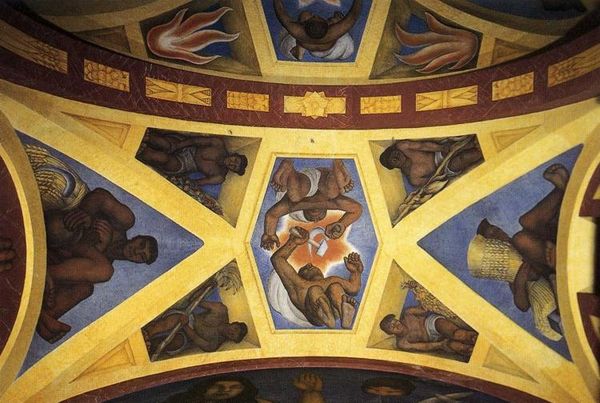
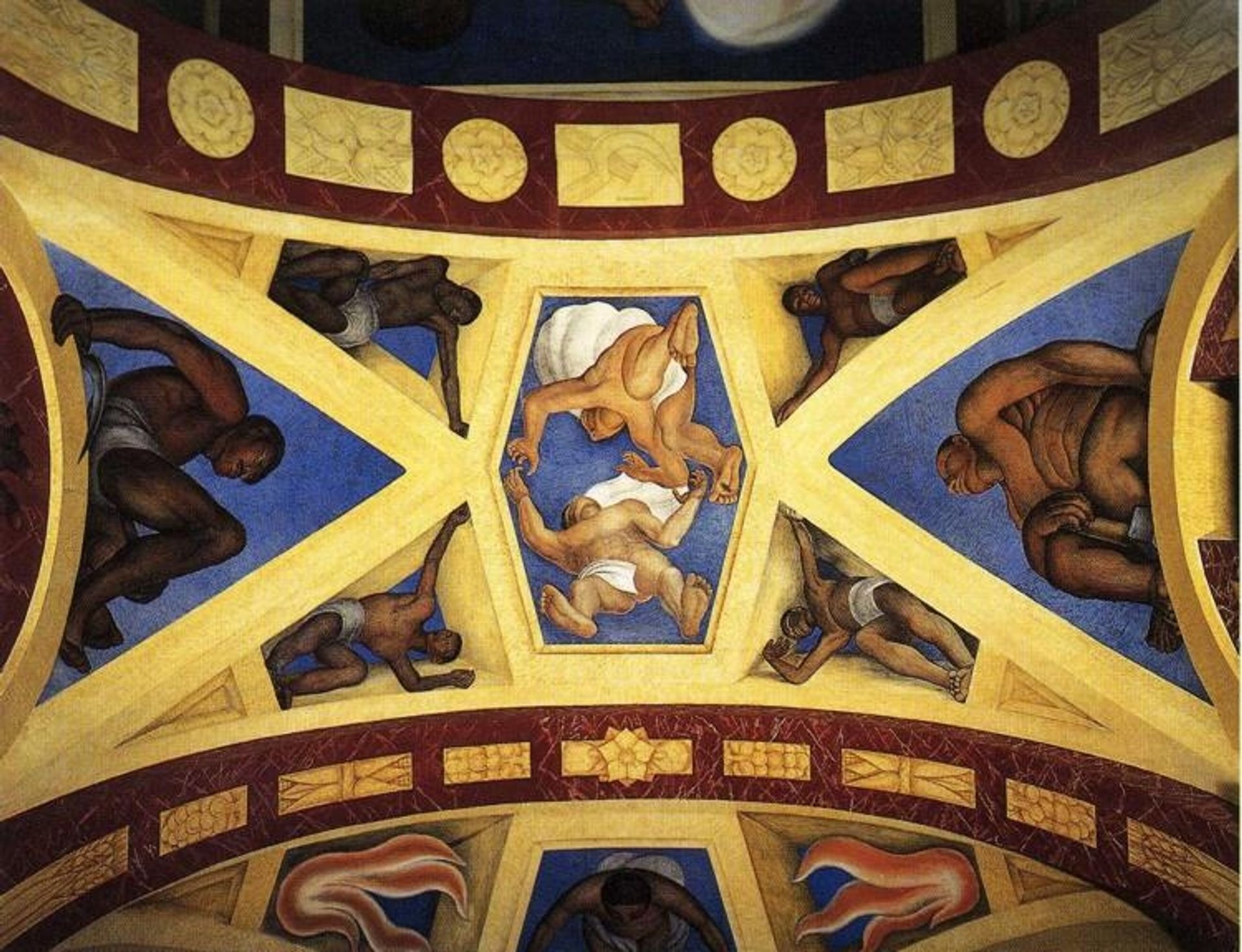
"Revelation of the Way" was painted by Diego Rivera at the Chapingo Autonomous University in Mexico, using the fresco technique. With fresco, the artist paints directly onto wet lime plaster. The process requires speed and precision, as the pigments are absorbed into the wall as it dries. This labor-intensive method permanently bonds the image to the architecture. The figures, rendered in earth tones, bulge against the geometric architecture, seemingly struggling against the weight of the structure above them. Rivera’s choice of fresco is not arbitrary; it’s a medium deeply tied to muralism and public art. The monumental scale and the direct application of paint to the wall speaks to the immense amount of work involved. The fresco medium embodies the social significance of the work. It speaks to a history of collective labor, reflecting the mural’s message of struggle, resistance, and the hope for a better world. It is a bold statement of purpose.
Revelation of the Way
1926

Diego Rivera
1886 - 1957Location
Chapingo Autonomous University, Texcoco, MexicoArtwork details
- Medium
- painting, acrylic-paint, mural
- Location
- Chapingo Autonomous University, Texcoco, Mexico
- Copyright
- Diego Rivera,Fair Use
Tags
Comments
Share your thoughts
About this artwork
"Revelation of the Way" was painted by Diego Rivera at the Chapingo Autonomous University in Mexico, using the fresco technique. With fresco, the artist paints directly onto wet lime plaster. The process requires speed and precision, as the pigments are absorbed into the wall as it dries. This labor-intensive method permanently bonds the image to the architecture. The figures, rendered in earth tones, bulge against the geometric architecture, seemingly struggling against the weight of the structure above them. Rivera’s choice of fresco is not arbitrary; it’s a medium deeply tied to muralism and public art. The monumental scale and the direct application of paint to the wall speaks to the immense amount of work involved. The fresco medium embodies the social significance of the work. It speaks to a history of collective labor, reflecting the mural’s message of struggle, resistance, and the hope for a better world. It is a bold statement of purpose.
Comments
Share your thoughts