About this artwork
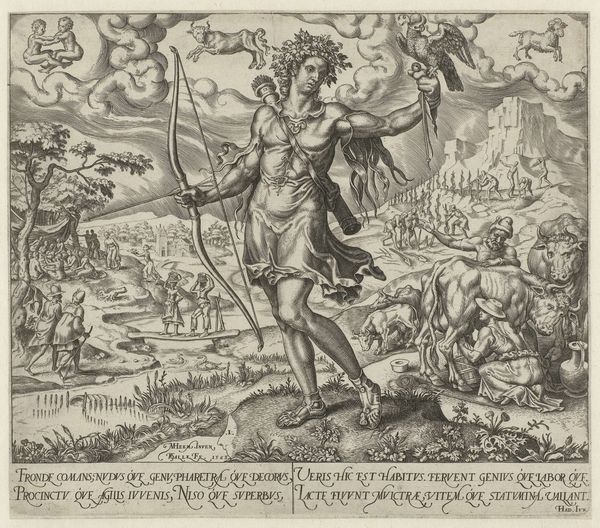
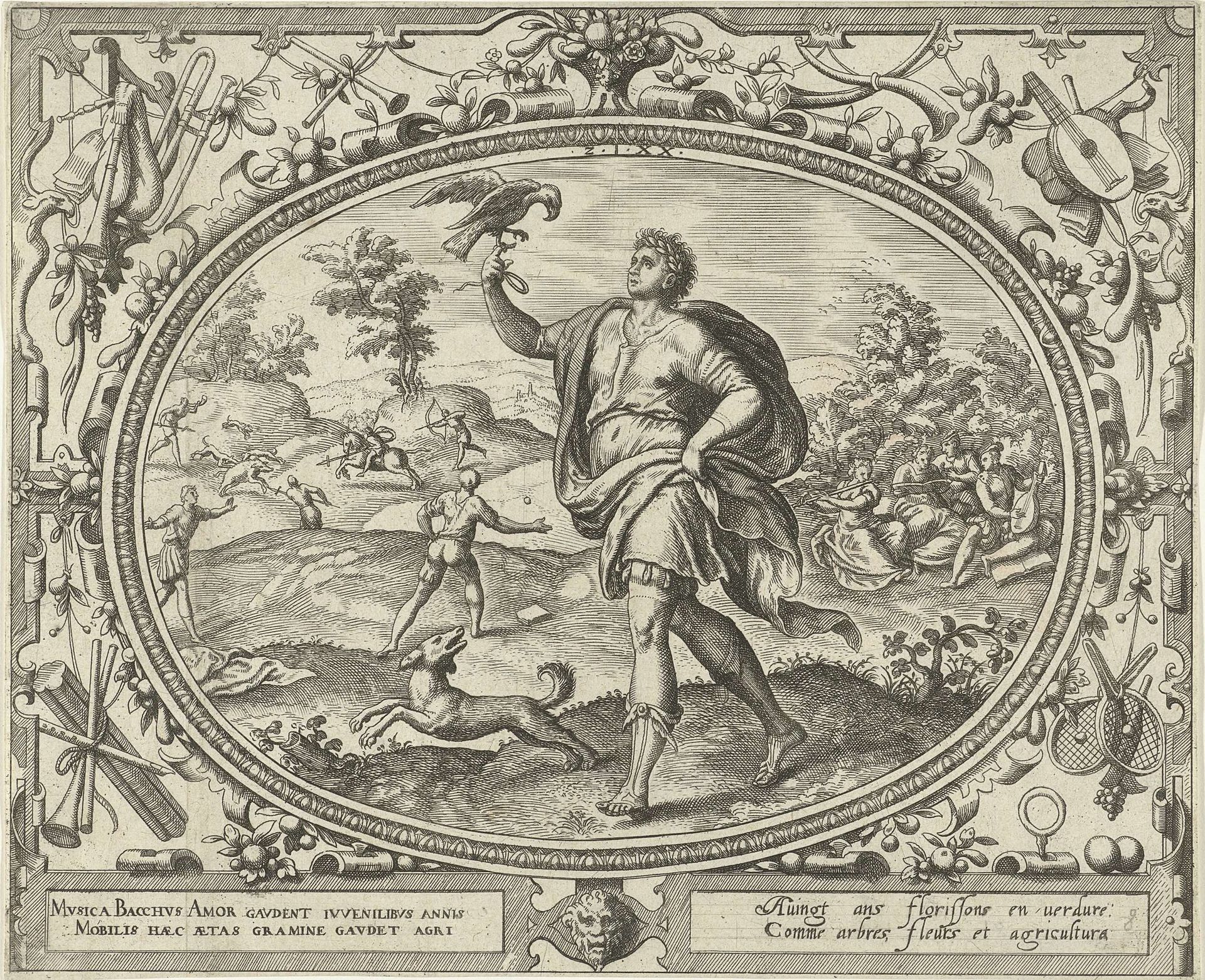
This engraving, "De mens op twintigjarige leeftijd" by Gerard van Groeningen, presents us with an allegorical scene framed within an oval border of musical instruments, fruits, and foliage. The linear precision and symmetrical composition suggest an attempt to capture the exuberance of youth through structured form. The central figure of a young man holding a falcon, set against a backdrop of playful activities, embodies the vitality associated with twenty years of age. The landscape, filled with hunting scenes, musicians and couples, is meticulously detailed, creating a sense of ordered chaos. This tension between order and chaos, typical of allegorical works, reflects a deeper exploration of human experience. The border, with its structured arrangement of objects, serves not just as a frame, but as a commentary on the relationship between art, nature, and human pursuits. The calculated arrangement of these elements invites us to decode the symbolic language used to describe youth’s essence. This piece uses formal devices not merely for aesthetic appeal, but as a complex system to engage viewers in a cultural and philosophical dialogue about life.
De mens op twintigjarige leeftijd
1569 - 1575

Gerard van Groeningen
1563 - 1573Location
RijksmuseumArtwork details
- Medium
- print, engraving
- Dimensions
- height 194 mm, width 238 mm
- Location
- Rijksmuseum
- Copyright
- Rijks Museum: Open Domain
Tags
Comments
Share your thoughts
About this artwork
This engraving, "De mens op twintigjarige leeftijd" by Gerard van Groeningen, presents us with an allegorical scene framed within an oval border of musical instruments, fruits, and foliage. The linear precision and symmetrical composition suggest an attempt to capture the exuberance of youth through structured form. The central figure of a young man holding a falcon, set against a backdrop of playful activities, embodies the vitality associated with twenty years of age. The landscape, filled with hunting scenes, musicians and couples, is meticulously detailed, creating a sense of ordered chaos. This tension between order and chaos, typical of allegorical works, reflects a deeper exploration of human experience. The border, with its structured arrangement of objects, serves not just as a frame, but as a commentary on the relationship between art, nature, and human pursuits. The calculated arrangement of these elements invites us to decode the symbolic language used to describe youth’s essence. This piece uses formal devices not merely for aesthetic appeal, but as a complex system to engage viewers in a cultural and philosophical dialogue about life.
Comments
Share your thoughts