1630 - 1641
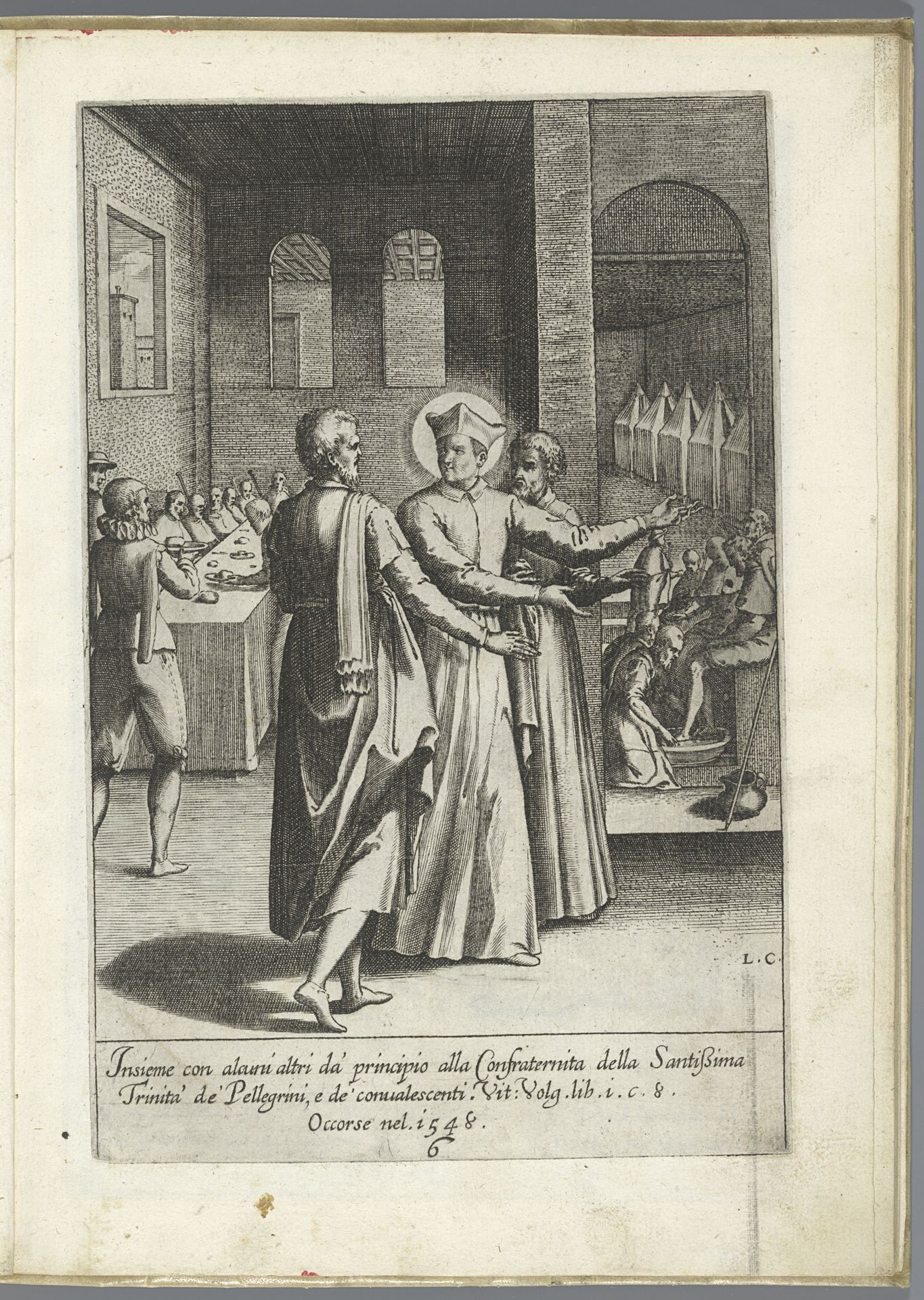
Filippo Neri sticht de broederschap van de pelgrims

Luca Ciamberlano
1599 - 1641Location
RijksmuseumListen to curator's interpretation
Curatorial notes
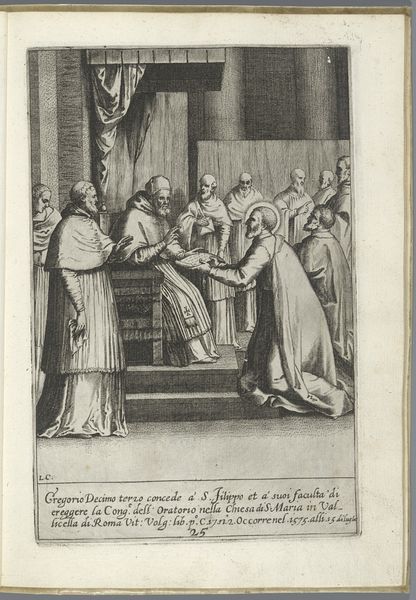
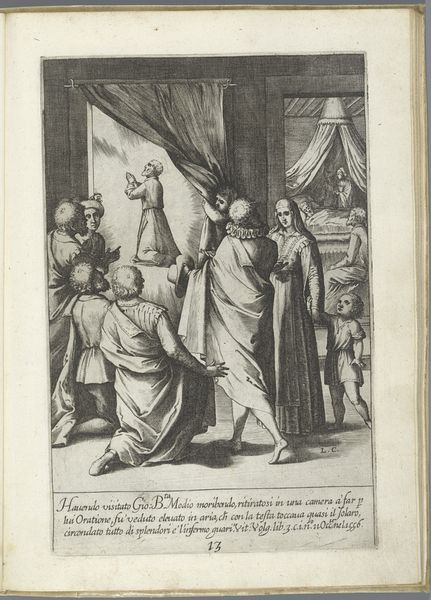
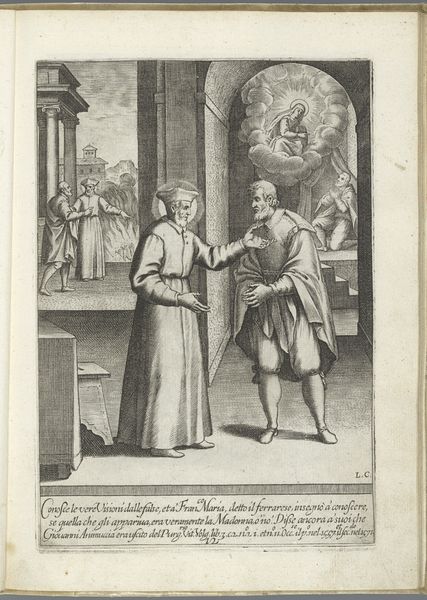
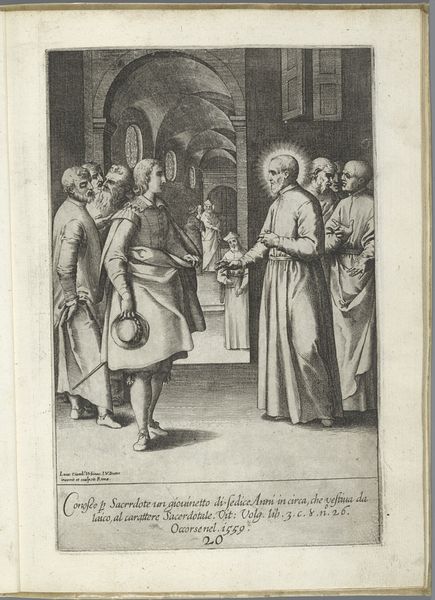
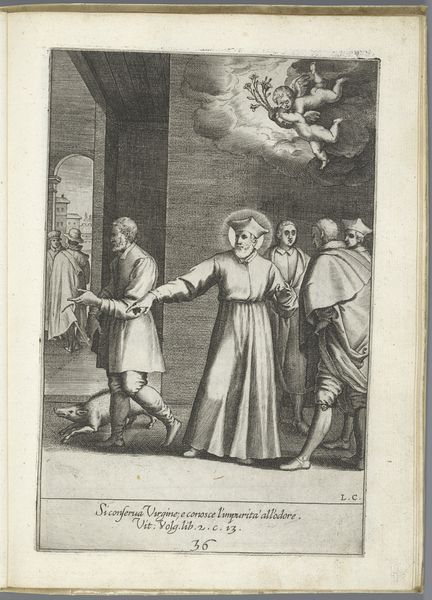
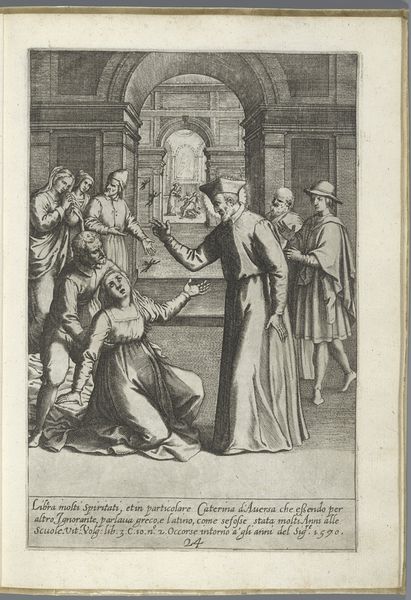
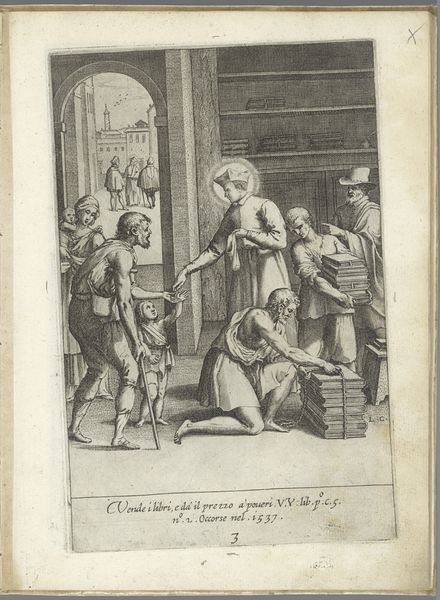
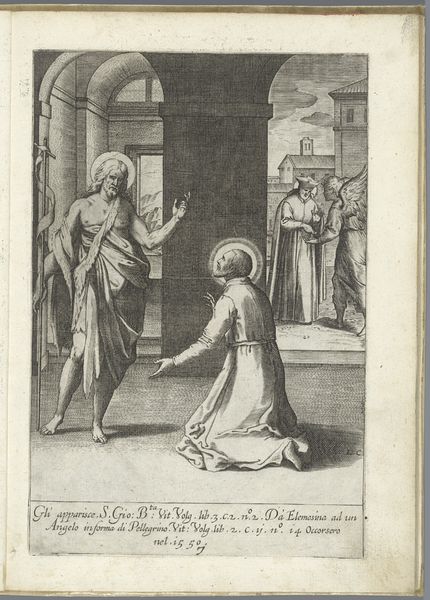
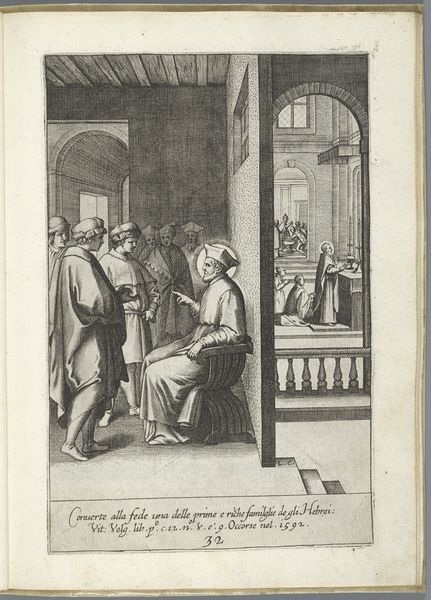
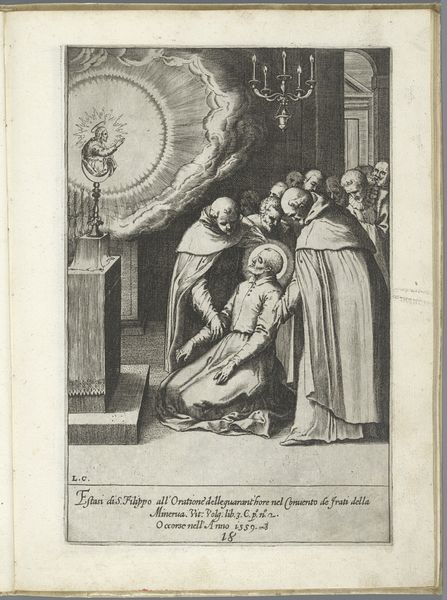
Luca Ciamberlano created this print, "Filippo Neri sticht de broederschap van de pelgrims," using etching, a printmaking technique that democratized image production in the 17th century. The process starts with a metal plate, usually copper. The etcher covers it with a waxy, acid-resistant ground, then draws through the ground with a needle, exposing the metal. Immersing the plate in acid bites away the exposed lines, creating recessed marks. Ink is then applied, filling these lines, and the surface is wiped clean. Finally, the image is transferred to paper under pressure. Here, the stark contrasts and fine lines emphasize the solemnity of the scene, the founding of a brotherhood. The material qualities of the print – its reproducibility and affordability – mirror the brotherhood’s mission of serving pilgrims, a contrast to the opulence often associated with religious institutions. This etching, like many prints of its era, blurred the lines between art and information, making images accessible and contributing to a wider circulation of ideas and narratives.